Sariska Tiger Reserve: Safari Guide
Tiger reintroduction, leopards, Kankwari Fort and Pandupole temple
About Sariska National Park
Sariska National Park lies in Alwar district in north-eastern Rajasthan, in the folds of the Aravalli Range, within Sariska Tiger Reserve. It is one of the wildlife destinations closest to Delhi and Jaipur, roughly midway between the two. The tiger reserve covers 1,203 km², made up of a core of about 881 km² and a buffer of about 322 km², and the national park forms the protected heart of it.
The forests here were once a hunting preserve of the princely state of Alwar, first recognised as a reserve in 1955 and declared a wildlife sanctuary in 1958. Sariska became part of Project Tiger in 1978 and was notified as a national park in 1982. The distinction is easy to hold: the tiger reserve is the wider protected landscape, while the national park is its core.
The terrain rises from about 300 to 722 m through rocky ridges, narrow valleys and grassy plateaus. Dhok (Anogeissus pendula) is the dominant tree, joined by salai, kadaya, dhak, ber and khair, with banyan and arjun trees along watercourses. The landscape shifts through the seasons, from parched gold in summer to green after the rains.
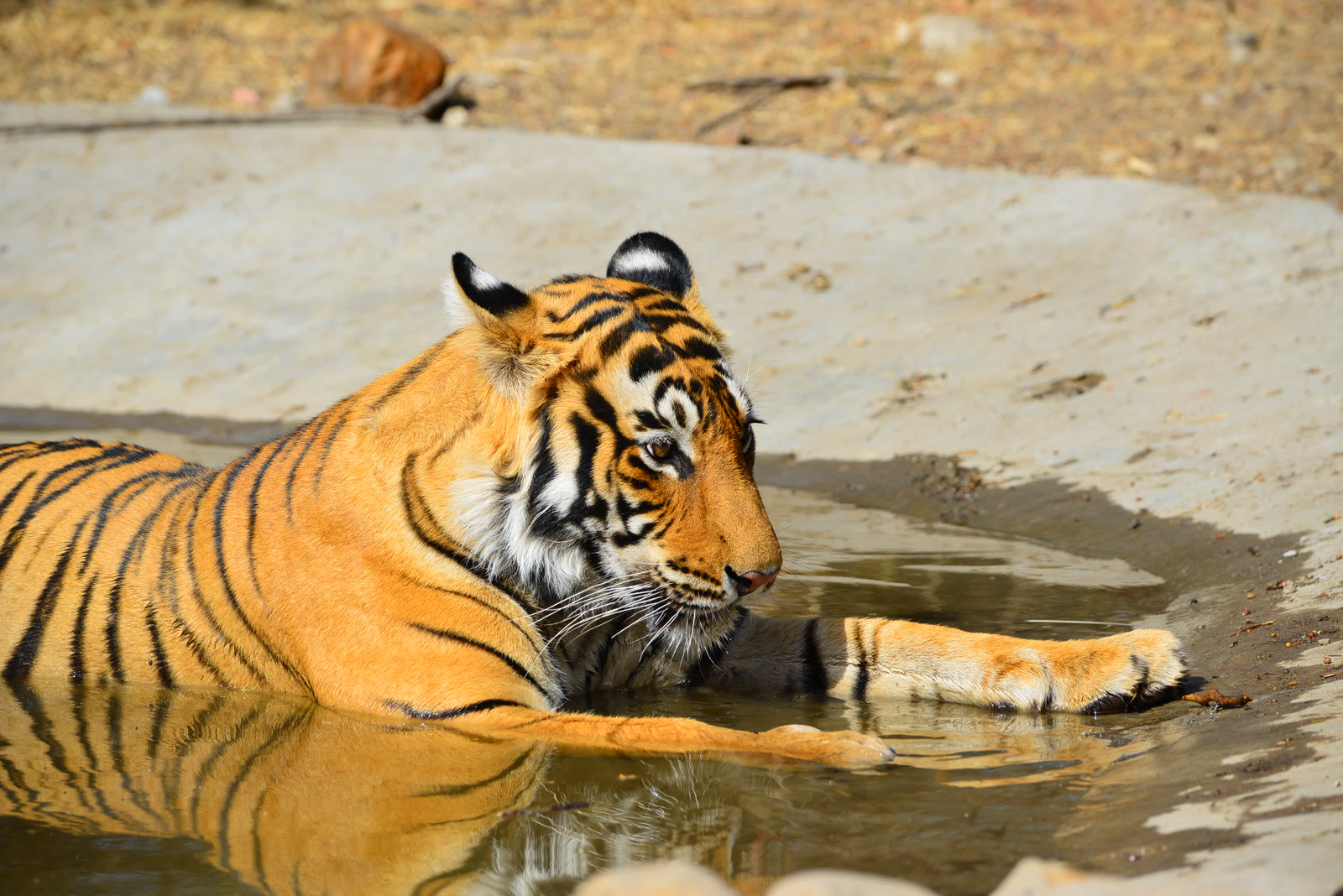
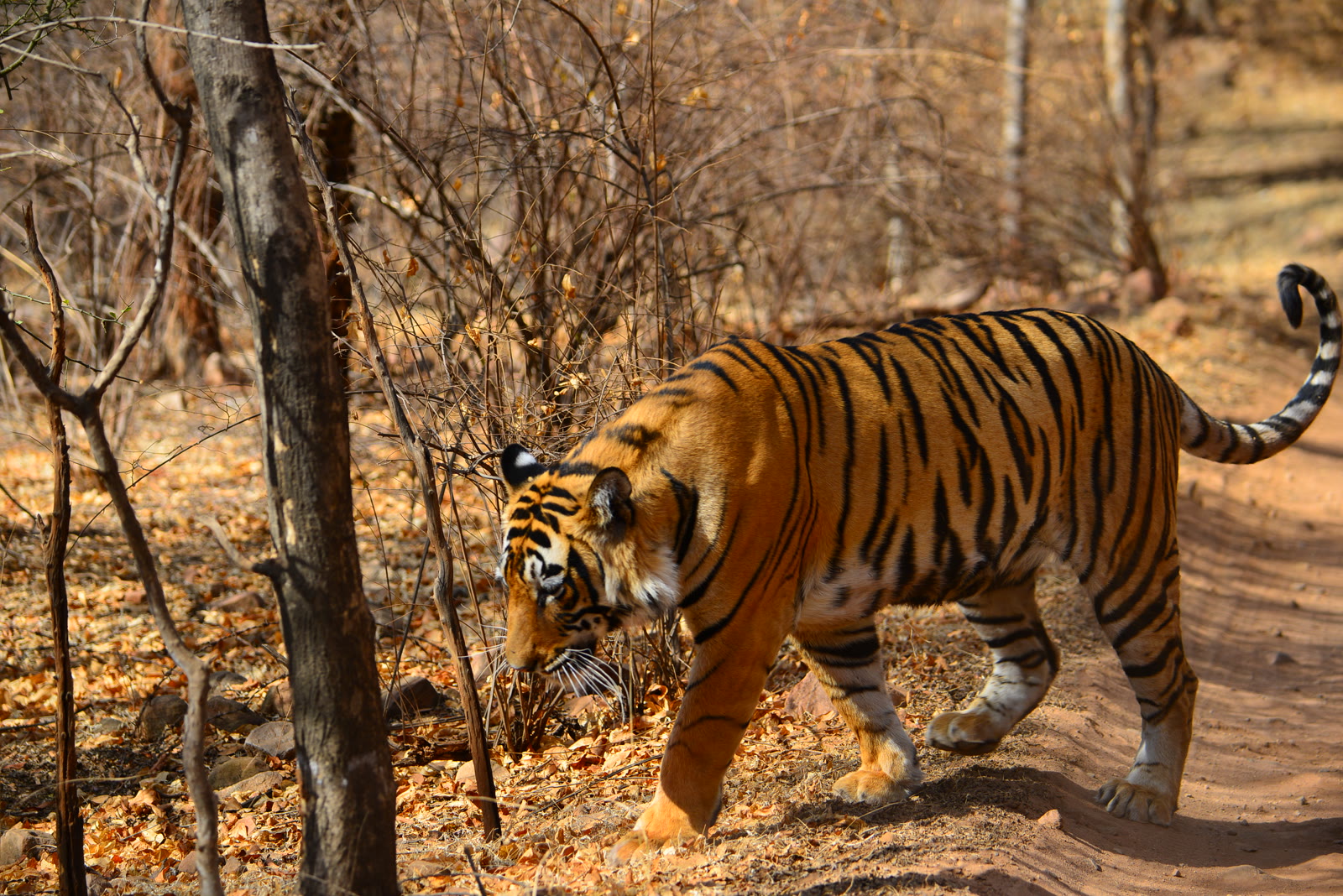
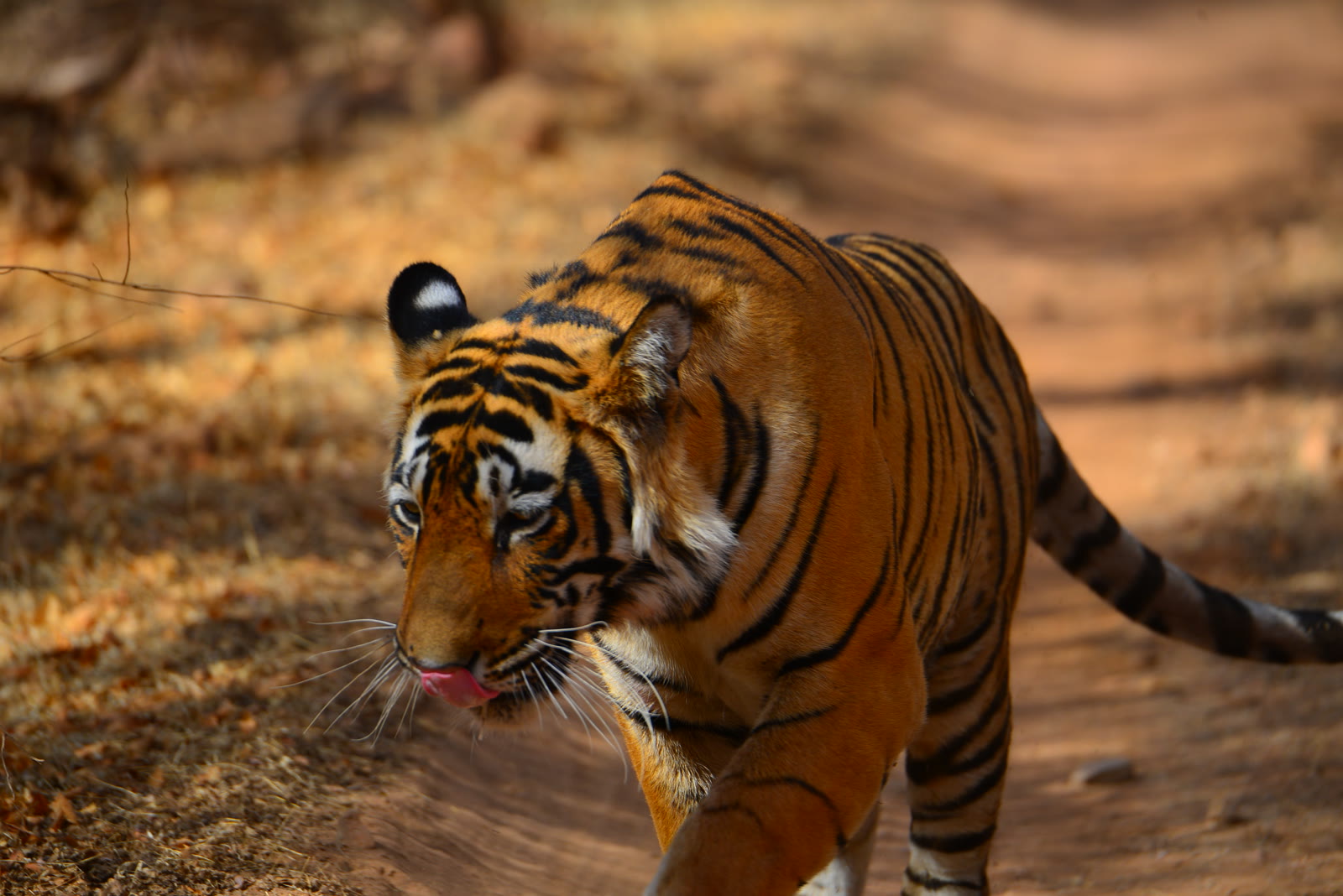
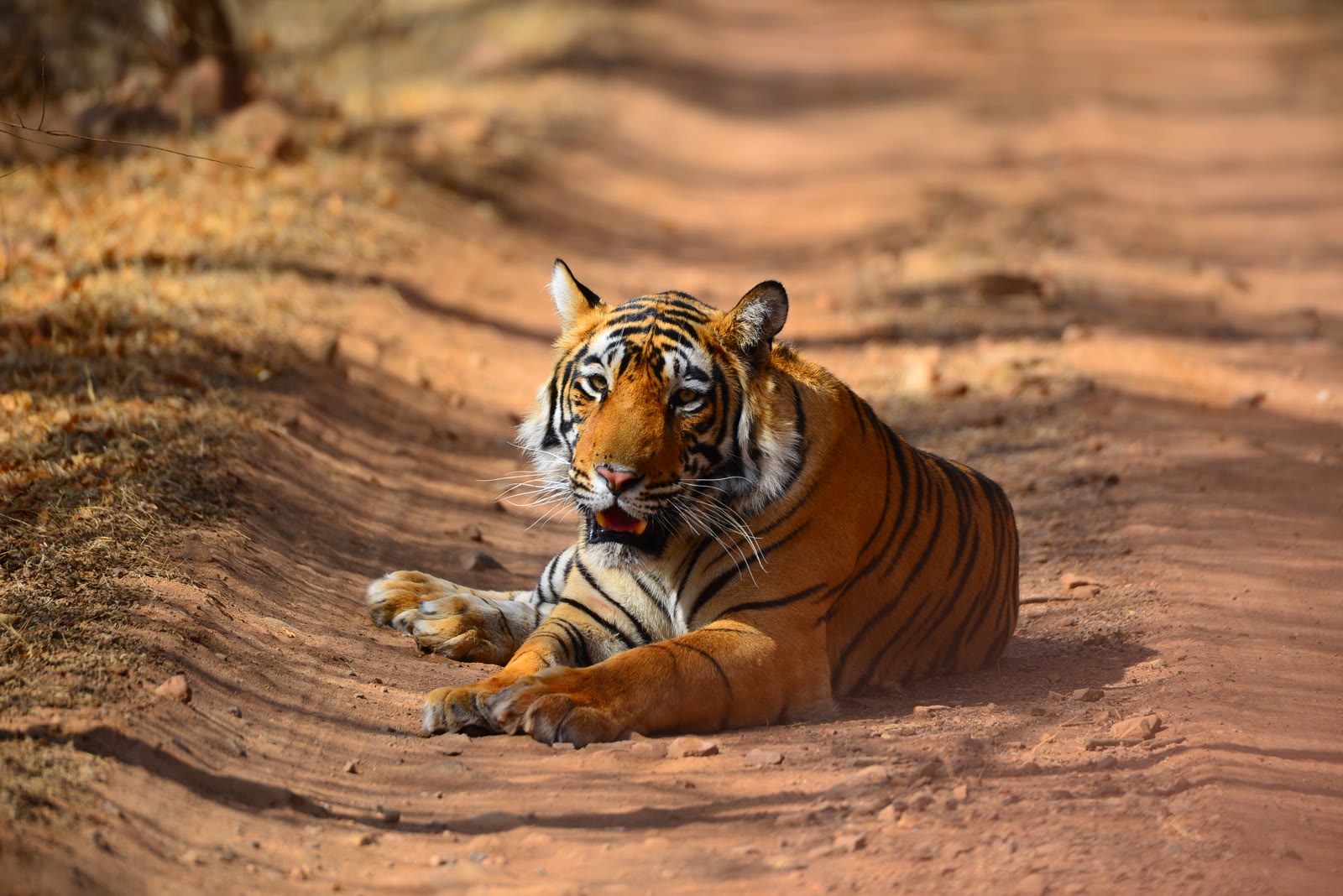
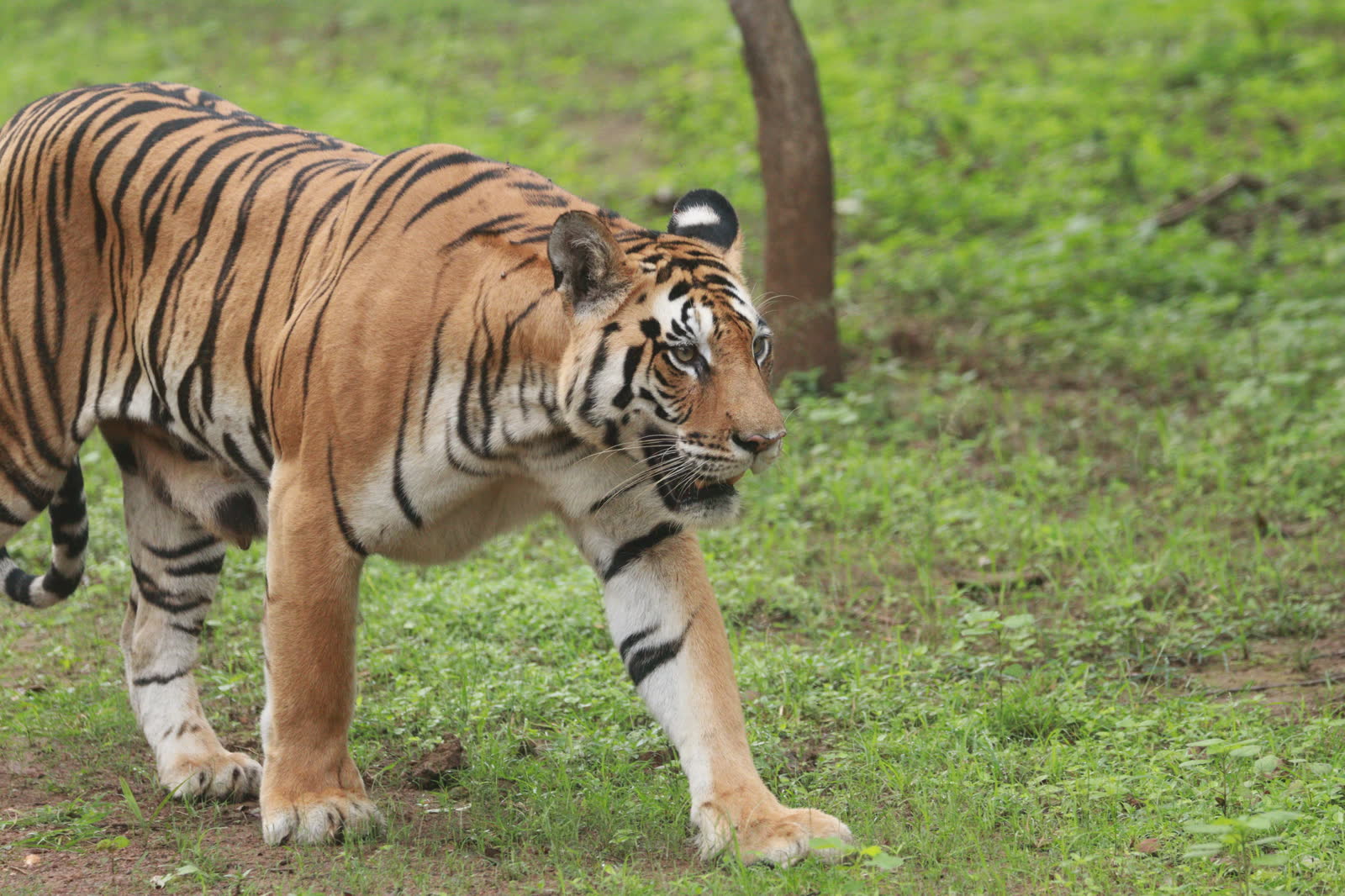
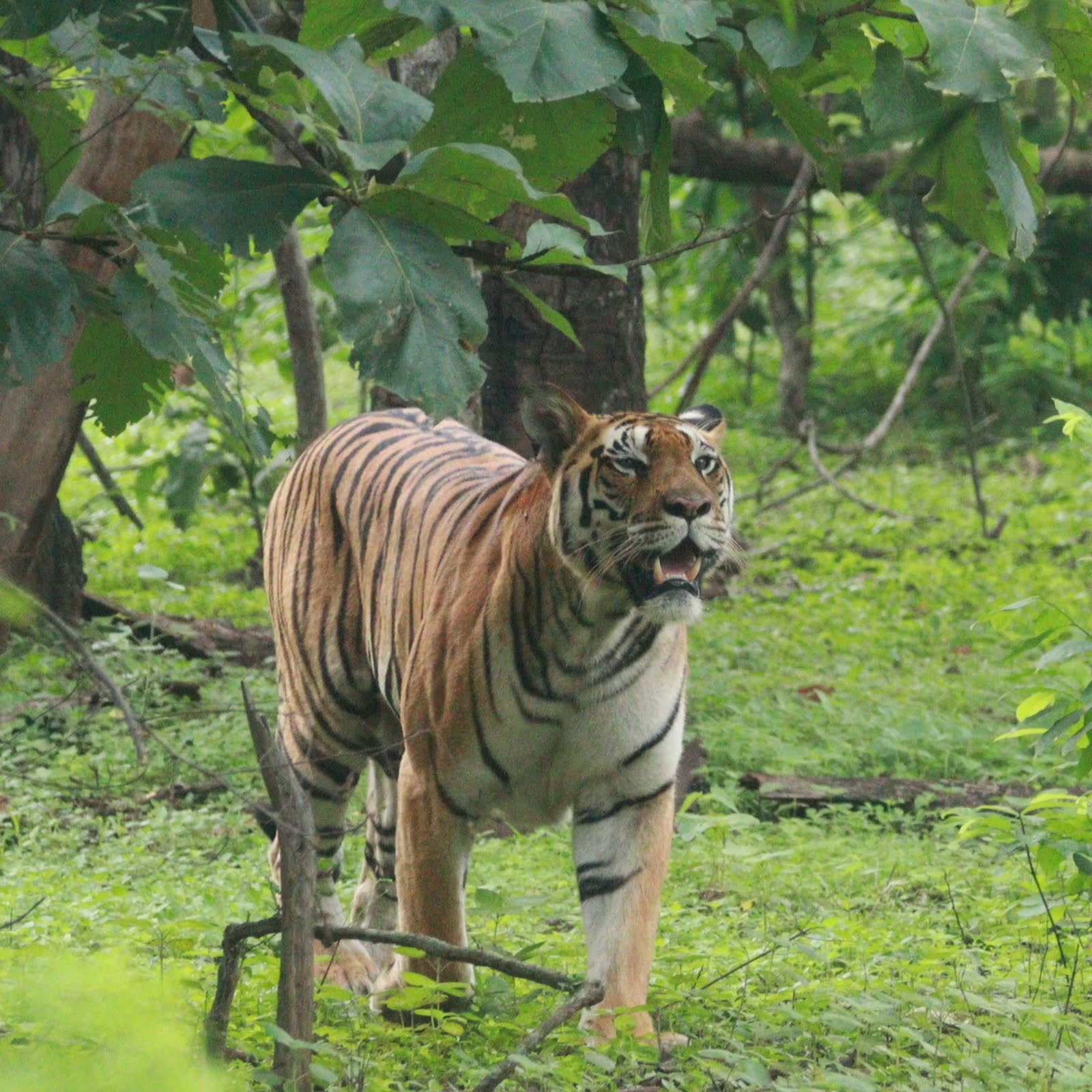
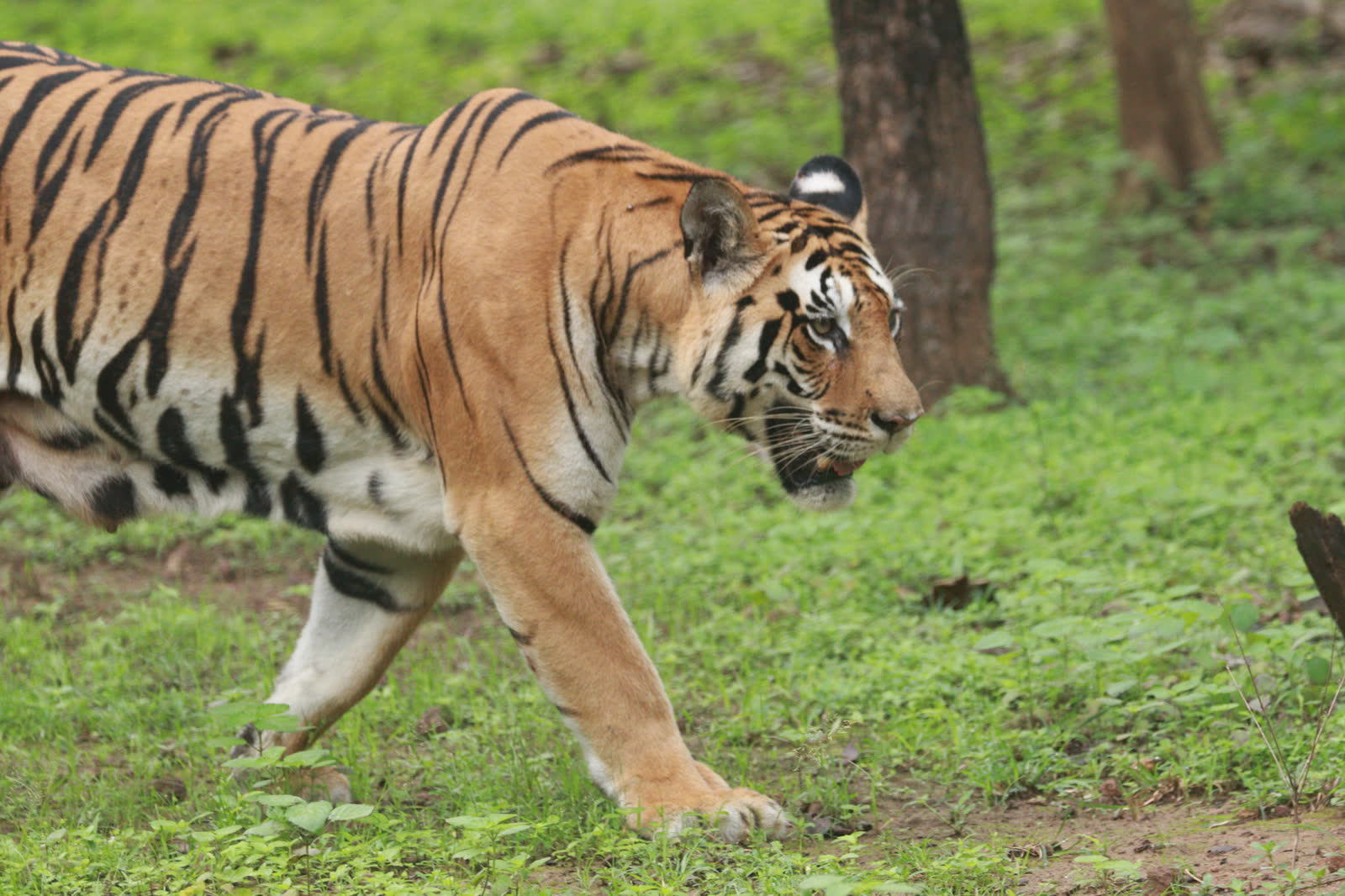
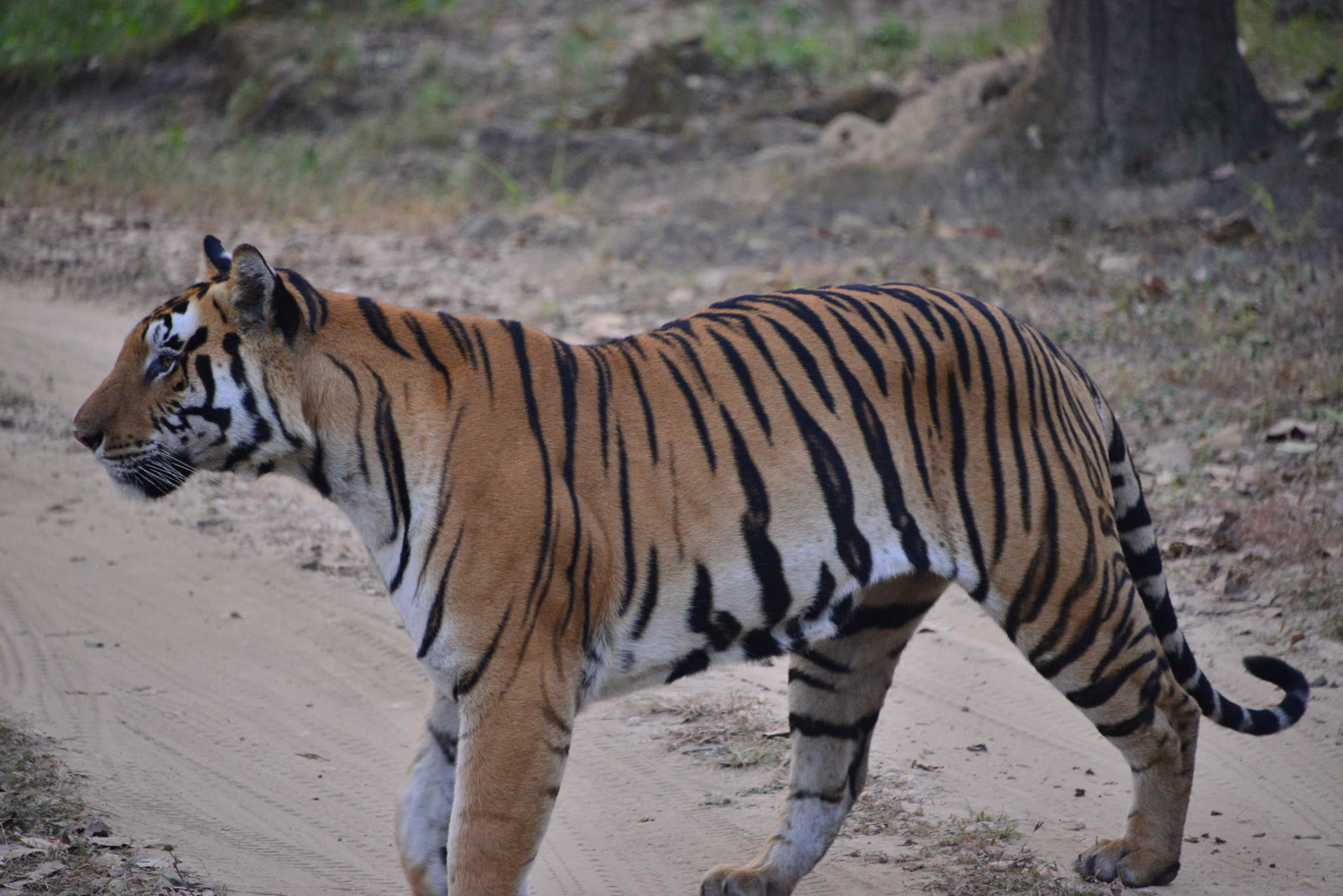
What sets Sariska apart is its story. In 2008 the first tiger was moved from Ranthambore by helicopter, in the first aerial translocation of a tiger, beginning one of India's most celebrated tiger reintroductions. Today around 30 tigers live here, and leopards, sloth bear, caracal and striped hyaena add to the variety. Leopard sightings are a particular strength of the reserve.
History is woven through the forest. The ruins of Kankwari Fort stand in the interior, the Pandupole Hanuman temple sits beside a rock cleft associated with the Pandavas, and the temples of Neelkanth and the ruined town of Bhangarh lie just beyond the Tehla gate. A former royal hunting lodge in the park operates as a heritage hotel.
What to expect: morning and afternoon drives in a jeep for up to six guests or a shared canter, through dry deciduous forest, hilltops and ruined temples. Drives are quiet, uncrowded and scenic, with leopard, sambar and peafowl regular and tigers a rewarding highlight that can never be promised.
Facts About Sariska National Park
| Information | Details |
|---|---|
| Location | Alwar district, Rajasthan, in the Aravalli Range |
| State | Rajasthan |
| Established | Reserve 1955; sanctuary 1958; Project Tiger reserve 1978; national park 1982 |
| Area | Tiger reserve 1,203 km²; core about 881 km²; buffer about 322 km² |
| Protected Area Type | National park within a tiger reserve |
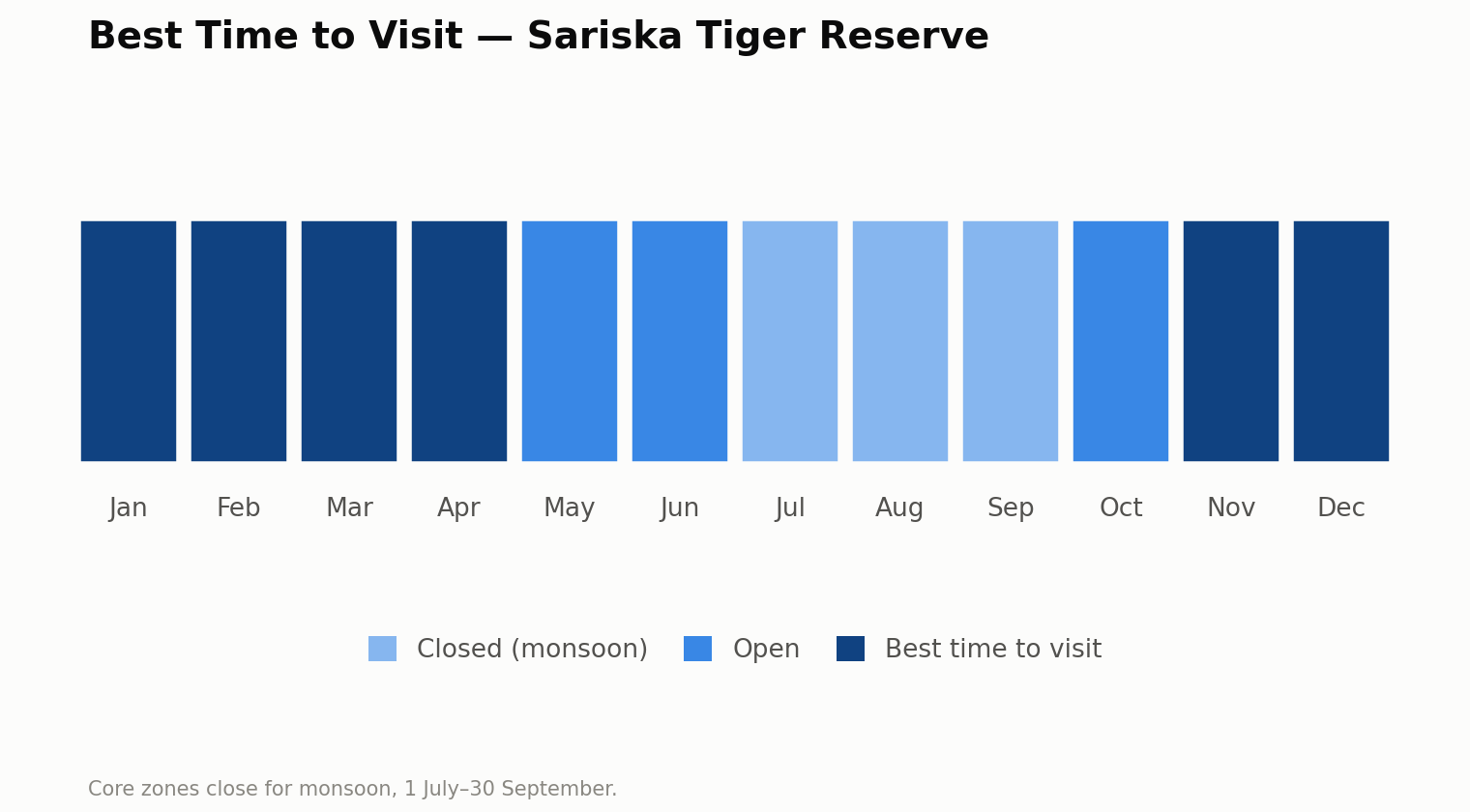
| Functional Days | Two daily shifts; all zones open from 1 October to 30 June |
| Annual Closure | The core zones rest from 1 July to 30 September; buffer routes may remain open |
| Weekly Offs | Tuesdays and Saturdays are set aside for pilgrim traffic to the Pandupole temple |
| Best Time to Visit | October to March |
| Recommended Safari Duration | Two nights with three to four drives across different zones |
| Vegetation | Dry deciduous dhok forest, scrub-thorn, grassland and rocky hills |
| Elevation | About 300–722 m |
| Major Wildlife | Tiger, leopard, sloth bear, caracal, striped hyaena, sambar, chital, nilgai |
| Famous For | Tiger reintroduction, leopards, Kankwari Fort and Pandupole temple |
Functional days. Drives run in a morning and an afternoon shift, roughly 6:30 to 9:00 am and 3:00 to 6:00 pm, with timings following the season.
Yearly off. The core zones rest through the monsoon breeding season and reopen on 1 October, when the forest is green and the reservoirs are full.
Weekly offs and rules. Jeeps and canters run on most days, and only authorised vehicles enter the safari zones. On Tuesdays and Saturdays, private vehicles may visit the Pandupole temple.
Tiger Density and Other Major Species
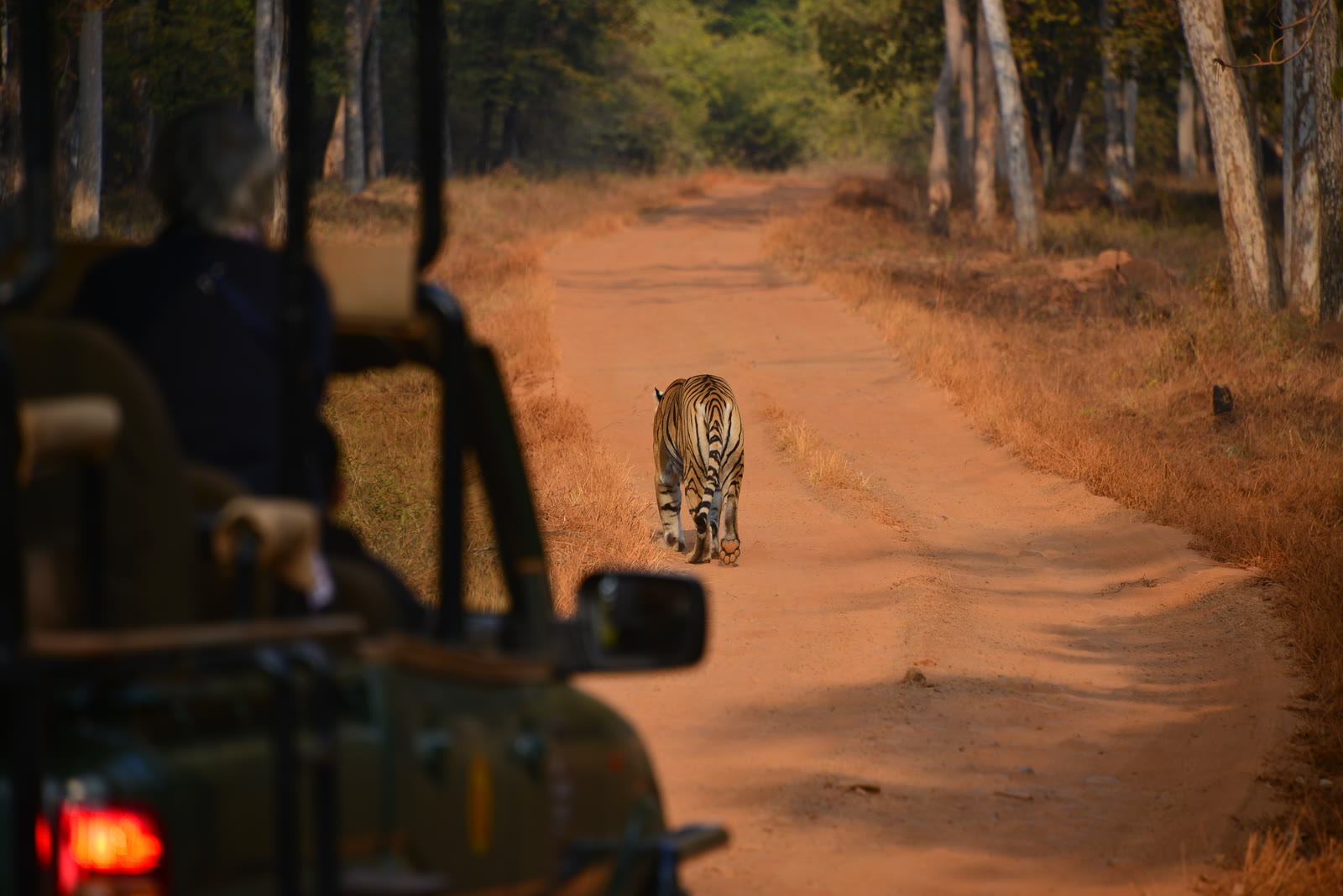
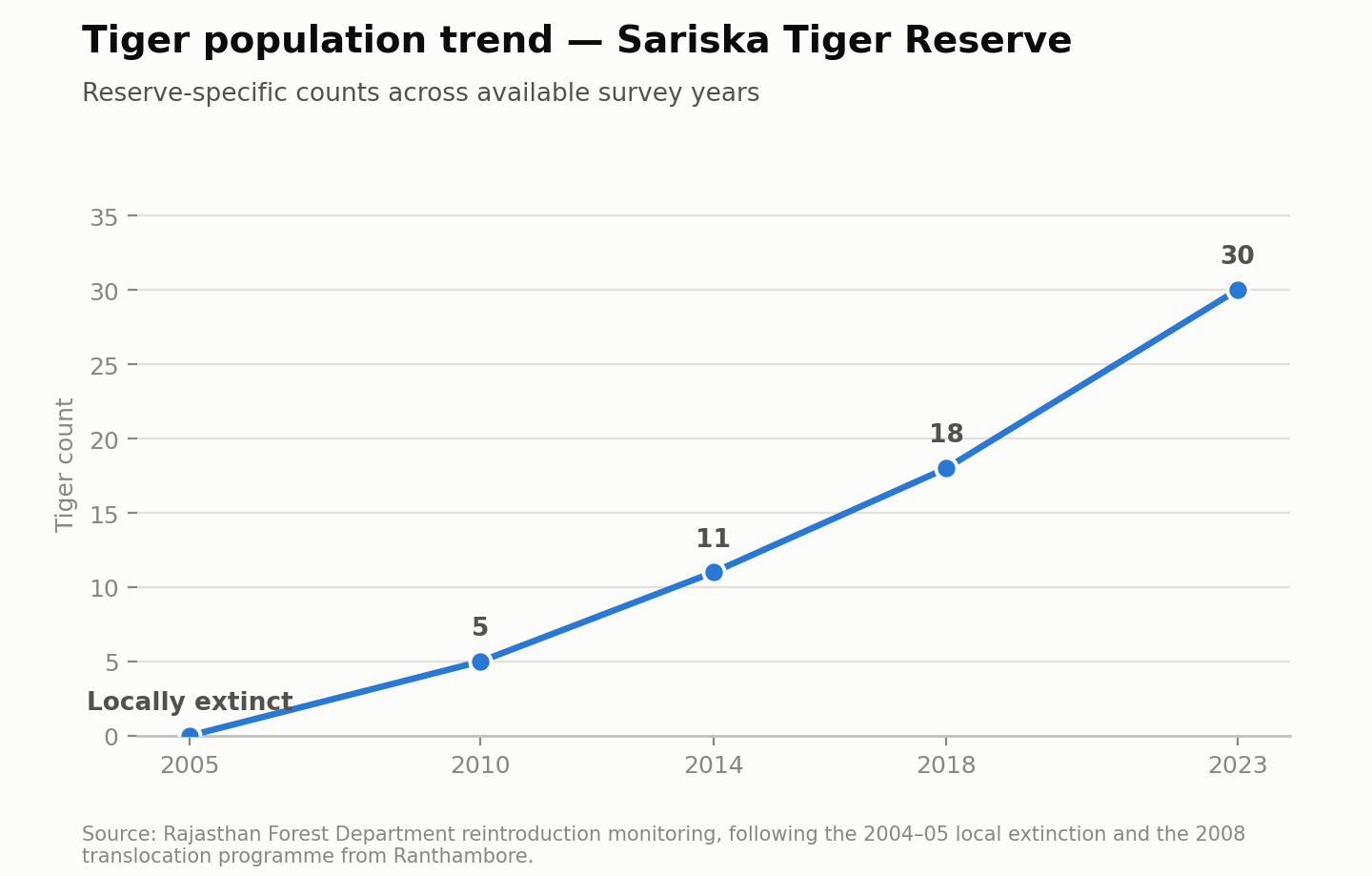
Sariska is one of India's most inspiring conservation stories. Tigers were reintroduced from Ranthambore beginning in 2008, and the population has grown steadily since.
| Year | Event or estimate | Tigers |
|---|---|---|
| 2008 | First tigers translocated from Ranthambore | 2 |
| 2010 | Five tigers, two males and three females | 5 |
| 2012 | Cubs recorded | 7 |
| 2014 | Further cubs recorded | 11 |
| 2018 | Population including cubs | 18 |
| 2020 | Population | 20 |
| 2023 | Population | About 30 |
The recovery shows how a well-protected reserve can restore a tiger population when habitat, prey and protection align. Villages inside the reserve were relocated to give tigers more space, and the reserve's prey base of chital, sambar and nilgai has supported the rise. Tigers here use rocky ridges and valleys, so sightings are a special highlight of the drive.
Other species
- Leopard: Sariska is well regarded for leopards, and sightings are a genuine possibility on many drives, especially in rocky hill areas.
- Sloth bear: Present and seen occasionally.
- Caracal and striped hyaena: Present, rarely seen.
- Prey base: Chital, sambar and nilgai are seen regularly, and wild boar are common.
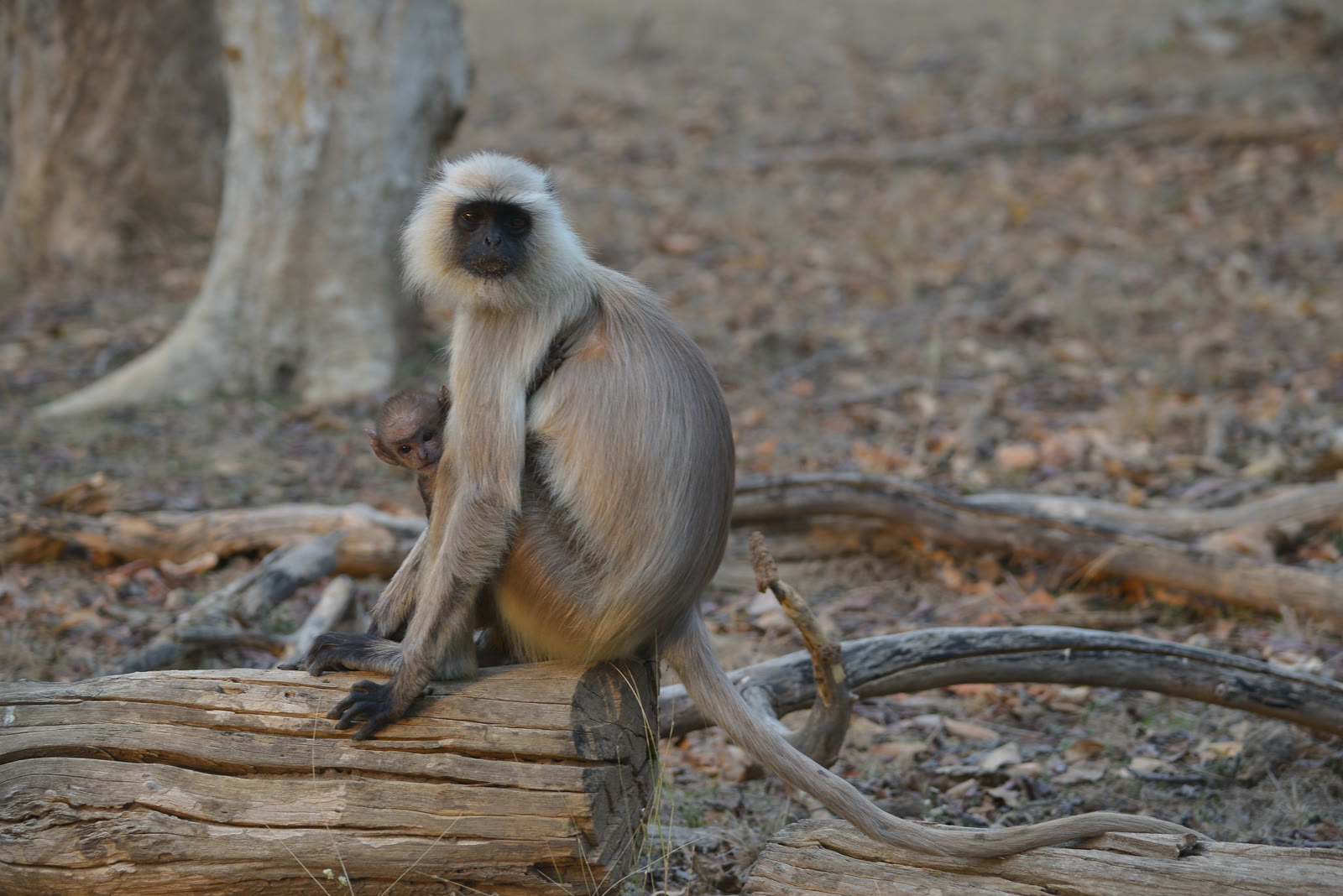
- Primates: Rhesus macaques and northern plains grey langurs are frequent, especially near the temples and gates.
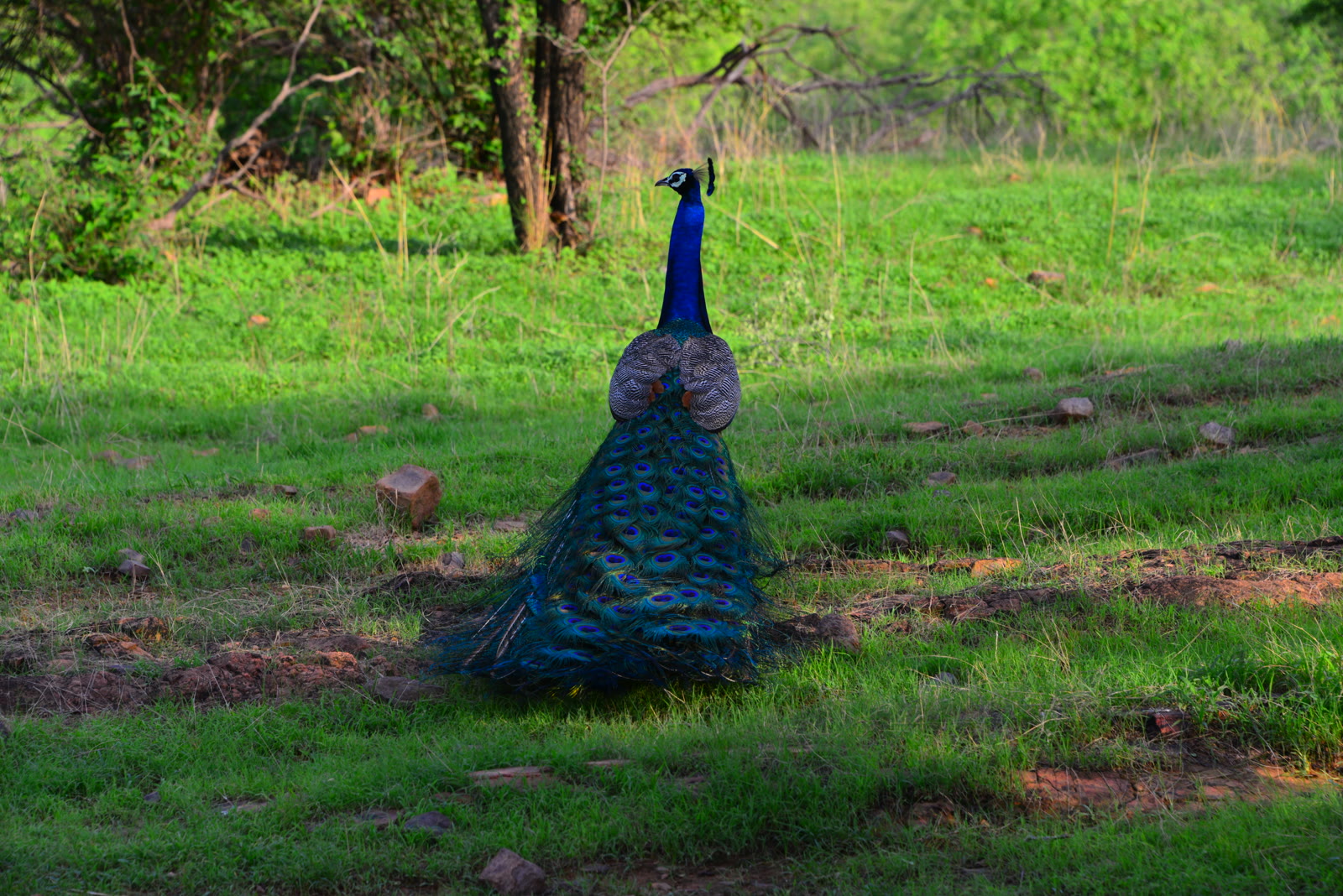
- Birds: More than 220 species, including Indian peafowl, grey francolin, crested serpent eagle and Indian eagle-owl.
Safari Zones in Sariska National Park
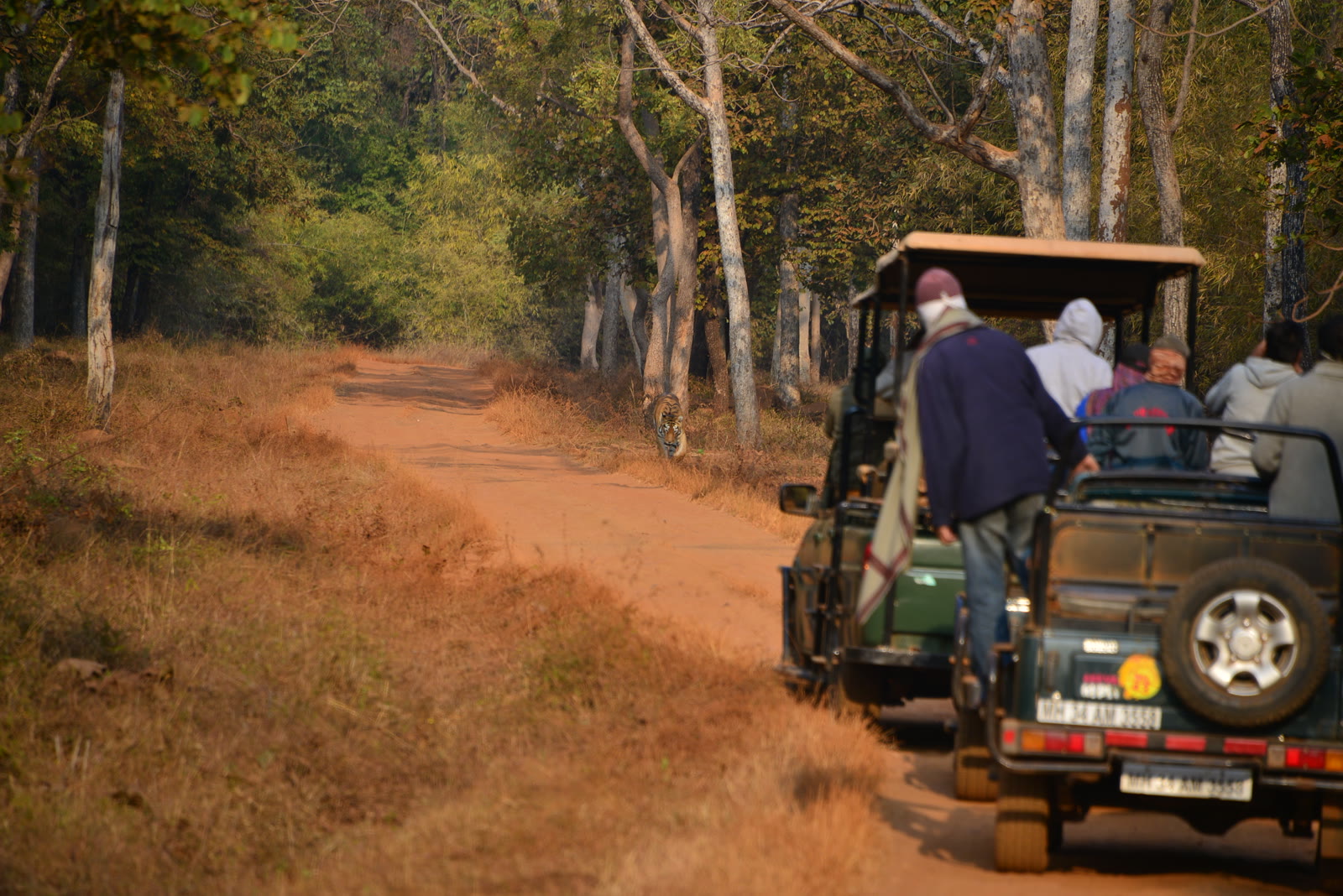
Sariska has two entry gates, each opening onto its own zones. A permit is tied to a zone, and no zone can promise a sighting.
| Gate | Zones | Character |
|---|---|---|
| Sariska Gate (main entrance) | Zones 1 to 3 | Core wildlife routes, Pandupole and Kankwari Fort |
| Tehla Gate | Tehla-side routes | Neelkanth, Bhangarh, Mansarovar Lake and Mangalsar Dam |
Zone 1
Zone 1 is entered through the main Sariska gate and is known for rich wildlife density. It includes the road to Pandupole and Kankwari Fort, with tigers, leopards, sambar, chital and birds all recorded. The Pandupole Hanuman temple, beside a dramatic rock cleft, adds a cultural stop.
Zone 2
Zone 2 is quieter than Zone 1 and offers relaxed drives through dhok forest and open grassland. Many visitors find the lack of crowds part of its appeal.
Zone 3
Zone 3 is as popular as Zone 1 and is often recommended for its strong sightings, with hill routes, waterholes and open valleys where leopards and sambar are seen.
Tehla Gate
Tehla Gate lies on the reserve's northern edge and gives access to historic and scenic places: the Neelkanth temples, the ruins of Bhangarh, and the Mansarovar Lake and Mangalsar Dam. It suits travellers who want to combine wildlife with heritage, and it is a useful alternative when your stay is on the Alwar side.
Vehicles and rules
Jeeps carry up to six guests and canters up to twenty, and each is accompanied by a forest guide. Permits are allotted by zone and gate, so drives from both gates give the fullest picture. India Tiger Safari would be delighted to design your fully private Sariska safari: a bespoke journey through the zones that suit you best, with curated stays, a private jeep and a naturalist guide devoted to your party.
Mammals and Birds
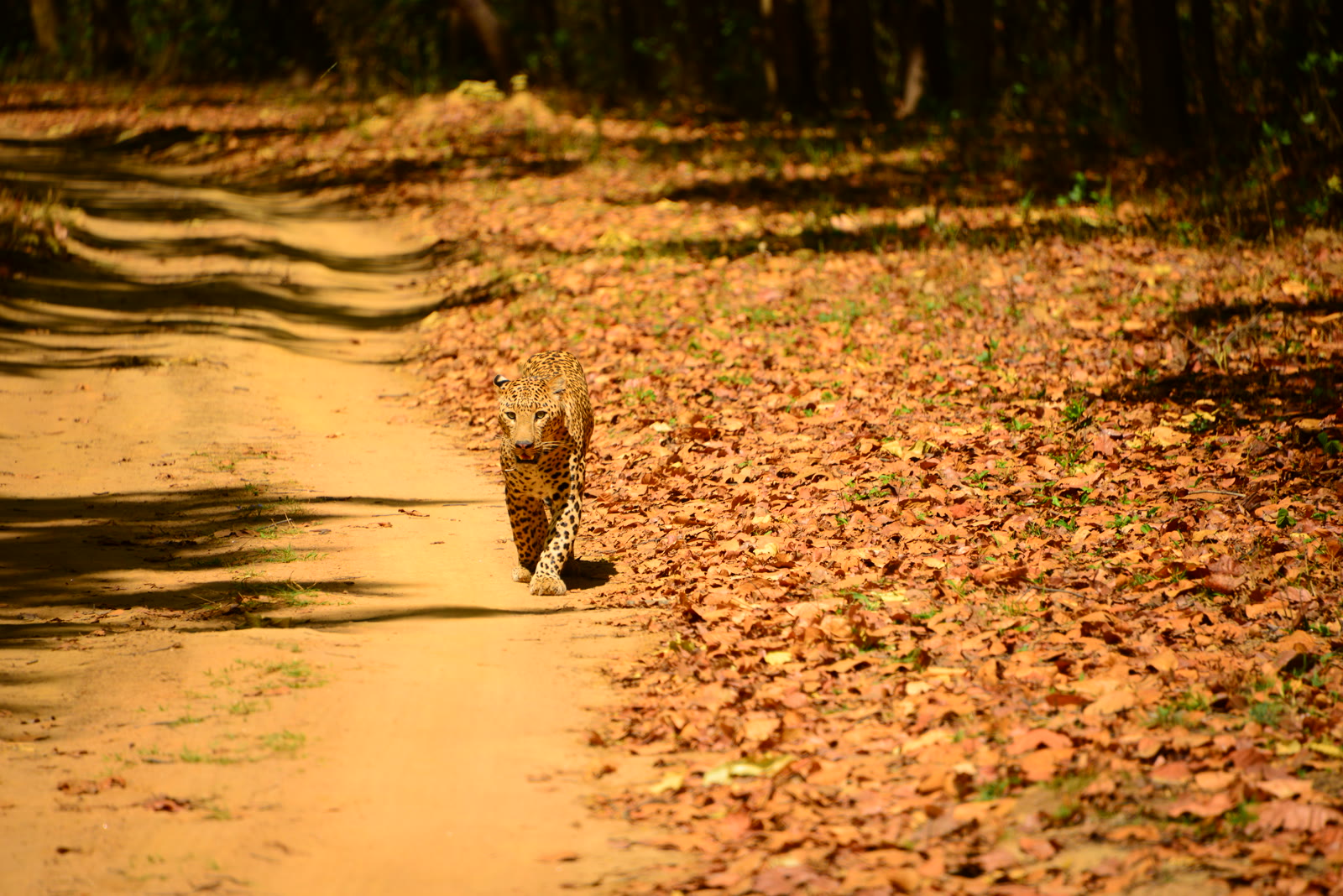
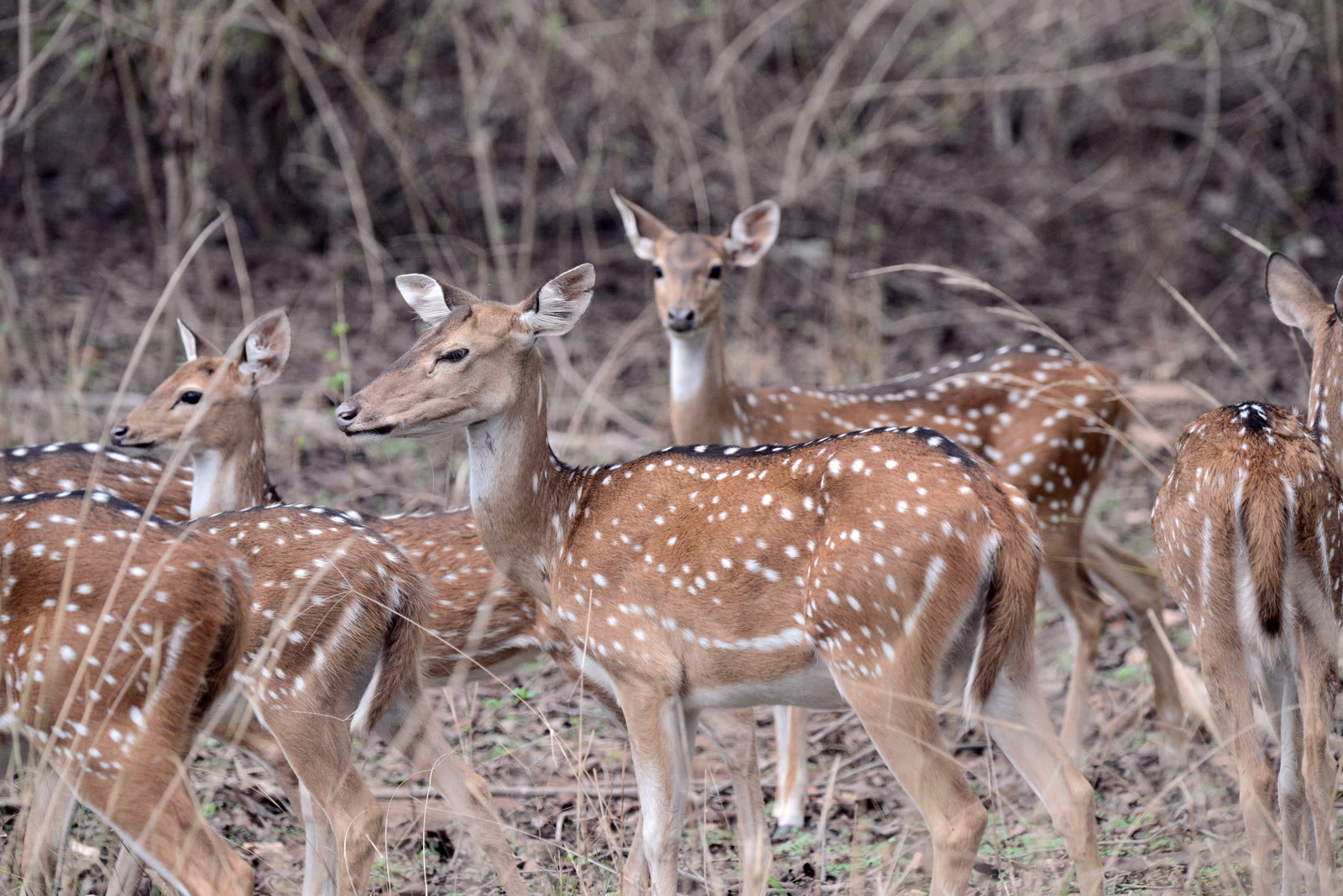
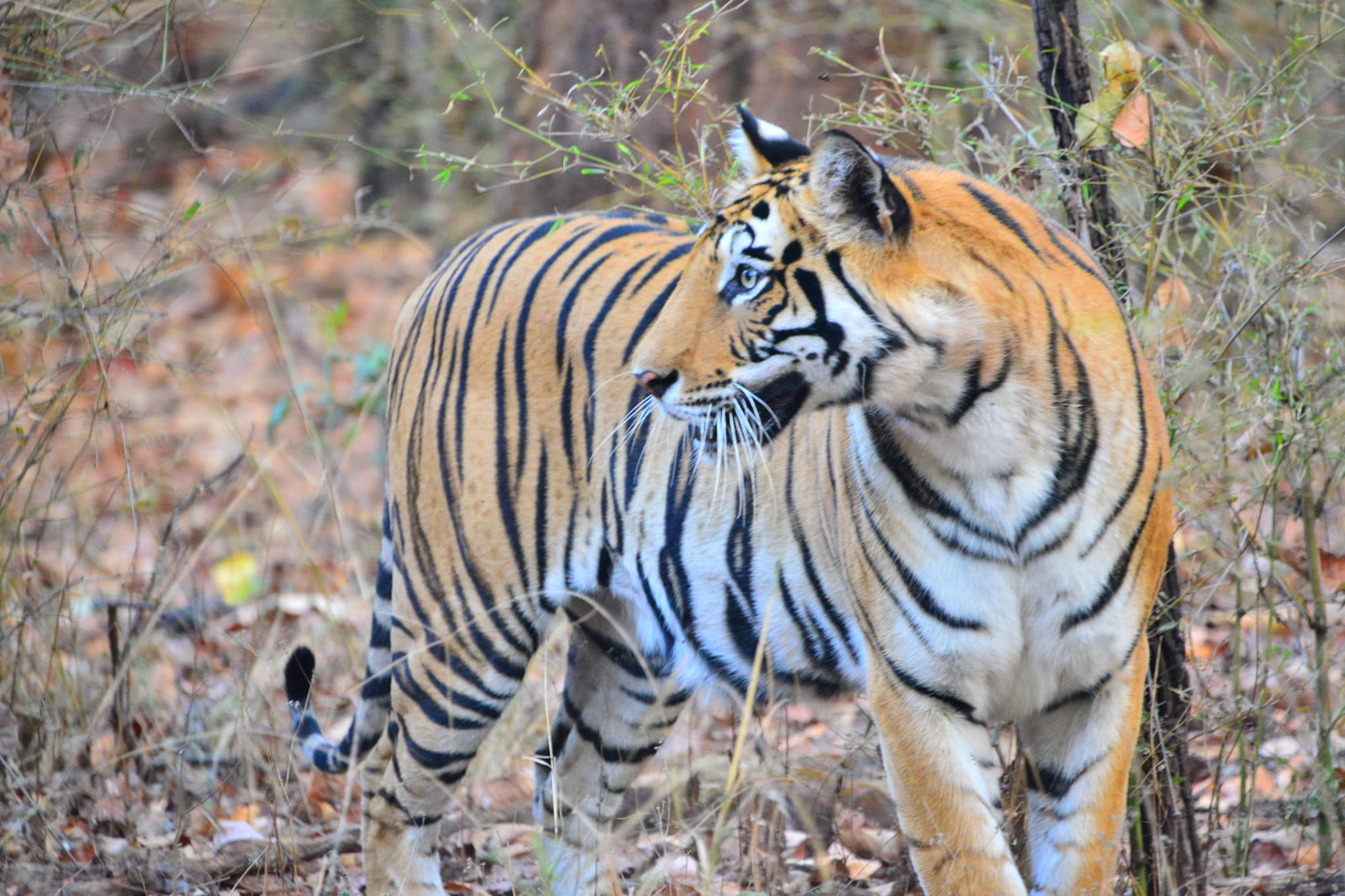
The lists below are representative and not complete.
Mammals
- Tiger
- Leopard
- Sloth Bear
- Jungle Cat
- Caracal
- Striped Hyaena
- Golden Jackal
- Chital
- Sambar
- Nilgai
- Wild Boar
- Small Indian Civet
- Javan Mongoose
- Ruddy Mongoose
- Honey Badger
- Rhesus Macaque
- Northern Plains Grey Langur
- Indian Hare
Birds
- Grey Francolin
- White-throated Kingfisher
- Indian Peafowl
- Bush Quail
- Sandgrouse
- Treepie
- Golden-backed Woodpecker
- Crested Serpent Eagle
- Indian Eagle-Owl
Accessibility
Sariska is one of the most accessible tiger reserves in India, roughly midway between Delhi and Jaipur, and it makes a natural first or last stop. Distances and times below are approximate.
Train
| Station | Distance and road time to the reserve | Why use it |
|---|---|---|
| Alwar Junction | About 35–37 km; roughly 45 minutes to an hour | The nearest major station, with direct trains from Delhi, Jaipur and Mumbai |
| Jaipur Junction | About 107–111 km; roughly two to two and a half hours | A larger hub, useful when combining Sariska with a Rajasthan itinerary |
Air
| Airport | Distance and road time | Onward transport |
|---|---|---|
| Jaipur (JAI) | About 107–111 km; two to two and a half hours | Private transfer |
| Delhi (DEL) | About 200–225 km; four to five hours by road | Private transfer, or train to Alwar |
Jaipur is the closest airport with regular scheduled flights. International guests arrive in Delhi and drive south, and the journey is easy on a good highway.
Road
Delhi (about 200–225 km, four to five hours). A straightforward drive on the Delhi–Jaipur highway via Alwar, and one of the shortest transfers to any tiger reserve.
Jaipur (about 107 km, two to two and a half hours). A comfortable drive through the Aravalli foothills, ideal as part of a Rajasthan journey.
Alwar (about 35 km, roughly 45 minutes). The last town before the reserve, with heritage sites of its own.
Inside the reserve, only authorised safari vehicles are used, with a forest guide.
Accommodation
Sariska offers a compact but appealing choice of stays, from a heritage hunting lodge in the park to riverside lodges and resorts along the highway. This guide describes the character of each option rather than ranking properties.
Heritage stays
A former royal hunting lodge inside the reserve operates as a heritage hotel, with old-world rooms and a setting among the trees. Staying here places you close to the wildlife and the history of the Alwar rulers.
Luxury and boutique lodges
Boutique lodges and resort-style properties near the main gate offer spacious rooms, gardens, pools and dining with regional dishes. They suit couples and small private groups who want comfort between drives.
Resorts and mid-range hotels
Resorts along the Alwar and Jaipur roads offer comfortable rooms and grounds, and are practical for families and short breaks from Delhi.
Budget stays
Guesthouses in Alwar and around the gates offer simple, good-value rooms.
Choosing well
- Gate proximity: Choose a stay near the main Sariska gate for Zones 1 to 3, and near Tehla if you plan to visit Bhangarh and Neelkanth.
- Dining: Lodges offer North Indian and Rajasthani menus and can pack breakfast for early drives.
- Guiding: Forest guides accompany every vehicle, and many lodges can recommend a naturalist.
- Families: Resorts with pools and gardens suit children, and the short journey from Delhi helps.
India Tiger Safari's bespoke private itineraries pair each zone with a curated lodge.
People Also Visit
Sariska sits between Delhi and Jaipur, which makes it an easy addition to a Rajasthan or northern India journey.
Ranthambore National Park
Ranthambore is the natural partner. The two share the same dry deciduous Aravalli landscape, and the tigers that repopulated Sariska came from Ranthambore. Sariska's quiet hill drives contrast with Ranthambore's lakes and fort, and the journey between them via Jaipur takes roughly a day.
Jim Corbett National Park
Corbett makes an easy northern extension from Delhi, with sal forests, the Ramganga river valley and elephants in place of Sariska's rocky ridges. Most itineraries return to Delhi between the two.
Jawai Leopard Reserve
Jawai is a conservation reserve rather than a national park, and it is famed for leopards living among granite hills and temples. It pairs naturally with Sariska's leopards, and the two can be linked by a route through Jaipur and Udaipur.
Keoladeo National Park
Sariska sits within striking distance of Bharatpur's Keoladeo wetlands, and the two make for a natural pairing on a Rajasthan circuit that spans forest and marsh in the same trip. After Sariska's leopard- and tiger-country drives through dry hill forest, Keoladeo's cycle-rickshaw safaris among painted storks, sarus cranes and wintering waterfowl offer a change of pace and habitat. India Tiger Safari can arrange a private itinerary linking the two, with a naturalist guide for each leg of the journey.
Sariska Tiger Reserve FAQs
What is the best time to visit Sariska National Park?
October to March is the most comfortable, with mild weather and green forest after the rains. All zones are open from 1 October to 30 June, while the core zones rest from July to September for the monsoon. April to June is hotter, when animals gather at waterholes and visibility is good.
How many days do you need in Sariska?
Two nights is a comfortable stay, giving three to four drives across different zones and time for Pandupole and Kankwari Fort. It also fits easily into a Delhi–Jaipur journey. India Tiger Safari's bespoke itineraries match nights and zones to your dates.
Can you see tigers in Sariska?
Sariska has around 30 tigers, after one of India's most celebrated reintroductions that began in 2008. Tigers here use rocky ridges and valleys, so a sighting is a special highlight. No sighting can be promised, but leopards, sambar and birds add to every drive.
Which safari zone is best in Sariska?
There is no single best zone. Zones 1 and 3, entered through the main gate, are popular for strong sightings, and Zone 2 offers quieter drives. Tehla Gate suits travellers who want to combine wildlife with Bhangarh, Neelkanth and Mansarovar Lake. Driving two zones gives the fullest picture.
How do Sariska safari bookings work?
Safaris are booked by zone, gate, date and a morning or afternoon shift, in a jeep for up to six guests or a shared canter. Every guest needs valid ID. India Tiger Safari handles permits, vehicles and guides for its private guests, so you can concentrate on the landscape and the animals.
What animals can you see in Sariska?
Tigers and leopards are the big cats, and the reserve is well regarded for leopards. Sloth bear, caracal and striped hyaena are present, while sambar, chital, nilgai and wild boar are seen regularly. More than 220 bird species include Indian peafowl, grey francolin and crested serpent eagle.
How do you reach Sariska National Park?
Alwar Junction, about 35 to 37 km away, is the nearest major station, with direct trains from Delhi and Jaipur. Jaipur airport is about 107 to 111 km, roughly two hours by road. Delhi is about 200 to 225 km, four to five hours by road on a good highway.
Is Sariska suitable for families?
Yes. It is close to Delhi and Jaipur, drives are unhurried, and temples, forts and lakes give children plenty to see between animal sightings. Resorts with gardens and pools suit young guests, and a private jeep lets families set a comfortable pace.
What should you wear on a Sariska safari?
Choose muted greens, browns and khaki, and layer up, since winter mornings in an open jeep are cool. In summer, bring a hat, sunscreen and light long sleeves. Wear closed shoes, avoid strong perfume, and carry binoculars for the birds and distant ridges.
Is a private jeep available in Sariska?
Yes. A jeep permit covers one vehicle for a small party, so a private group can have it to itself. India Tiger Safari arranges a private jeep and a naturalist guide devoted to your party as part of its bespoke journeys.