Keoladeo National Park: Safari Guide
One of Asia's great heronries and a UNESCO World Heritage wetland
About Keoladeo National Park
Keoladeo National Park sits on the eastern edge of Bharatpur city in eastern Rajasthan, roughly 50 km west of Agra and about 180 km south of Delhi. Compact by Indian national park standards, it covers just 29 sq km (2,873 hectares), yet its wetlands hold one of the densest concentrations of birdlife anywhere on the subcontinent. The site began life in the late nineteenth century as a private duck-shooting reserve of the Maharajas of Bharatpur, who engineered a network of low earthen bunds to channel monsoon floodwater from the adjoining Ajan Bandh reservoir into a system of shallow marshes. Hunting continued on a controlled basis until 1972; the area was declared a bird sanctuary in 1976, recognised as a Ramsar wetland of international importance in 1981, notified as a national park in 1982, and inscribed as a UNESCO World Heritage Site in 1985.
The landscape is flat Gangetic plain, threaded by raised bunds that double as walking and cycling paths between a mosaic of seasonal wetlands, dry grassland and open woodland dominated by acacia, kadam and jamun. Roughly a third of the park floods each monsoon, and the depth and timing of that flooding — still managed today much as it was under the old royal engineering — governs where the herons, storks and ducks gather through the rest of the year.
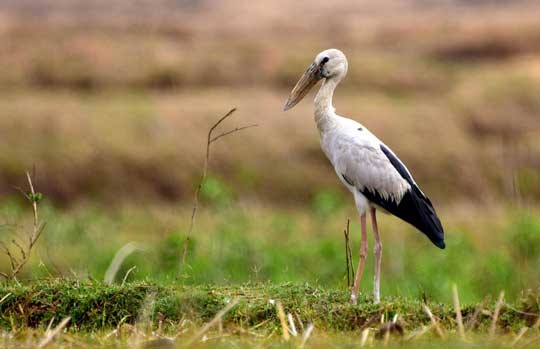
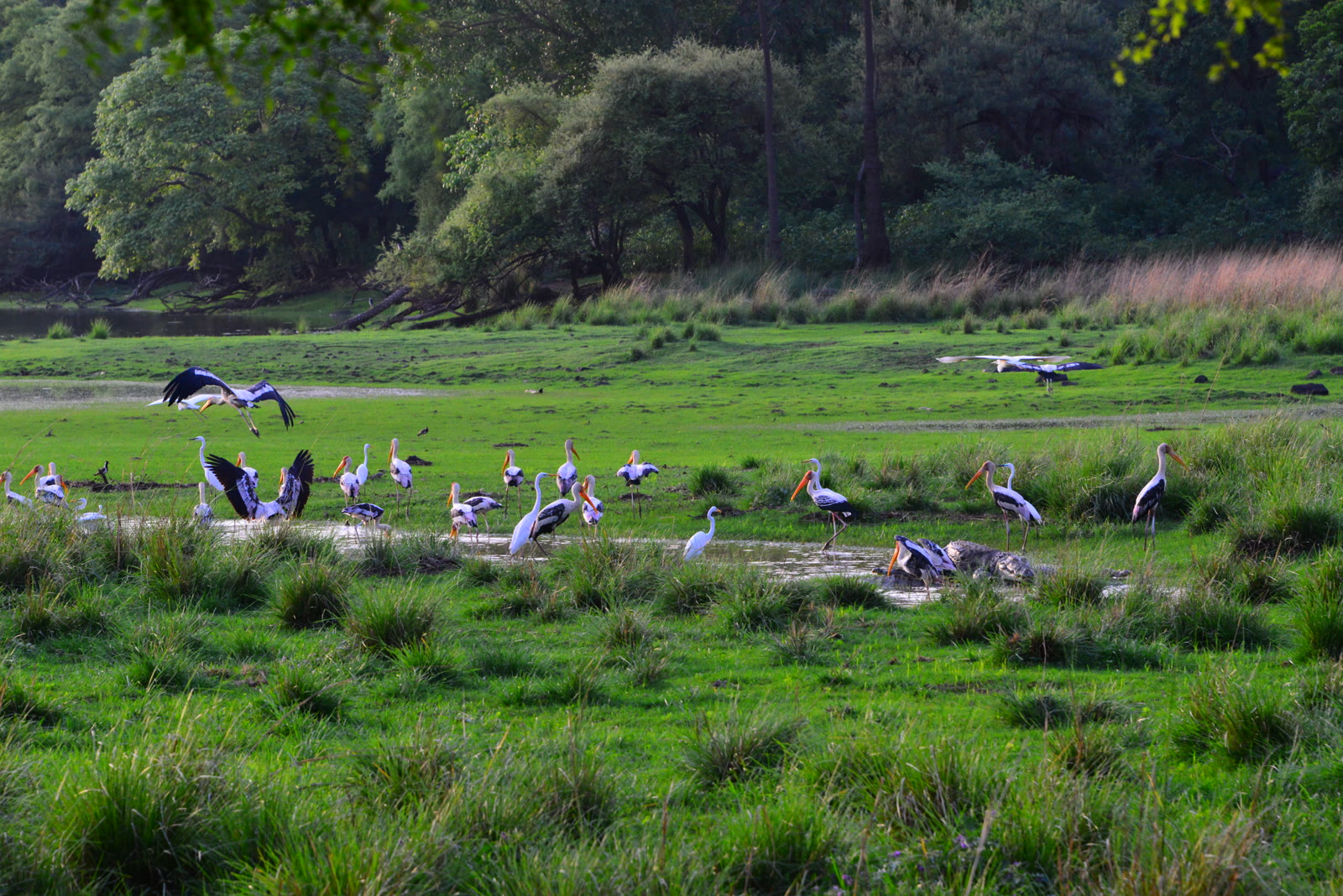
What sets Keoladeo apart is not scale but density and history. Its heronries rank among the finest in Asia, with painted storks, cormorants, darters and egrets nesting by the thousand in the same low trees each monsoon. The park carries a storied place in global birding history as a wintering ground once used by the Siberian crane, and it remains a first-choice staging post for waterfowl arriving in the Indian subcontinent from Central Asia and Siberia each winter. Its 1985 UNESCO inscription cited exactly this: a wetland ecosystem whose scale of breeding and migratory bird activity has few equals worldwide.
At its heart stands the Keoladeo Temple, a modest Shiva shrine that gives the park its name and remains a quiet, still point amid the wetlands. Because the park is walked, cycled or explored by cycle-rickshaw rather than driven, a visit here has an intimacy that larger tiger reserves cannot offer — slow, close, unhurried encounters with birds and mammals at eye level along the bunds.
What to expect: Expect painted storks, sarus cranes and thousands of migratory waterfowl on the wetlands, alongside nilgai, sambar and the Indian rock python along the drier trails. Sightings of headline species, while never promised, are frequent, especially in the winter months when the marshes are at their fullest.
Facts About Keoladeo National Park
| Category | Details |
|---|---|
| Location | Bharatpur district, eastern Rajasthan |
| State | Rajasthan |
| Established | Bird Sanctuary 1976 · National Park 1982 · UNESCO World Heritage Site 1985 |
| Area | 29 sq km (2,873 hectares) |
| Protected Area Type | National Park, Ramsar Wetland, UNESCO World Heritage Site |
| Functional Days | Open all 365 days of the year |
| Annual Closure | None |
| Weekly Offs | None |
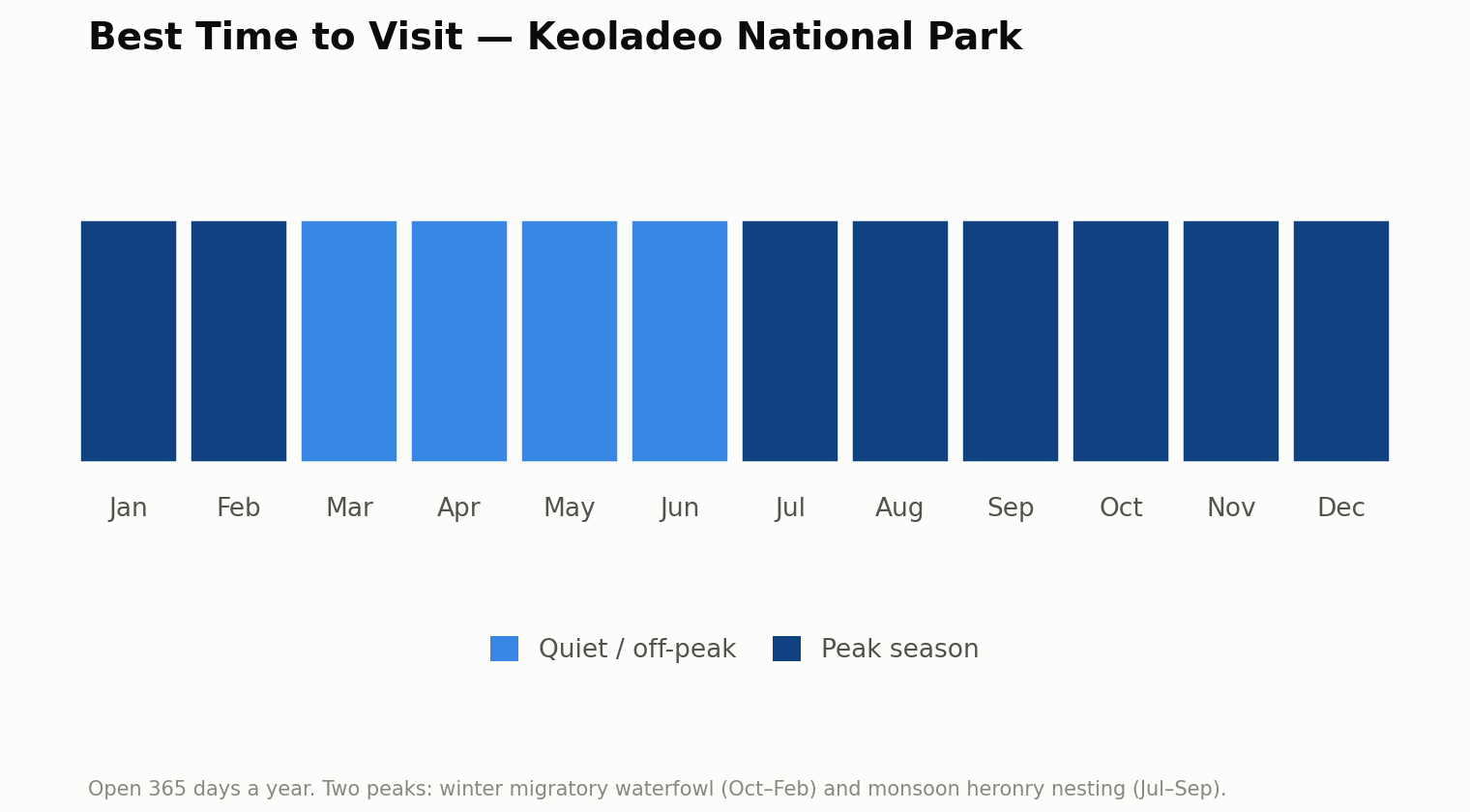
| Best Time to Visit | October to February (migratory birds); July to September (nesting season) |
| Recommended Safari Duration | Half day to full day (3-6 hours) |
| Vegetation | Seasonal wetlands, dry grassland, open acacia and kadam woodland |
| Elevation | Approximately 174 m |
| Major Wildlife | Painted stork, sarus crane, nilgai, sambar, Indian rock python |
| Famous For | One of Asia's great heronries and a UNESCO World Heritage wetland |
Functional days. Keoladeo is open every day of the year, generally from around sunrise to sunset, with slightly longer hours in summer than in winter.
Yearly off. Unlike India's tiger reserves, Keoladeo has no monsoon closure. The wetlands are, if anything, at their most dramatic in July and August, when resident storks and herons nest in large numbers.
Weekly offs and rules. There are no weekly closures. Private motor vehicles are not permitted inside the park; visitors move by foot, bicycle, or cycle-rickshaw with a trained naturalist-puller, and a small fleet of battery-operated vehicles is available for those who prefer not to cycle.
Major Species
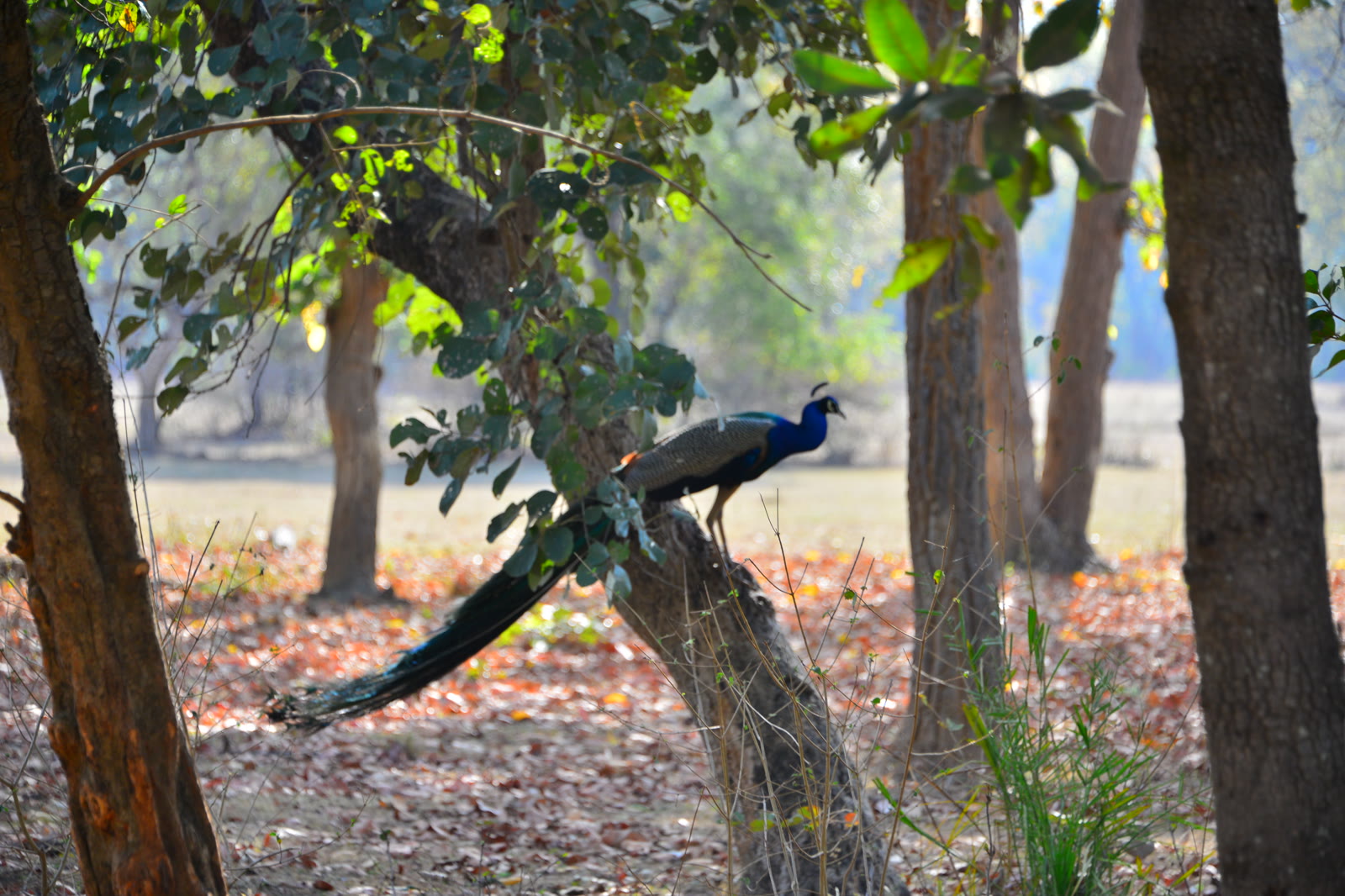
Keoladeo's story is written in feathers rather than stripes. This is a UNESCO World Heritage wetland sanctuary, not a tiger habitat, and its reputation rests entirely on the scale and density of its birdlife rather than on any big cat. For visitors expecting the pattern of India's tiger reserves, it helps to reset expectations early: the headline numbers here are nesting pairs and migratory arrivals, not big-cat census figures.
| Indicator | Figure |
|---|---|
| Bird species recorded | 370+ |
| Resident and migratory waterbird families breeding here | Storks, herons, cormorants, ibises, egrets |
| Painted stork heronry (peak monsoon) | Among the largest in Asia, thousands of nesting pairs |
| Siberian crane | Historic winter visitor, part of the park's global birding legacy |
The monsoon nesting season, roughly July to September, is when Keoladeo's numbers are most visible: painted storks, openbill storks, cormorants and egrets crowd the same low trees around the central wetlands in colonies that number in the thousands. Winter, from October to February, brings the migratory arrivals — bar-headed geese, a wide range of ducks, and raptors that follow the waterfowl south. The wetland loop near Keoladeo Temple and the marshes around Mansarovar and Sapan Mori are consistently the most productive stretches for both.
Among mammals, nilgai and sambar are the species most visitors come across along the drier bunds, and the Indian rock python at Python Point is one of the park's signature non-avian sightings. As with any wild landscape, encounters are never guaranteed, but given the density of activity in Keoladeo's wetlands, meaningful sightings of both birds and mammals are frequent through most of the year.
Other species
- Nilgai: India's largest antelope, regularly seen grazing the grassland edges.
- Sambar and chital: Both deer species are common around the wetland margins.
- Wild boar and golden jackal: Frequently spotted along the bunds, particularly at dawn.
- Fishing cat and jungle cat: Present but elusive, most often seen near the water at quieter hours.
- Rhesus macaque and hanuman langur: Common around the woodland and temple precinct.
- Indian rock python: The park's best-known reptile, often found basking near Python Point.
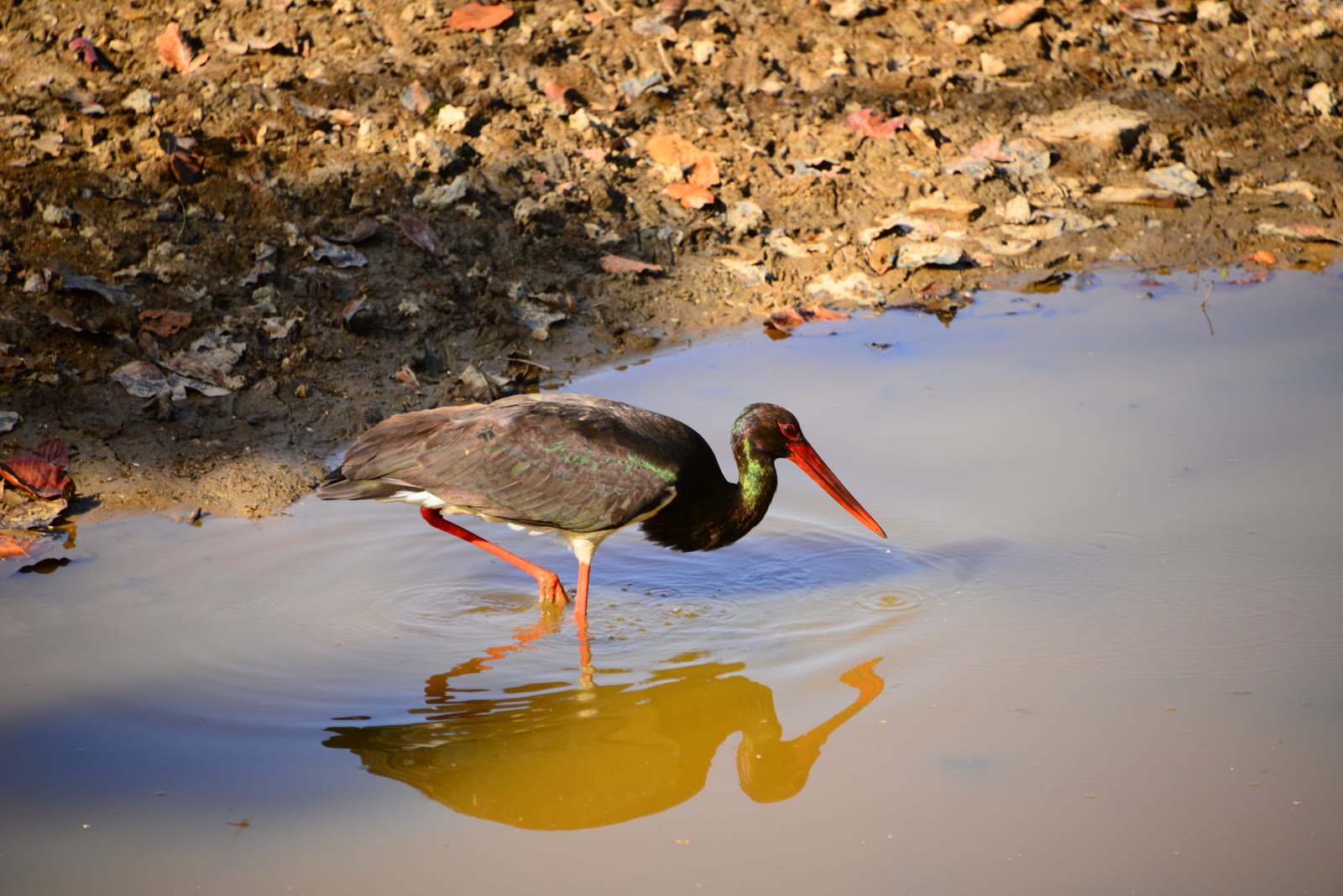
- Birds: Keoladeo's true headline act — painted storks, black-necked storks, woolly-necked storks, Asian openbills, Eurasian spoonbills, glossy and black-headed ibises, darters, cormorants, grey and purple herons, night herons, egrets of four species, sarus and demoiselle cranes, bar-headed and greylag geese, gadwall, shoveler, pintail and teal among the wintering ducks, ospreys, marsh harriers, Pallas's fish eagle, peregrine falcons, and a long list of kingfishers, bee-eaters and warblers that keeps even experienced birders returning trip after trip.
Safari Zones in Keoladeo National Park
Keoladeo has no jeep zones in the conventional sense; instead, a network of raised bunds divides the wetland into distinct walking and cycling stretches, all accessible from a single entrance near Bharatpur city. Most visits combine two or three of these stretches over a half or full day.
| Zone | Area | Character |
|---|---|---|
| Keoladeo Temple wetland loop | Central | The park's richest heronry stretch, close to the main gate |
| Python Point and woodland trail | Western | Drier acacia woodland, reptiles and mammals |
| Mansarovar and Sapan Mori | Northern | Open marsh, strong for waterfowl and waders |
| Shanti Kutir | Southern | Quieter stretch, good for a slower final circuit |
Keoladeo Temple wetland loop
The most visited stretch, this loop rings the wetlands closest to the historic Shiva temple and holds the densest heronries in the monsoon and the best duck concentrations in winter. It is usually the first stop on any visit.
Python Point and woodland trail
A drier, wooded stretch where the going shifts from wetland to scrub and open acacia woodland. It is the most reliable area for the Indian rock python, nilgai and sambar, and a good complement to the wetter zones.
Mansarovar and Sapan Mori
An open marshland stretch to the north that fills dramatically in a good monsoon and draws large numbers of migratory geese and waders through the winter. It rewards an unhurried pace and a good pair of binoculars.
Shanti Kutir
A quieter southern stretch, less crowded than the temple loop, well suited to a slower final circuit or a second visit focused on close observation rather than covering ground.
Ways to explore
Keoladeo is walked, cycled, or toured by cycle-rickshaw with a trained naturalist-puller who doubles as a spotter; a small number of battery-operated vehicles are also available for those who prefer not to pedal, and shallow punt boats are used along the flooded central wetlands in the monsoon and winter months when water levels allow. No private motor vehicles are permitted inside. India Tiger Safari would be delighted to design your fully private Keoladeo safari: a bespoke journey through the trails and wetlands that suit you best, with curated stays, a private naturalist guide and cycle-rickshaw devoted to your party.
Mammals and Birds
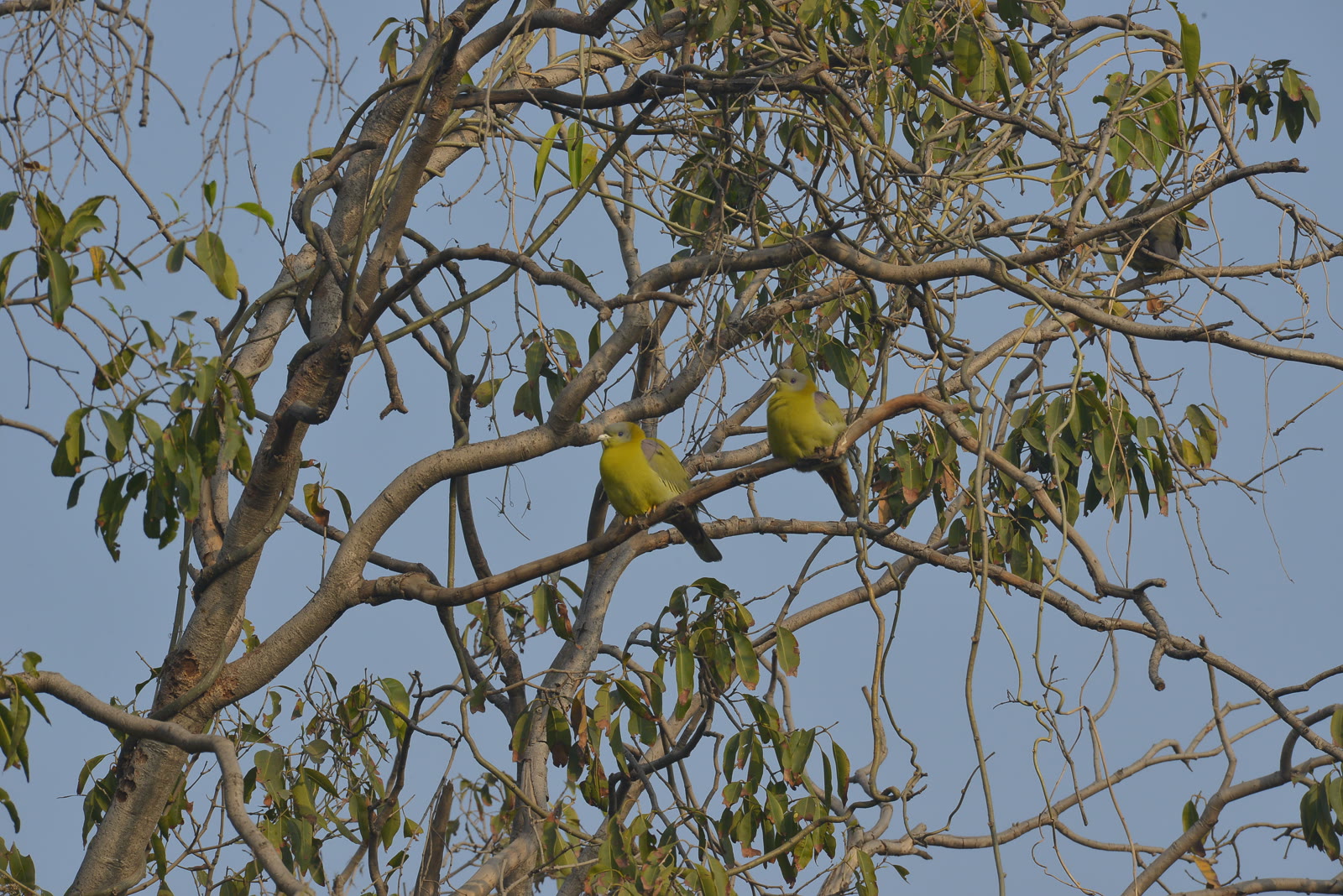
The lists below are representative and not complete.
Mammals
- Nilgai
- chital
- sambar
- wild boar
- golden jackal
- striped hyena
- fishing cat
- jungle cat
- leopard cat
- small Indian civet
- common palm civet
- smooth-coated otter
- Indian porcupine
- rhesus macaque
- hanuman langur
- Indian flying fox
- five-striped palm squirrel.
Birds
- Painted stork
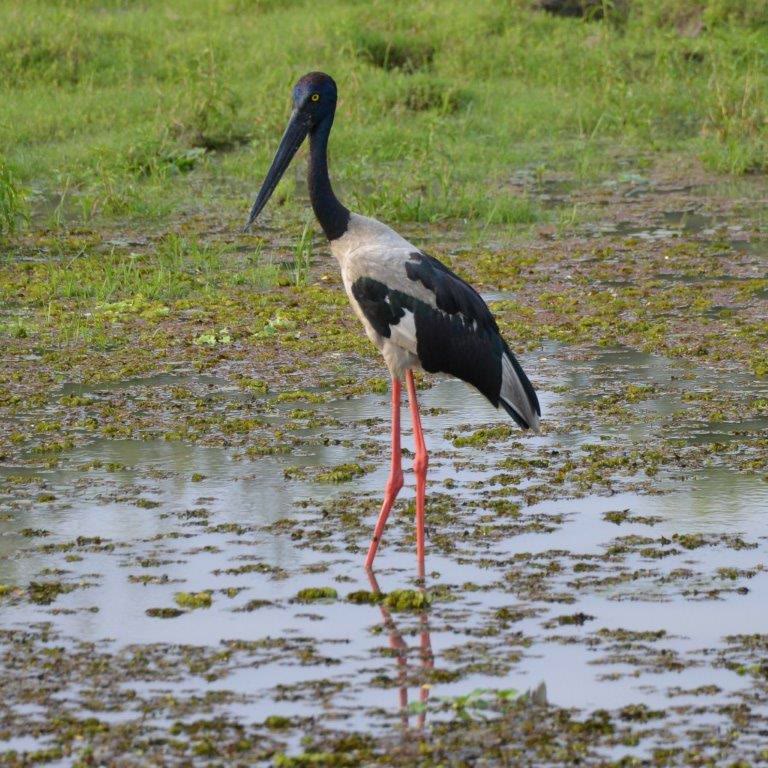
- black-necked stork
- woolly-necked stork
- Asian openbill
- white spoonbill
- glossy ibis
- black-headed ibis
- oriental darter
- little cormorant
- great cormorant
- Indian cormorant
- grey heron
- purple heron
- black-crowned night heron
- great egret
- intermediate egret
- little egret
- cattle egret
- sarus crane
- demoiselle crane
- bar-headed goose
- greylag goose
- gadwall
- northern shoveler
- northern pintail
- common teal
- tufted duck
- comb duck
- osprey
- western marsh harrier
- short-toed snake eagle
- Pallas's fish eagle
- peregrine falcon
- spotted eagle
- white-breasted waterhen
- purple swamphen
- common moorhen
- black-winged stilt
- common kingfisher
- pied kingfisher
- white-throated kingfisher
- green bee-eater
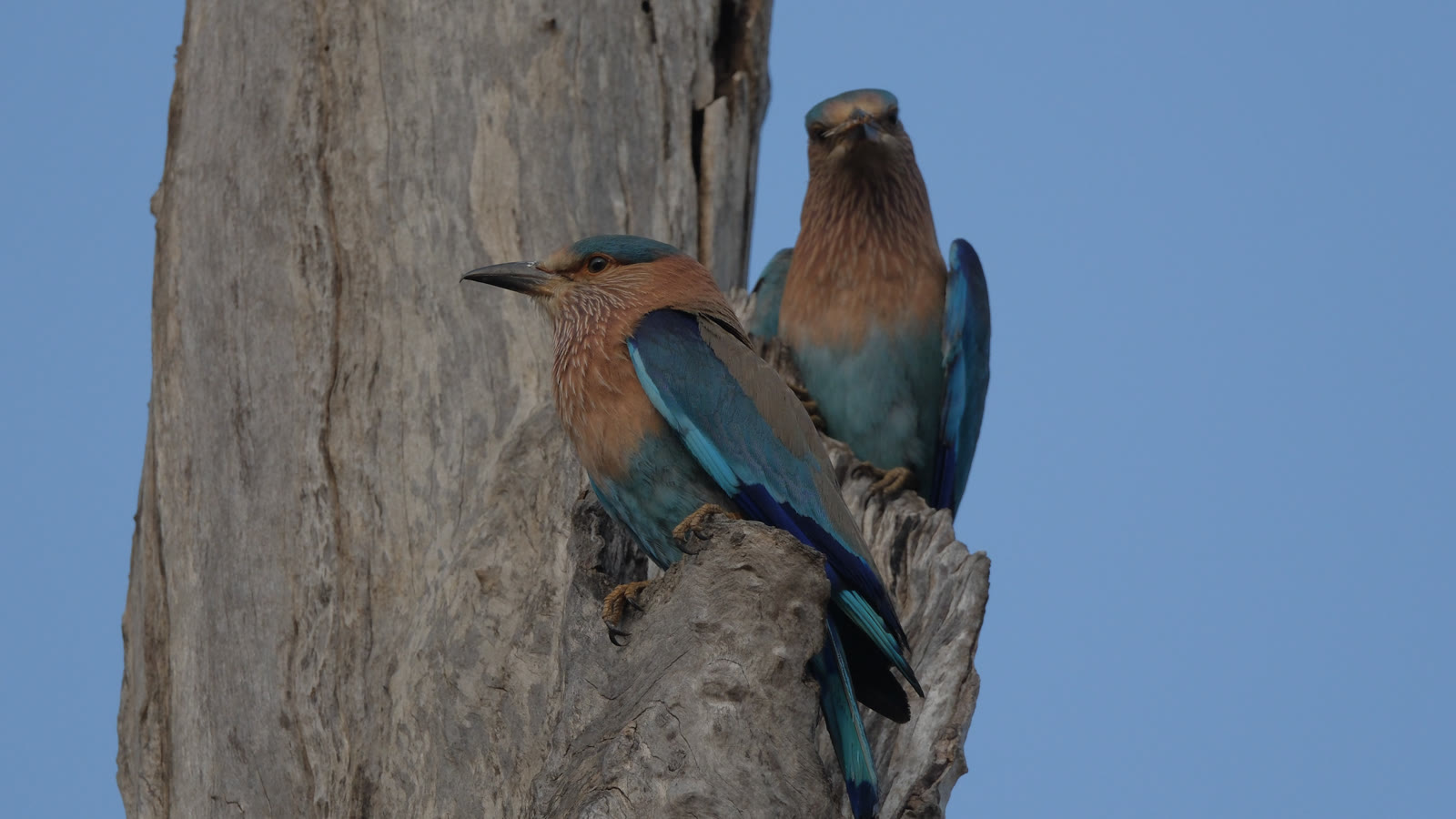
- Indian roller
- hoopoe
- coppersmith barbet.
Accessibility
Keoladeo sits within walking distance of Bharatpur city and is one of the easiest wildlife destinations in India to reach.
Train
| Station | Distance from Park | Notes |
|---|---|---|
| Bharatpur Junction | 5 km | Well connected on the Delhi–Mumbai main line |
| Agra Cantt | 55 km | Alternative for onward connections via Agra |
Air
| Airport | Distance from Park |
|---|---|
| Agra Airport (Kheria) | 55 km |
| Jaipur International Airport | 180 km |
| Delhi (Indira Gandhi International) | 180 km |
Agra's airport offers the shortest transfer, but flight frequency is limited, so many visitors fly into Delhi or Jaipur and continue by road.
Road
Well connected by NH21 and NH11 from Delhi (about 4 hours), the Agra–Bharatpur road (about 1.5 hours), and the Jaipur–Bharatpur route via Dausa and Mahwa (about 4 hours), making Keoladeo an easy add-on to an Agra or Jaipur itinerary.
Inside the park itself, movement is on foot, by bicycle, or aboard a cycle-rickshaw with a trained naturalist-puller — never by private motor vehicle.
Accommodation
Bharatpur offers a compact but well-regarded range of stays close to the park gate.
Luxury safari lodges
Laxmi Vilas Palace, a heritage property built for Bharatpur's royal family, and The Bagh, a restored orchard estate, are the district's most distinguished addresses, both within easy reach of the main gate.
Boutique lodges and eco-lodges
Birder's Inn and similar naturalist-run guesthouses sit closest to the entrance and are built around early starts and expert local guiding, while the Chambal Safari Lodge offers a quieter, more rural base a short drive away.
Resorts and mid-range hotels
A number of comfortable mid-range hotels near Saras Circle and the park gate offer straightforward, well-located stays for shorter visits.
Budget stays
Simple guesthouses in Bharatpur town keep costs modest without sacrificing proximity to the entrance.
Choosing well
- Gate proximity: A stay within a few minutes of the entrance maximises time on the bunds during the best light.
- Dining: Properties with kitchens used to early breakfasts suit the dawn starts that birding rewards.
- Guiding: A lodge with its own trained naturalists adds real value here, given how identification-driven a Keoladeo visit is.
- Families: Heritage properties and boutique lodges with gardens tend to suit families best for downtime between visits.
India Tiger Safari's bespoke private itineraries pair each trail with a curated lodge.
People Also Visit
Keoladeo is most often paired with the tiger forests of eastern Rajasthan, and one combination in particular has become a classic of Indian wildlife travel.
Ranthambore National Park
Roughly two to three hours from Bharatpur, Ranthambore is the natural counterpart to a Keoladeo visit, and together they form one of the most popular combined itineraries in Indian wildlife travel: dry deciduous tiger forest and Aravalli ruins paired with Keoladeo's wetland birdlife. Many private itineraries run Keoladeo first as a gentler, walkable introduction before the jeep safaris of Ranthambore.
Sariska National Park
For those extending further into the Aravallis, Sariska adds a quieter tiger forest with rocky gorges and ruined temples, and sits within a comfortable loop of Bharatpur and Ranthambore for a wider Rajasthan wildlife circuit.
Keoladeo National Park FAQs
What is the best time to visit Keoladeo National Park?
October to February is best for migratory waterfowl, while July to September brings the dramatic monsoon nesting of painted storks and other heronry species.
How many days are needed for Keoladeo?
A single full day covers the park's main stretches well, though keen birders often prefer two half-day visits at dawn and late afternoon.
Can you see painted storks and cranes at Keoladeo?
Yes. Painted storks nest here in large colonies through the monsoon, and sarus and demoiselle cranes are regularly seen on the wetlands, though as with all wildlife, sightings are never guaranteed.
Which zone is best for birdwatching at Keoladeo?
The Keoladeo Temple wetland loop is the most consistently productive, with Mansarovar and Sapan Mori a close second for waterfowl in winter.
How do Keoladeo safari arrangements work?
India Tiger Safari handles permits, cycle-rickshaws, naturalist guides and logistics for private guests, so the visit is arranged around your schedule rather than a fixed group timetable.
What mammals can be seen at Keoladeo besides birds?
Nilgai, sambar, chital and wild boar are common, with the Indian rock python at Python Point a particular highlight for many visitors.
How do you reach Keoladeo National Park?
Bharatpur Junction railway station is 5 km from the park, with Agra 55 km away and Delhi and Jaipur each about 180 km by road.
Is Keoladeo suitable for families and children?
Yes. The gentle pace, flat cycling paths and short distances make it one of India's more relaxed and family-friendly wildlife destinations.
Is Keoladeo good for birdwatchers and photographers?
Exceptionally so. The density of birdlife, close approach distances along the bunds, and good light for much of the day make it a favourite with serious birders and photographers alike.
Is a private guide available in Keoladeo?
Yes. India Tiger Safari arranges a private naturalist guide and cycle-rickshaw as part of every bespoke Keoladeo journey.