Nagarhole National Park: Safari Guide
Kabini backwaters boat safaris, elephant herds, dhole packs
About Nagarhole National Park
Nagarhole National Park, formally the Rajiv Gandhi National Park and Nagarhole Tiger Reserve, lies across the Kodagu and Mysuru districts of Karnataka, in the heart of the Western Ghats. Spread over 847.98 square kilometres, it forms the northern flank of one of the largest and best-connected tiger landscapes anywhere in the world, sharing unbroken forest with Bandipur National Park to the south, Mudumalai in Tamil Nadu, and the Wayanad Wildlife Sanctuary in Kerala.
The park's story of protection runs back to 1955, when the area was first set aside as a wildlife sanctuary. It was upgraded to a national park in 1983, renamed Rajiv Gandhi National Park in 1992, and brought under Project Tiger as a dedicated tiger reserve in 1999. Its boundaries have grown twice since, most recently in 2012, reflecting a deliberate widening of protected habitat rather than a retreat.
Geographically, Nagarhole is defined by the Kabini River, which curls along its southern edge and, dammed downstream, forms the wide Kabini reservoir shared with Bandipur. The Lakshmantirtha River threads the park's interior. Between the two, the terrain rises gently from around 700 to 960 metres, carrying moist and dry deciduous forest, pockets of semi-evergreen woodland, bamboo brakes and open swampy clearings known locally as hadlus, which draw grazing herds into the open through the day.
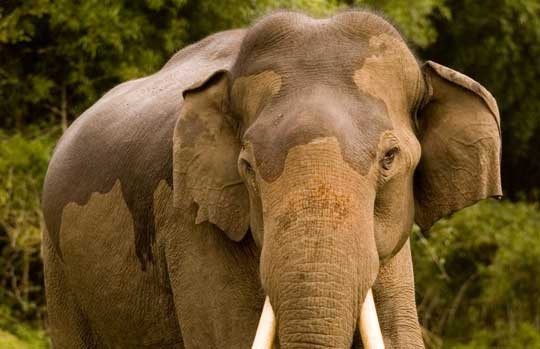
This mix of water, grassland and forest is what makes Nagarhole so productive for wildlife-watching. It holds one of India's largest populations of wild Asian elephants, healthy packs of dhole (the Asiatic wild dog), and a tiger density that regularly ranks among the country's highest. The park is also an Important Bird Area, with more than 270 recorded species, and sits within the Nilgiri Biosphere Reserve, part of the Western Ghats' UNESCO World Heritage cluster.
Nagarhole's proximity to Mysuru and Bengaluru, combined with the Kabini backwaters' famously reliable sightings, has made it one of the most sought-after private safari destinations in South India.
What to expect: A Nagarhole safari means threading deciduous forest and open hadlus by jeep, or gliding along the Kabini backwaters by boat, watching for tiger, leopard, elephant and dhole against a backdrop of dense old-growth forest. Sightings, while never promised, are frequent, particularly for elephant herds and waterside wildlife drawn to the Kabini shoreline through the dry months.
Facts About Nagarhole National Park
| Aspect | Details |
|---|---|
| Location | Kodagu and Mysuru districts, Karnataka |
| State | Karnataka |
| Established | Wildlife sanctuary (1955); national park (1983); tiger reserve (1999) |
| Area | 847.98 km² |
| Protected Area Type | National Park and Tiger Reserve, within the Nilgiri Biosphere Reserve |
| Functional Days | Open year-round, safaris daily |
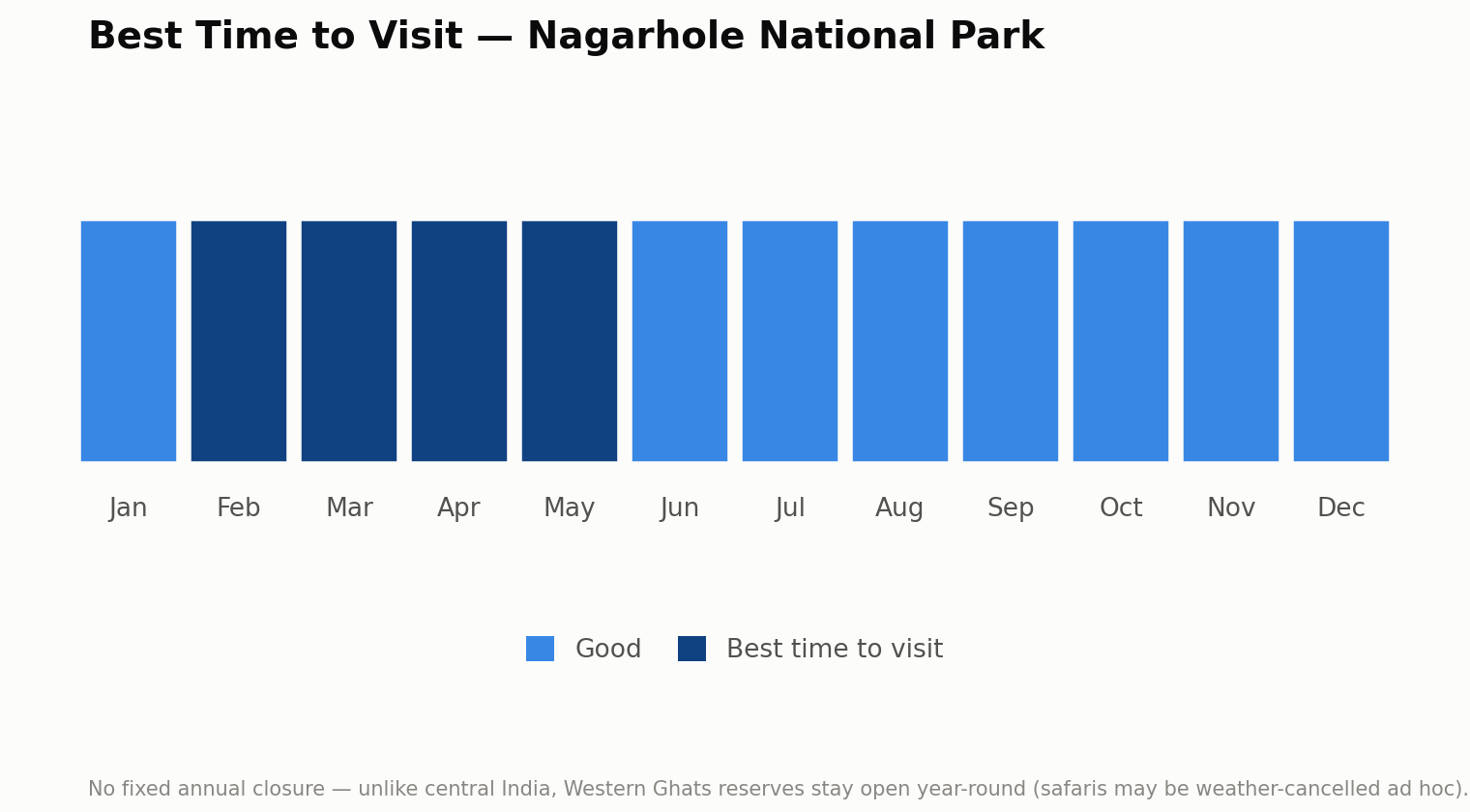
| Annual Closure | No fixed annual closure; monsoon months bring reduced visibility |
| Weekly Offs | None |
| Best Time to Visit | October to May, with February to May best for waterside sightings |
| Recommended Safari Duration | 2-3 nights (4-6 safaris) |
| Vegetation | Moist and dry deciduous forest, semi-evergreen patches, bamboo, hadlu grasslands |
| Elevation | 700-960 metres |
| Major Wildlife | Tiger, Asian elephant, dhole, gaur, leopard, sloth bear |
| Famous For | Kabini backwaters boat safaris, elephant herds, dhole packs |
Functional days. Safaris run every day of the year in two shifts, an early-morning drive starting around 6 am and an afternoon drive from roughly 3.30 pm, each lasting two to three hours by jeep or boat.
Yearly off. Nagarhole has no mandated annual closure of the kind seen in central India; the heavier monsoon months of June to September bring lush cover and lower visibility rather than a shutdown.
Weekly offs and rules. There are no weekly rest days for safaris. Vehicle numbers per zone are capped by permit, gates open on a first-booked basis, and each jeep or boat travels with a forest department guide alongside the naturalist.
Tiger Density and Other Major Species
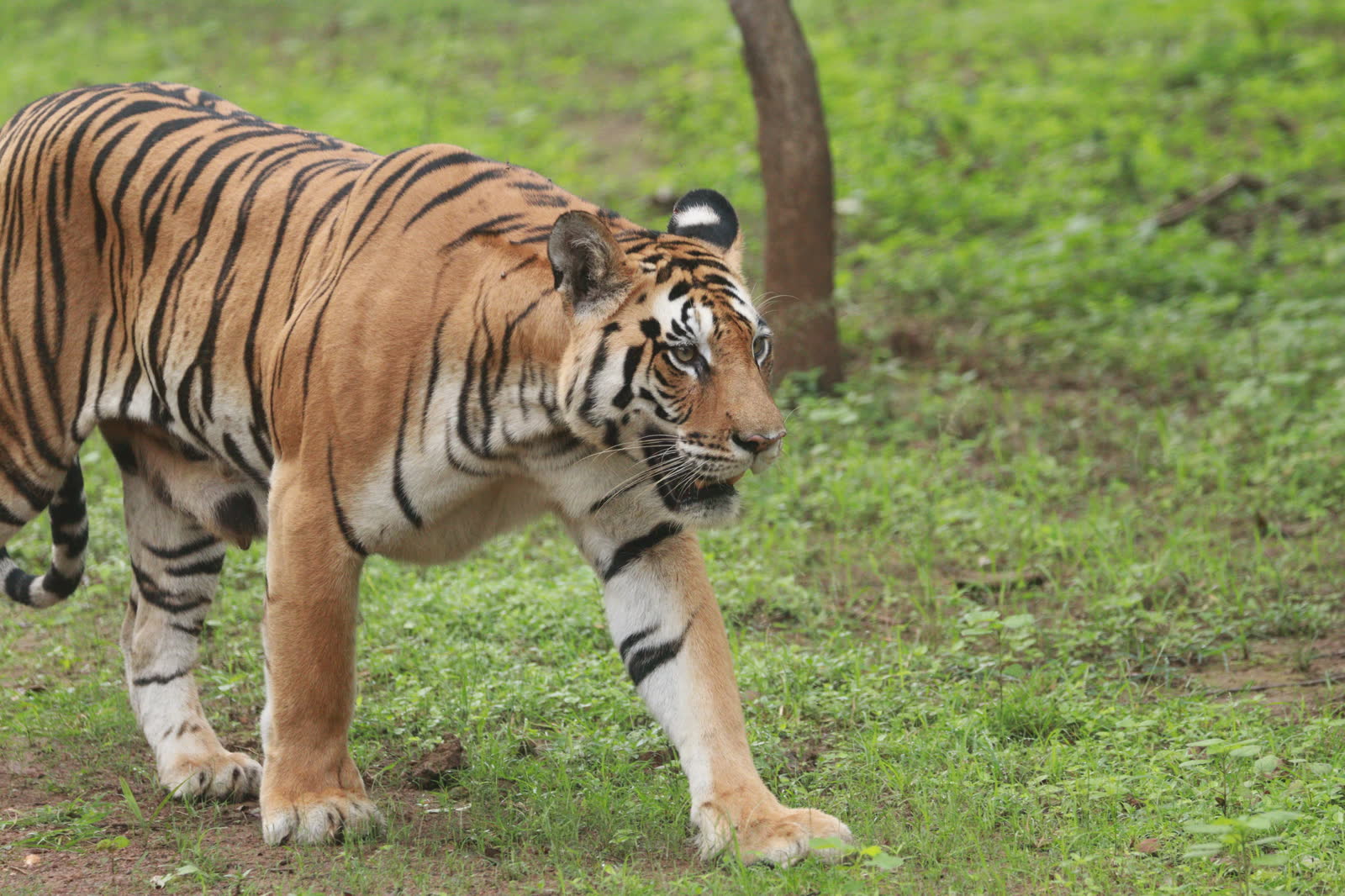
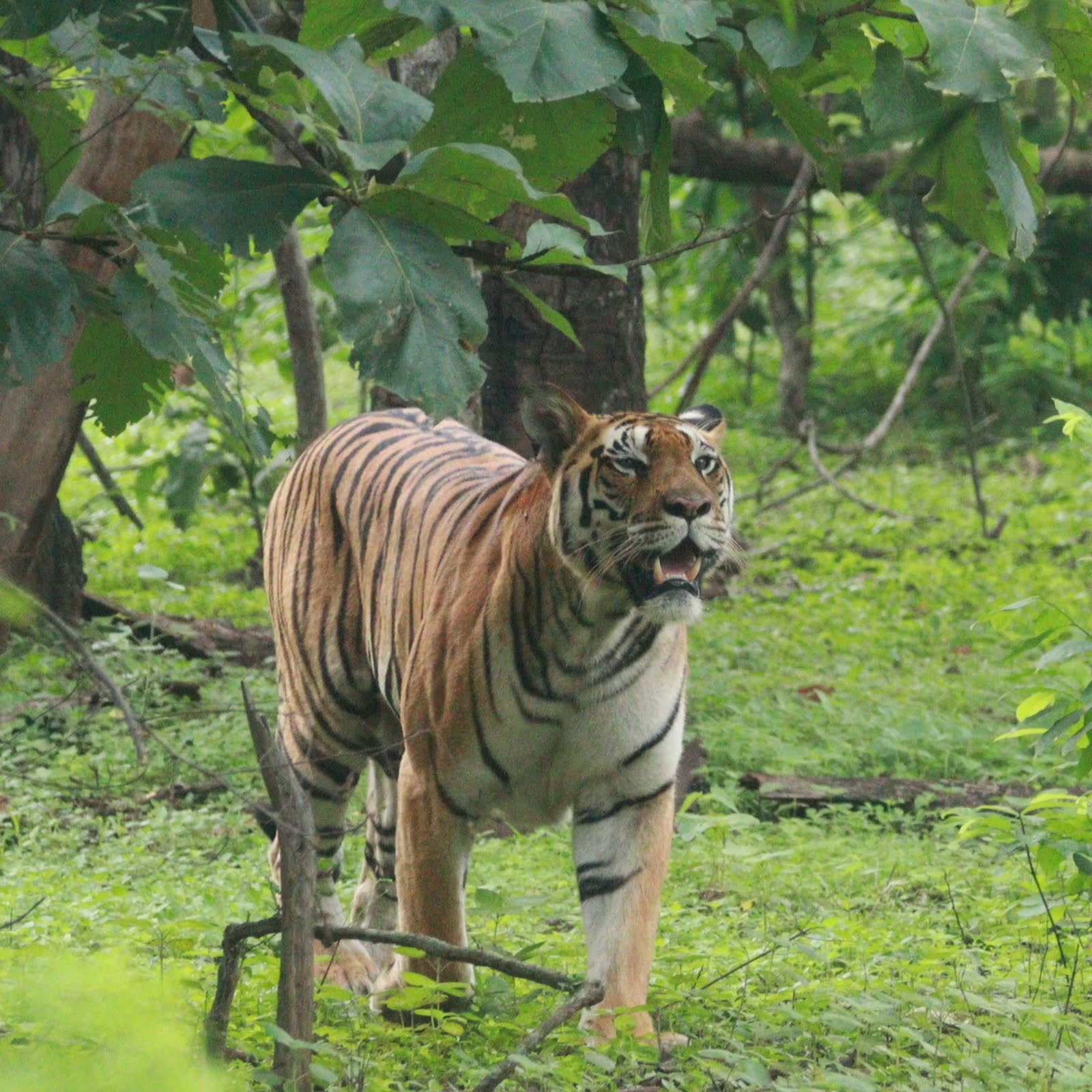
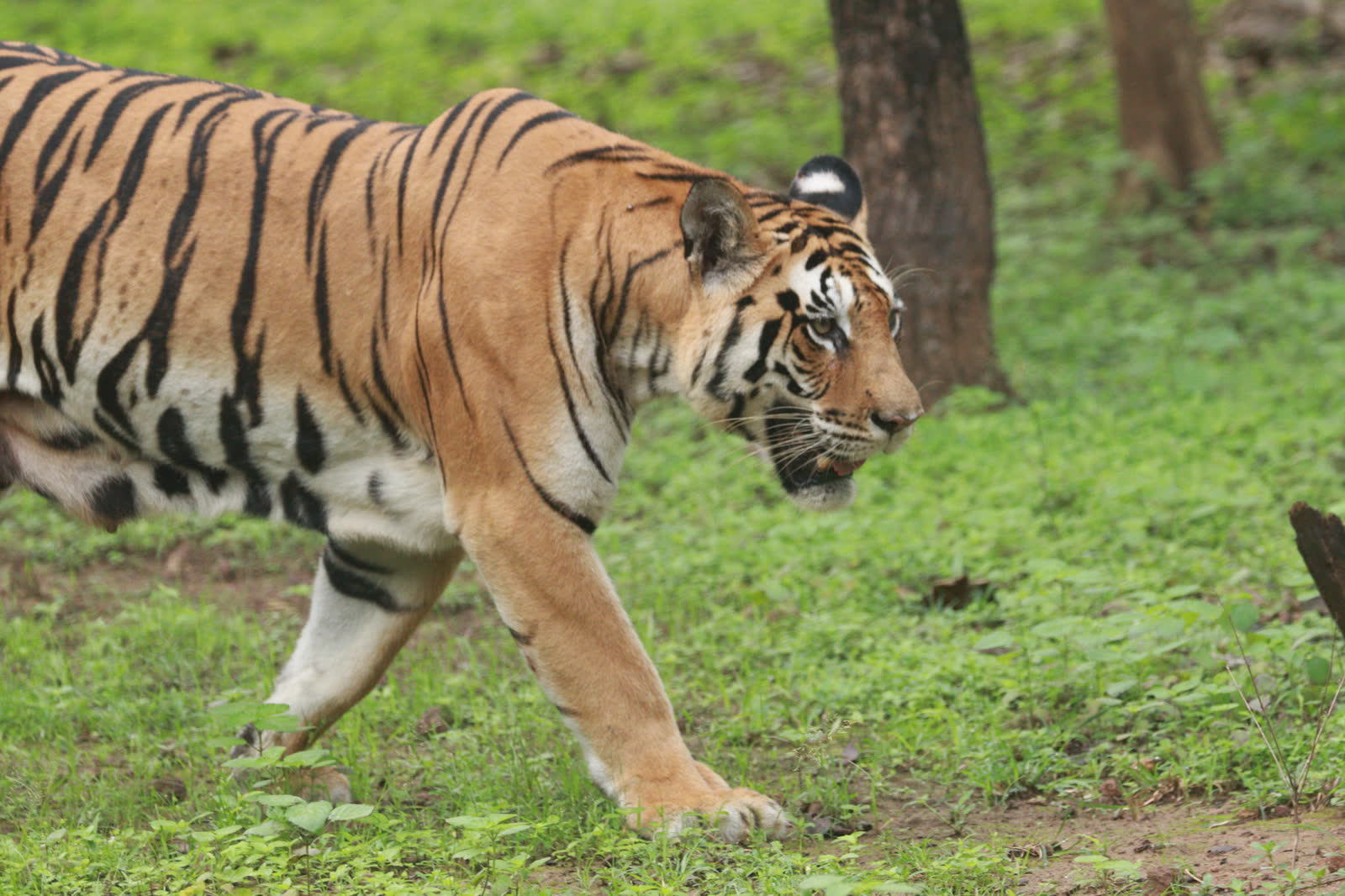
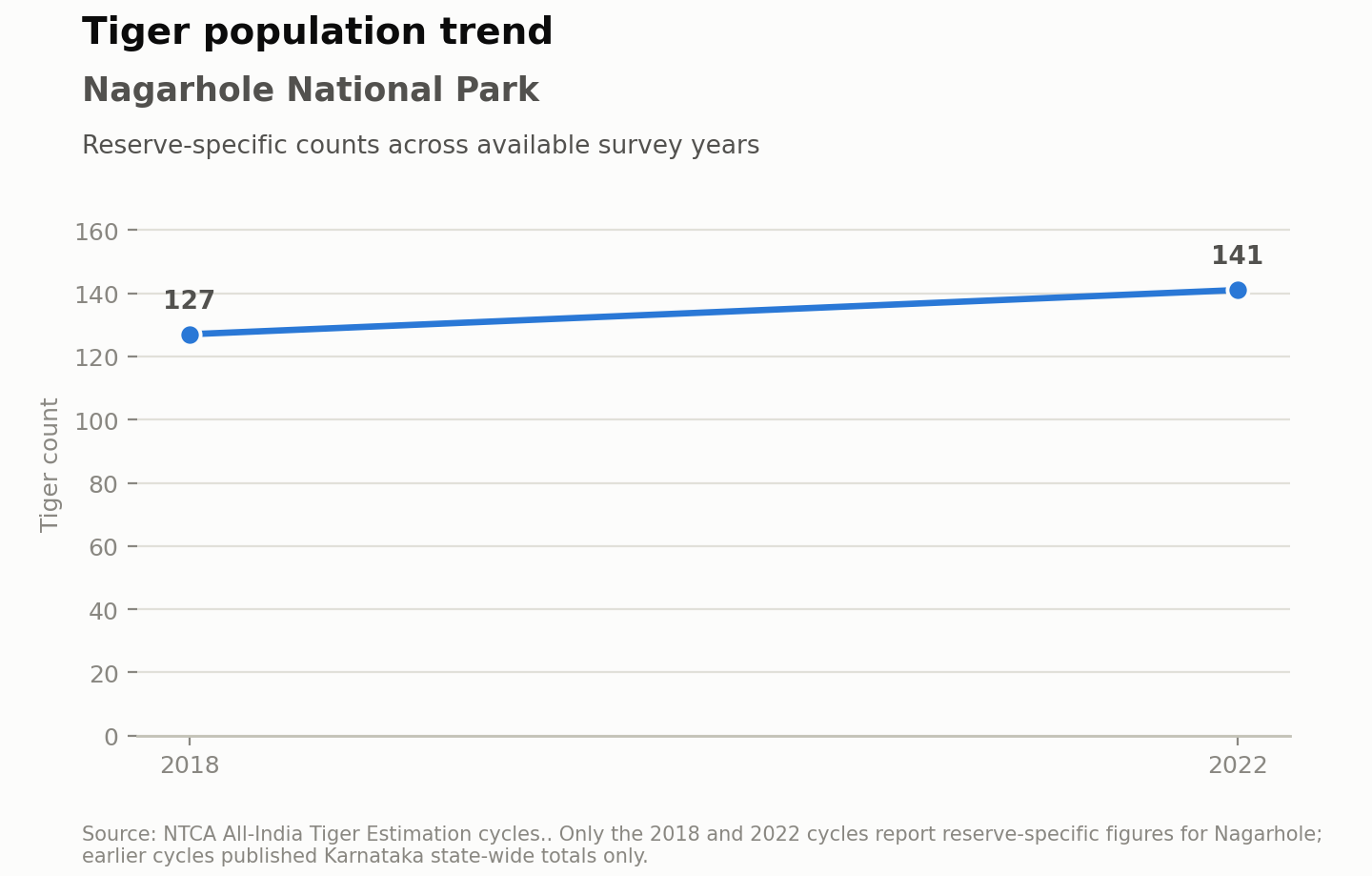
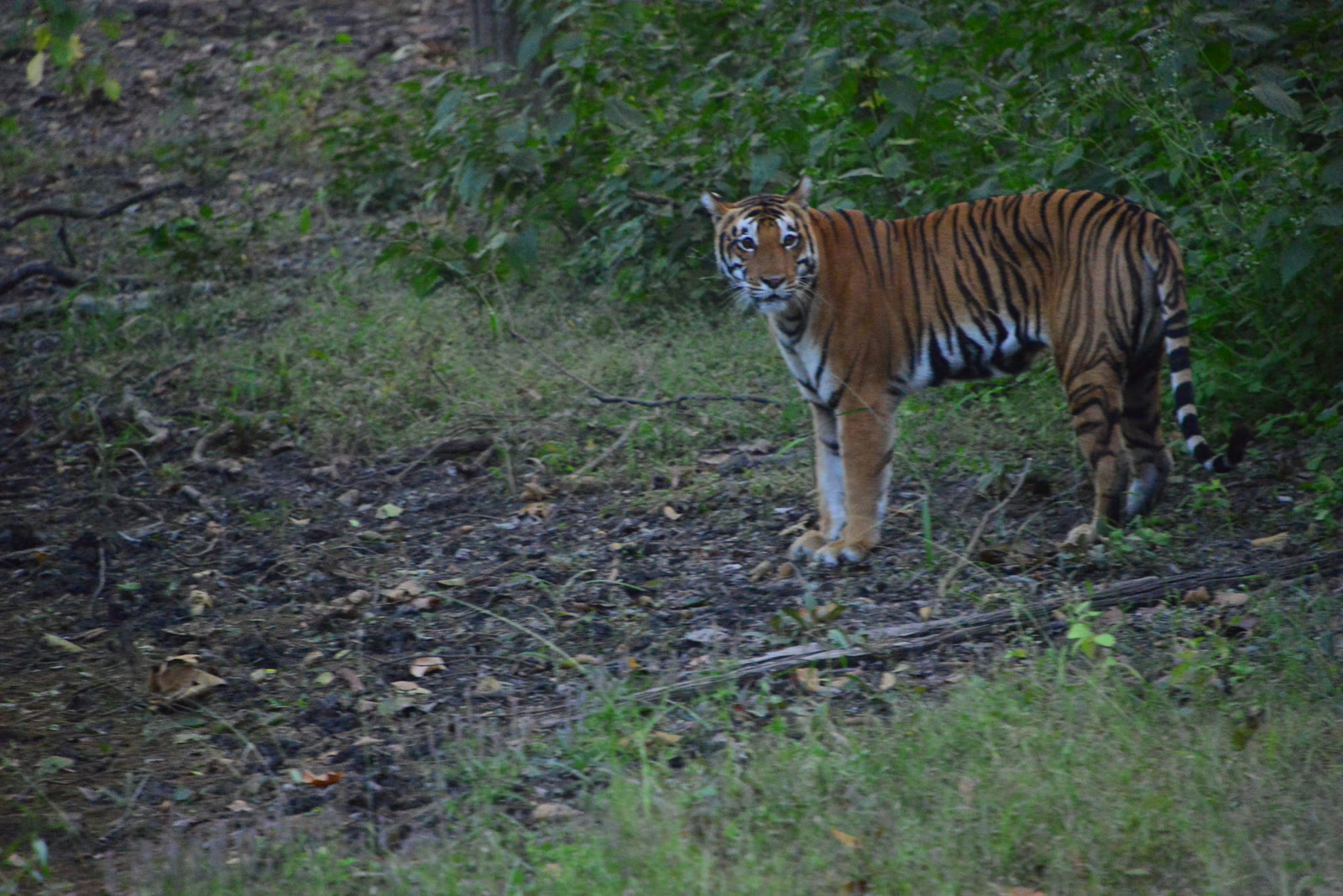
Nagarhole Tiger Reserve carries one of the highest tiger densities in India. In the 2022 All India Tiger Estimation, camera traps identified 141 individual tigers within the reserve, with the total population, including animals recorded only indirectly, estimated at up to 185 - placing Nagarhole among the country's three highest tiger counts, alongside neighbouring Bandipur.
| Reserve | Camera-trapped Tigers (2022) | Estimated Total |
|---|---|---|
| Nagarhole Tiger Reserve | 141 | Up to 185 |
| Bandipur Tiger Reserve (adjoining) | 150 | Up to 191 |
These numbers reflect a landscape success story: Nagarhole and Bandipur, joined by Mudumalai and Wayanad, together support one of the largest single tiger populations on the planet, a result of unbroken forest cover and decades of consistent protection. Sightings tend to cluster around the Kabini backwaters and the water-dependent hadlus in the dry months, when prey concentrates near remaining water. As with any wild landscape, sightings are never guaranteed, but the reserve's density gives guests a genuinely strong chance across a multi-safari stay.
Other species
- Asian elephant: Nagarhole holds one of India's largest elephant populations, with large herds regularly seen along the Kabini backwaters, especially in the dry season.
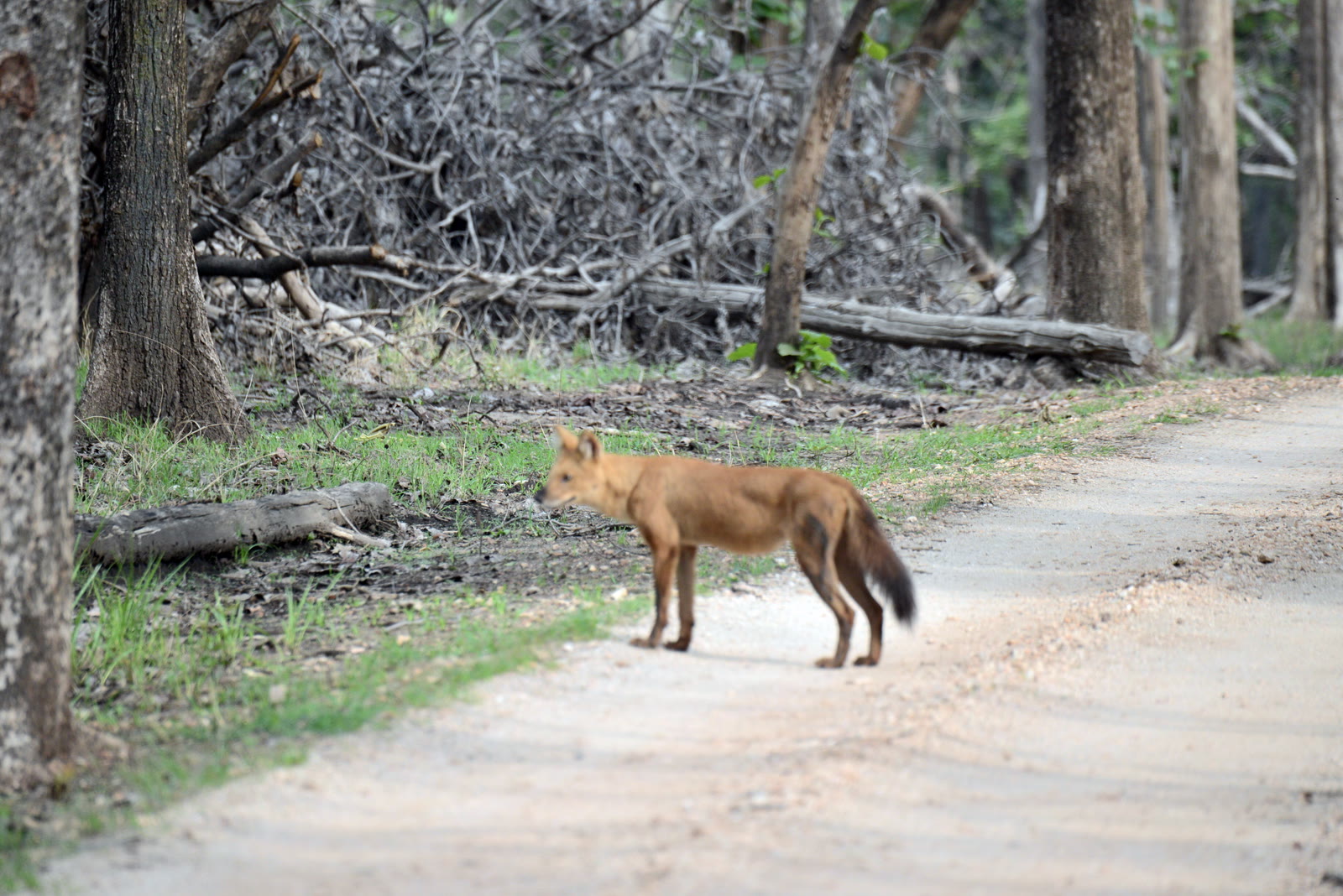
- Dhole (Asiatic wild dog): Coordinated packs are seen hunting chital and sambar through the deciduous forest, a Nagarhole speciality.
- Gaur: India's wild bison grazes the open hadlus and forest edges in good numbers year-round.
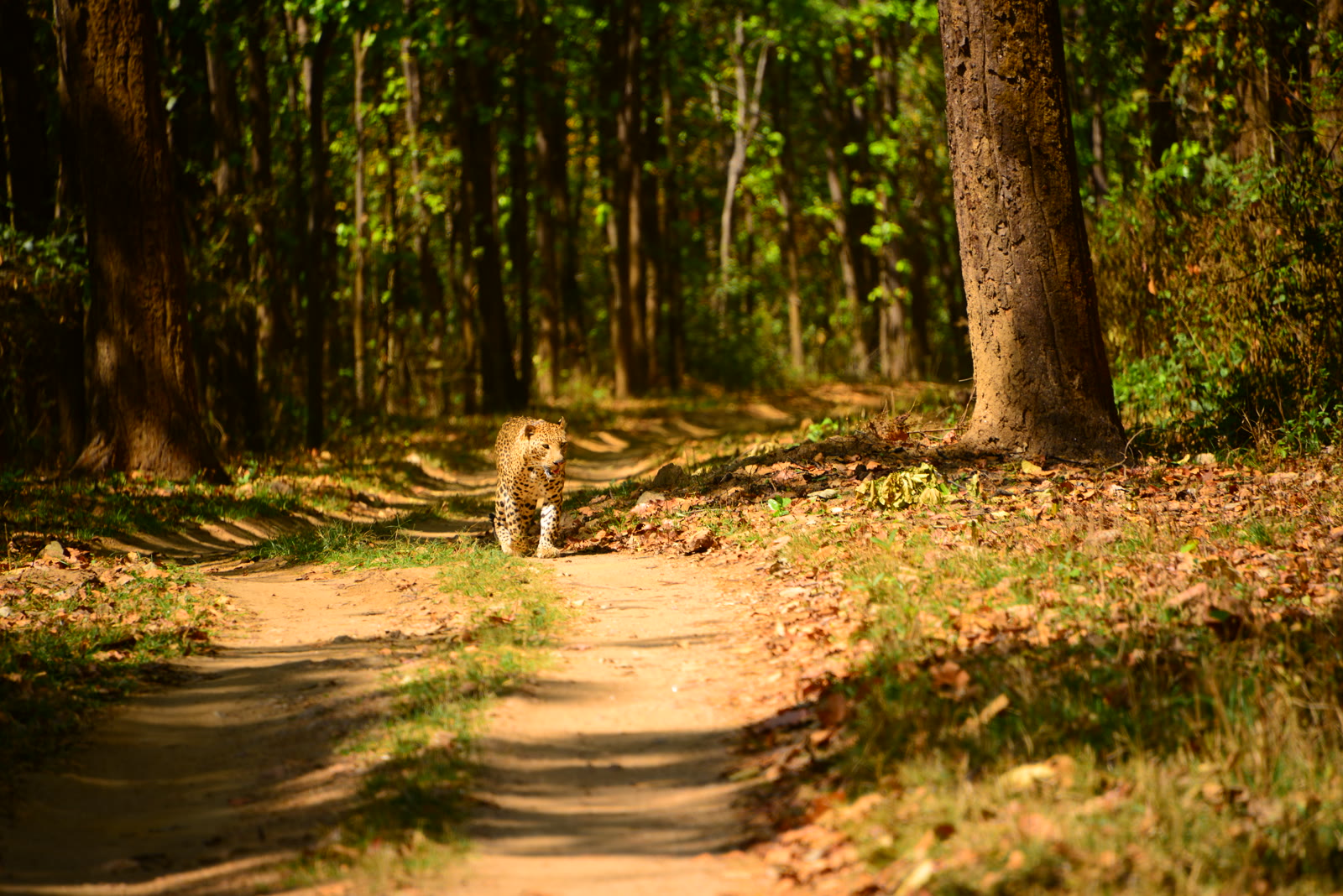
- Leopard: Present throughout the reserve, most often spotted at dawn or dusk near the Kabini shoreline.
- Sloth bear: Occasionally seen foraging in the drier, rockier stretches away from the water.
- Four-horned antelope (chousingha): A shy, uncommon sighting in the drier deciduous tracts.
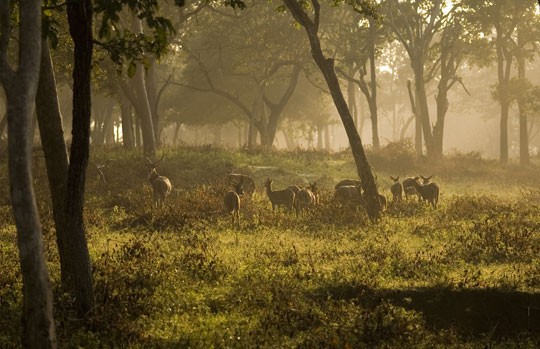
- Chital and sambar: Abundant throughout, forming the prey base that sustains the park's predators.
- Mugger crocodile: Basks along the Kabini backwaters, often seen on boat safaris.
- Birds: Roughly 270 species, including the Malabar pied hornbill, grey-headed fish eagle, osprey, crested serpent eagle and painted stork.
Safari Zones in Nagarhole National Park
Nagarhole is entered through a handful of gates, each opening into its own range, with jeep permits issued zone-wise and boat safaris run separately on the Kabini backwaters.
| Zone | Area | Character |
|---|---|---|
| Karapura (Nanachi Gate) | Kabini backwaters | Waterside forest, elephant herds, best tiger and leopard sightings |
| Veeranahosahalli | Main gate, off the Mysuru-Kutta road | Open deciduous forest, gaur and elephant |
| Antharasanthe | Interior forest range | Dense cover, dhole packs, quieter game drives |
| D'Gudde (Metikuppe) | Remote northern range | Fewer vehicles, strong birding, occasional big-cat sightings |
Karapura (Nanachi Gate)
The zone bordering the Kabini reservoir is Nagarhole's headline draw, combining jeep safaris with boat safaris on the backwaters. Elephant herds gather along the shoreline through the dry season, and this is consistently the park's strongest area for tiger and leopard sightings.
Veeranahosahalli
The principal entry gate off the Mysuru-Kutta highway opens into rolling deciduous forest and grassy hadlus, offering a good balance of herbivore sightings and predator activity.
Antharasanthe
A denser, more interior range known for dhole activity and a quieter safari experience, with lower vehicle density than the Kabini-facing zones.
D'Gudde (Metikuppe)
The park's remoter northern reaches see far fewer vehicles and reward patient, birding-focused safaris, with occasional sightings of tiger and elephant moving between core areas.
Vehicles and rules
Jeep safaris carry up to six guests per vehicle, while Kabini boat safaris run in small groups on covered launches; both operate on a fixed permit system with a capped number of vehicles and boats per shift. India Tiger Safari would be delighted to design your fully private Nagarhole safari: a bespoke journey through the zones that suit you best, with curated stays, a private jeep and a naturalist guide devoted to your party.
Mammals and Birds
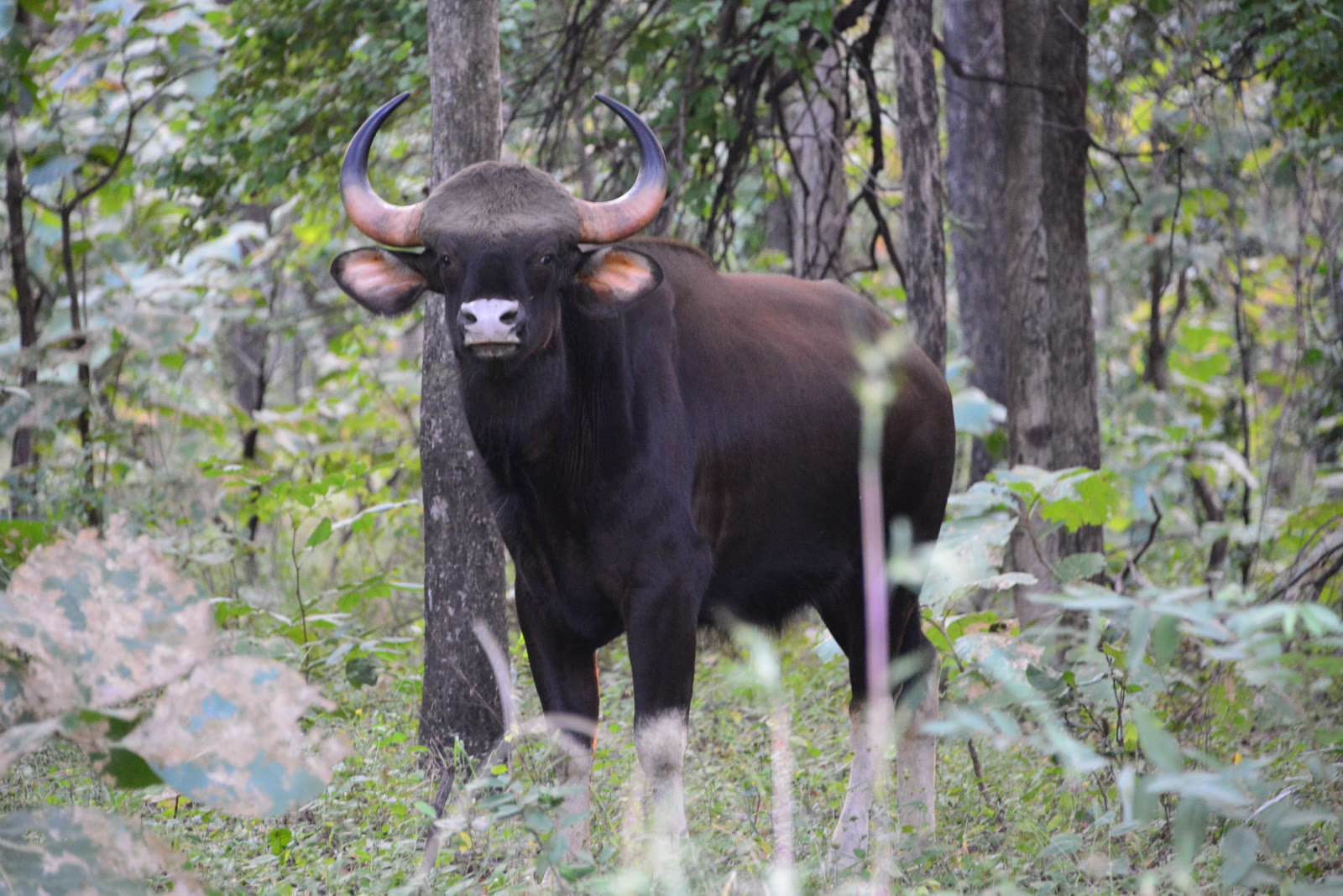
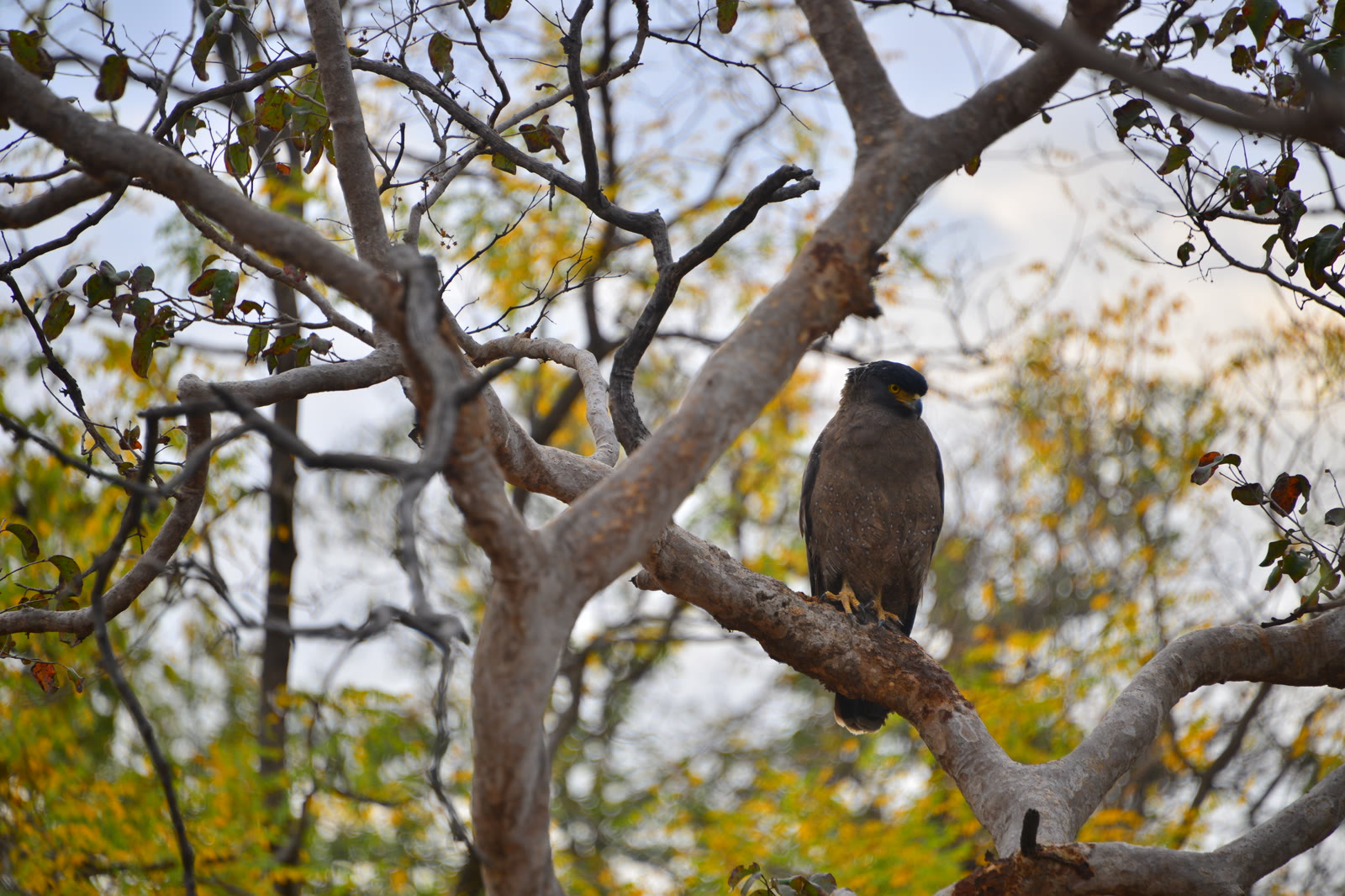
The lists below are representative and not complete.
Mammals
- Bengal tiger
- Asian elephant
- Indian leopard
- dhole (Asiatic wild dog)
- sloth bear
- gaur
- sambar deer
- chital
- four-horned antelope
- wild boar
- Indian jackal
- gray langur
- bonnet macaque
- red slender loris
- Malabar giant squirrel
- smooth-coated otter
- small Indian civet.
Birds
- Malabar pied hornbill
- grey-headed fish eagle
- osprey
- lesser fish eagle
- crested serpent eagle
- Indian pitta
- racket-tailed drongo
- Malabar trogon
- white-bellied woodpecker
- oriental darter
- painted stork
- changeable hawk-eagle
- Indian roller
- spot-billed pelican
- black stork
- white-bellied sea eagle.
Accessibility
Nagarhole sits within a half-day's drive of both Mysuru and Bengaluru, making it one of the more accessible luxury safari destinations in South India.
Train
| Station | Distance and road time | Why use it |
|---|---|---|
| Mysuru Junction | ~90 km, about 2-2.5 hours | Best-connected station, frequent trains from Bengaluru and Chennai |
| Hunsur | ~50 km, about 1.5 hours | Closer, but limited long-distance services |
Air
| Airport | Distance and road time | Onward transport |
|---|---|---|
| Mysuru Airport (MYQ) | ~90-95 km, about 2-2.5 hours | Private transfer or taxi |
| Kempegowda International, Bengaluru (BLR) | ~220 km, about 5-5.5 hours | Private transfer, the main gateway for most international and long-haul guests |
Road
Bengaluru to Nagarhole: around 220 km, 5-5.5 hours via Mysuru and Hunsur.
Mysuru to Nagarhole: around 90-95 km, 2-2.5 hours via Hunsur.
Madikeri (Coorg) to Nagarhole: around 90 km, 2.5 hours, a popular add-on for guests combining coffee-country stays with the safari.
Inside the park, only authorised safari vehicles are used, with a naturalist.
Accommodation
Lodges cluster along the Kabini backwaters, just outside the park's Karapura zone, putting guests within minutes of the gate and the water.
Luxury safari lodges
Riverfront lodges along the Kabini backwaters offer villa-style suites, private safari vehicles, fine dining and spa facilities, with some properties running their own resident naturalists.
Boutique lodges and eco-lodges
Smaller, design-forward camps set back from the water offer a quieter, more intimate stay, often with a strong focus on naturalist-led programming over sheer scale.
Resorts and mid-range hotels
Mysuru and the wider Kabini-Hunsur corridor hold a range of comfortable mid-range resorts, useful for longer multi-generational stays or larger groups.
Budget stays
Simple homestays and guesthouses around Hunsur and the park's outer villages suit travellers prioritising value over lodge amenities.
Choosing well
- Gate proximity: Lodges near Karapura cut transfer time to the Kabini backwaters, the park's strongest zone.
- Dining: Several riverfront lodges offer plantation-to-table menus drawing on Kodagu's coffee country.
- Guiding: Resident naturalists, rather than shared forest-department guides alone, sharpen the safari experience.
- Families: Riverfront lodges with pools and open lawns suit families travelling with children between safaris.
India Tiger Safari's bespoke private itineraries pair each zone/gate with a curated lodge.
People Also Visit
Nagarhole sits at the northern edge of a Western Ghats wildlife corridor that extends south into Kerala, making it a natural pairing for a longer South Indian safari circuit.
Periyar National Park
Periyar, in Kerala's Western Ghats, makes a natural second stop on a South India wildlife journey, connected to Nagarhole by scenic hill roads through Wayanad and Munnar. Where Nagarhole is defined by jeep and boat safaris across deciduous forest, Periyar shifts the experience to boat safaris and guided treks through evergreen hill forest around Periyar Lake, with its own resident tiger population and some of India's most visible wild elephant herds.
Gir National Park
For guests building a wider India itinerary, Gir National Park in Gujarat offers a separate big-cat experience entirely, home to the world's only wild population of Asiatic lions, on a distinct Western India journey rather than a direct add-on to a South Indian trip.
Nagarhole National Park FAQs
What is the best time to visit Nagarhole National Park?
October to May is best, with February to May offering the strongest sightings as water sources shrink and wildlife concentrates near the Kabini backwaters.
How many days should I spend in Nagarhole?
Two to three nights, covering four to six safaris across jeep and boat, gives a good spread of zones and sighting opportunities.
Can I see tigers in Nagarhole?
Yes. Nagarhole holds one of India's highest tiger densities, though as with any wild reserve, sightings are never guaranteed.
Which zone or gate is best for a first safari?
Karapura, opening onto the Kabini backwaters, is generally the strongest zone for tiger, leopard and elephant sightings.
How do Nagarhole safari arrangements work?
India Tiger Safari handles the permits, vehicles and naturalist guides for private guests, building a bespoke Nagarhole itinerary around the zones and lodges that suit each traveller.
What other wildlife can I expect to see besides tigers?
Elephant herds, dhole packs, gaur, leopard, sloth bear and prolific birdlife are all regular sightings across Nagarhole's zones.
How do I reach Nagarhole National Park?
Most guests fly into Bengaluru or Mysuru and continue by road; Mysuru is roughly two hours away, Bengaluru around five.
Is Nagarhole suitable for families with children?
Yes, particularly lodges along the Kabini backwaters, which combine wildlife access with pools, open grounds and family-friendly programming.
What should I wear on a Nagarhole safari?
Neutral, muted colours, layers for cool early mornings, closed shoes, and a hat and sunscreen for the open hadlu stretches.
Is a private jeep available in Nagarhole?
Yes. India Tiger Safari arranges a private vehicle or boat and naturalist guide as part of its bespoke Nagarhole journeys.