Hemis National Park: Snow Leopard Guide
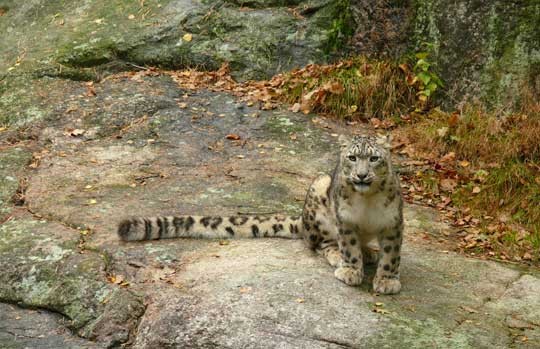
The world's highest recorded snow leopard density, Rumbak Valley, Hemis Monastery
About Hemis National Park
Hemis National Park is a high-altitude wilderness in Leh district, Ladakh, close to the town of Leh. It is India's largest national park, at about 4,400 km², and the only one in the country that lies north of the Himalaya. Its elevation runs from about 3,000 m to over 6,000 m, in the cold, dry Trans-Himalayan landscape that gives the snow leopard its home.
The park was established in 1981 to protect the catchments of the Rumbak and Markha rivers, an area of about 600 km². It grew to about 3,350 km² in 1988 and to roughly 4,400 km² in 1990. The Indus bounds it to the north, and it takes in parts of the Zanskar Range. Unlike the tiger reserves of central India, Hemis is explored on foot rather than from vehicles.
Lying in the rain shadow of the Himalaya, the park receives little rainfall. Valley bottoms hold juniper, poplar and willow, with birch and fir higher up in the sheltered pockets. Steep slopes above give way to alpine meadows and tundra, while the lower river courses are steppe dotted with caragana, artemisia and ephedra. Snow-fringed ridges, gorges and boulder-strewn slopes create the broken terrain snow leopards favour.
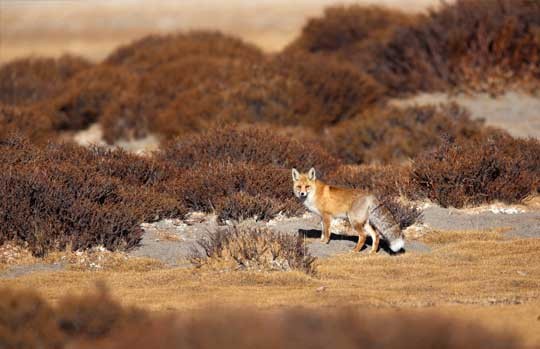
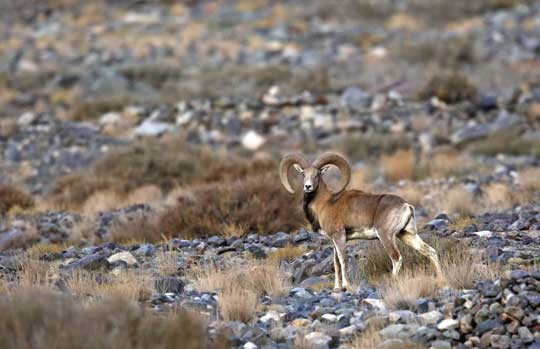
Hemis has the highest recorded density of snow leopards in the world, and it is home to bharal (blue sheep), Asiatic ibex, argali and the Ladakh urial, or shapu, of which it is the only refuge in India. Tibetan wolf, Eurasian brown bear, Eurasian lynx and red fox share the mountains, and golden eagles, lammergeiers and Himalayan griffons patrol the skies.
People are part of the story. Small villages, gompas and chortens sit inside the park, and the 400-year-old Hemis Monastery hosts the Hemis Tsechu festival each summer. Local families run homestays that let visitors experience Ladakhi hospitality, with income supporting conservation. The peaks of Stok Kangri and Kang Yatse draw climbers, and the Markha Valley is one of Ladakh's classic treks.
What to expect: a quiet, walking-based wildlife experience. Spotters scan the slopes at first and last light through spotting scopes, and days in the valleys of Rumbak and Husing are built around patience, clear air and big landscapes. Snow leopards are the prize, and sightings, while never promised, are among the most memorable in Asia.
Facts About Hemis National Park
| Information | Details |
|---|---|
| Location | Leh district, Ladakh, close to Leh |
| State | Ladakh (Union Territory) |
| Established | 1981; enlarged in 1988 and 1990 |
| Area | About 4,400 km² |
| Protected Area Type | National park (high-altitude, Trans-Himalayan) |
| Functional Days | Open through the year on foot, with entry through check posts at Zingchen, Skiu and Shang Sumdo |
| Annual Closure | No seasonal closure of the park; some passes and roads close in winter |
| Weekly Offs | None |
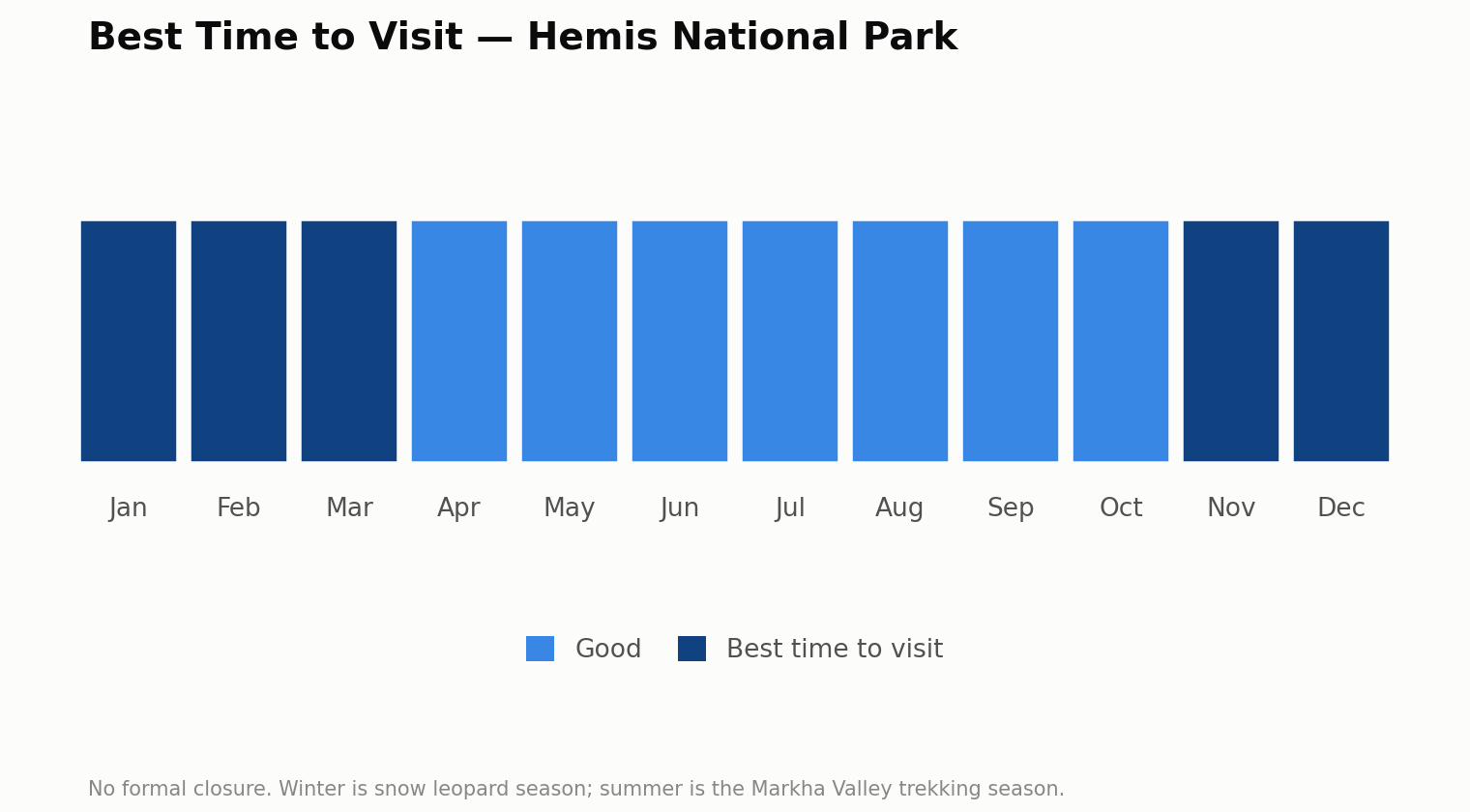
| Best Time to Visit | November to March for snow leopards; mid-June to mid-October for trekking |
| Recommended Safari Duration | Six to eight nights in Ladakh, including two to acclimatise in Leh and three to five days in the valleys |
| Vegetation | Juniper, poplar–willow and birch–fir in valleys; alpine meadow; steppe; tundra |
| Elevation | About 3,000–6,000 m |
| Major Wildlife | Snow leopard, bharal, Ladakh urial, Asiatic ibex, argali, Tibetan wolf, Eurasian brown bear |
| Famous For | The world's highest recorded snow leopard density, Rumbak Valley, Hemis Monastery |
Functional days. The park is entered on foot through check posts. Beyond them only villagers' vehicles are allowed, so visitors walk, usually with a local guide and spotter.
Yearly off. Winter is the peak season for snow leopards, when snow pushes prey and predator into the lower valleys. Summer is the trekking season, with the Markha Valley and Ganda La routes open from June.
Weekly offs and rules. There are no weekly closures. Visitors pay a small wildlife fee on entry, and activity inside the park is guided and permitted.
Snow Leopard Density and Other Major Species
Hemis is where the snow leopard is most concentrated. Camera-trap surveys carried out between 2019 and 2023 recorded some of the highest snow leopard densities ever measured, with Hemis at roughly two animals per 100 km², well above the densities reported elsewhere in the species' range.
| Survey period | Area | Estimated snow leopards |
|---|---|---|
| 2019–2023 | Hemis National Park | About 2 per 100 km², the highest recorded density |
| 2019–2023 | Ladakh | About 477 |
| 2019–2023 | India | About 718 |
This success rests on a healthy prey base and on communities who share the landscape with the cat. Conservation work here includes predator-proof livestock corrals, no-grazing zones for domestic stock and a homestay programme that turns tourism income into a reason to protect snow leopards. Project Snow Leopard, launched in 2009, guides the wider effort.
In the winter season, snow drives bharal and other prey down into the lower valleys, and snow leopards follow. With a good spotter, three to five days in Rumbak and Husing gives a strong chance of a sighting, though as with every wild cat, it can never be promised.
Other species
- Bharal (blue sheep): The park's main prey species, seen daily on the slopes of Rumbak and Husing.
- Ladakh urial (shapu): Hemis is the only refuge for this sheep in India, and it is seen regularly.
- Asiatic ibex and argali: Present in smaller numbers, seen occasionally on higher ground.
- Tibetan wolf, Eurasian brown bear and Eurasian lynx: Present and rarely seen.
- Red fox: Often seen at dawn and dusk.
- Himalayan marmot: Active in summer and hibernating in winter.
- Birds of prey: Golden eagle and lammergeier are regular, and Himalayan griffons circle over the gorges.
Safari Zones in Hemis National Park
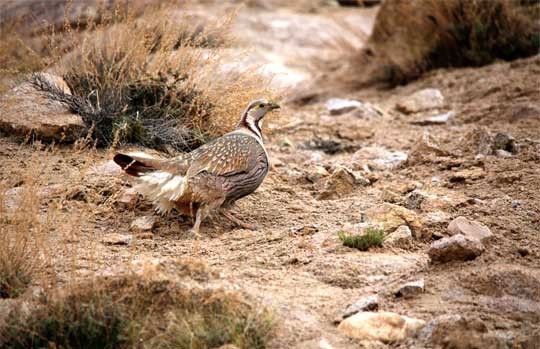
Hemis does not have vehicle safari zones. It is explored on foot from a few entry points, each opening onto a different valley, and the wildlife experience is built around walking, spotting and patience. Entry is through check posts at Zingchen, Skiu and Shang Sumdo.
| Valley | Entry point | Character |
|---|---|---|
| Rumbak and its side valleys | Zingchen | The main snow leopard area, with homestays in Rumbak village |
| Husing | Zingchen | High camp near 3,650 m, a short walk from the road head |
| Markha Valley | Skiu | Classic trekking route through villages and across Ganda La |
| Shang Valley | Shang Sumdo | Quieter eastern approach with strong wildlife potential |
Rumbak Valley
Rumbak is the heart of Hemis wildlife watching. From the road head at Zingchen the trail climbs gradually through a narrow gorge to Rumbak village, a walk of a few hours. Side valleys such as Husing, Yurutse and Tarbung fan out from here, and Stok La is known as one of the most productive vantage points. Homestays in Rumbak give a warm, simple base, with spotters scanning the slopes at dawn and dusk.
Husing Valley
Husing lies close to Zingchen and offers a camp at around 3,650 m. It is an excellent alternative base for winter snow leopard days, with bharal and urial visible on the slopes above camp and good birding along the streambed.
Markha Valley
The Markha Valley, entered from Skiu, is Ladakh's best-known trek, passing Buddhist villages and gompas, with the Ganda La pass at about 4,980 m between Rumbak and Skiu. It is a summer trekking route, with the trail open from mid-June to mid-October.
Shang Valley
Shang Sumdo opens onto the park's eastern side. It is quieter than Rumbak, with steep gorges and good blue sheep habitat, and suits travellers who prefer fewer people on the trail.
Rules and etiquette
Walking is the only way to enter, and a small wildlife fee is charged on arrival. Keep noise low, keep your distance and always follow your spotter's lead. India Tiger Safari would be delighted to design your fully private Hemis expedition: a bespoke journey through the valleys that suit you best, with curated stays, private spotters and a naturalist guide devoted to your party.
Mammals and Birds
The lists below are representative and not complete. About 16 mammal species and 73 bird species have been recorded in the park.
Mammals
- Snow Leopard
- Eurasian Lynx
- Tibetan Wolf
- Eurasian Brown Bear
- Red Fox
- Bharal
- Ladakh Urial
- Asiatic Ibex
- Argali
- Himalayan Marmot
- Mountain Weasel
- Himalayan Mouse Hare
- Woolly Hare
- Pika
Birds
- Golden Eagle
- Lammergeier
- Himalayan Griffon
- Himalayan Snowcock
- Tibetan Snowcock
- Chukar
- Red-billed Chough
- Yellow-billed Chough
- Brown Accentor
- Robin Accentor
- Fire-fronted Serin
- Streaked Rosefinch
- Great Rosefinch
- Black-winged Snowfinch
- White-browed Tit-warbler
- Wallcreeper
- Tickell's Leaf Warbler
- Blyth's Swift
- Horned Lark
- Solitary Snipe
Accessibility
Hemis is closer to Leh than most parks are to their gateway towns, and the journey is part of the appeal. Times below are approximate.
Train
Ladakh has no railway. The nearest major railheads, Jammu Tawi and Chandigarh, are each two to three days by road from Leh, so almost all guests fly to Leh and begin the journey there.
Air
| Airport | Distance and road time | Onward transport |
|---|---|---|
| Leh, Kushok Bakula Rimpochee (IXL) | A short transfer to Leh town; about an hour to an hour and a half to Zingchen | Private car to your Leh hotel, then on to the trailhead |
| Delhi (DEL) | Connecting flight to Leh of about one and a half hours | Regular year-round flights to Leh |
Leh airport sits close to the park boundary and has regular flights from Delhi. Spend your first two nights in Leh to acclimatise before heading into the valleys.
Road
Manali (about 430 km, two days). One of the world's great mountain drives, crossing high passes and usually broken with a night in the Lahaul valley or beyond. It is a summer route.
Srinagar (about 420 km, two days). Through the Zoji La and Kargil, with an overnight stop en route. Also a summer route, and a beautiful way to begin a Kashmir and Ladakh journey.
Leh (about an hour to an hour and a half to Zingchen). The road head for Rumbak and Husing. From there, the walk to Rumbak takes a few hours, and to Husing camp about an hour.
No metalled road enters the park itself. Beyond the check posts you walk, and only villagers' vehicles continue.
Accommodation
Stays around Hemis range from warm Ladakhi homestays in Rumbak to boutique lodges in the Leh valley. Because wildlife watching is on foot, where you sleep shapes each day, so this guide describes the character of each option rather than ranking properties.
Homestays in Rumbak
Families in Rumbak and nearby villages welcome guests into traditional homes, with simple rooms, shared meals of thukpa, momos and butter tea, and the warmth of a kitchen stove. The homestay programme supports local families and links tourism to snow leopard conservation, so a stay here is part of the experience. It is the closest base to the valleys where spotters work.
Camps at Husing and Zingchen
Seasonal camps, with insulated tents and heated dining areas, sit at higher elevations for winter expeditions. They put you nearest the slopes where snow leopards are watched, with dawn starts a short walk from your tent.
Luxury and boutique lodges
In and around Leh, boutique lodges and heritage-style hotels offer heated rooms, fine Ladakhi and international dining and calm garden settings. They are an ideal base for acclimatising in comfort before heading into the park and for recovering afterwards.
Mid-range and budget stays
Leh has a wide choice of hotels and guesthouses, from comfortable mid-range properties to simple, friendly budget stays near the old town.
Choosing well
- Proximity: Homestays and camps are closest to the wildlife, while Leh offers comfort and easy logistics.
- Dining: Homestay meals are simple and hearty; lodges in Leh serve a broader menu.
- Guiding: Local spotters and naturalist guides work with all stays and know each valley intimately.
- Families: High altitude and cold weather suit families with older, healthy children who enjoy walking.
India Tiger Safari's bespoke private itineraries pair each valley with a curated stay.
People Also Visit
Hemis pairs best with parks reached through Delhi, where a single flight connects Leh with the plains.
Ranthambore National Park
Ranthambore is the natural big-cat counterpart, with tigers among lakes and fort ruins instead of snow leopards among Himalayan gorges. Flying from Leh to Delhi and then taking the train south makes a striking contrast, from alpine desert at more than 3,000 m to dry deciduous forest on the Rajasthan plains.
Jim Corbett National Park
Corbett brings the Himalayan foothills into an itinerary that begins in the high Trans-Himalaya. Its sal forest, Ramganga river valley and elephants make a warm, green contrast to Hemis's rock and snow, and it is a day's journey from Delhi.
Jawai Leopard Reserve
Jawai is a conservation reserve, not a national park, and is famed for its Indian leopards living among granite hills and old temples. Pairing snow leopards with Jawai's leopards is a rewarding way to compare two remarkable cats, with a route through Delhi and Udaipur or Jaipur.
Hemis National Park FAQs
What is the best time to visit Hemis National Park?
November to March is the peak season for snow leopards, when snow pushes prey and predator into lower valleys and spotters can scan open slopes. Mid-June to mid-October is the trekking season, with the Markha Valley open, marmots active and roads from Manali and Srinagar passable. Each season offers a different Ladakh.
How many days do you need in Hemis?
Plan six to eight nights in Ladakh, with two in Leh to acclimatise and three to five days in the valleys. Extra days in Rumbak or Husing add more time on the slopes at dawn and dusk. India Tiger Safari's bespoke itineraries match nights and valleys to your dates.
Can you see snow leopards in Hemis?
Hemis has the highest recorded snow leopard density in the world, and winter expeditions with a good spotter produce sightings on many trips. Snow leopards remain shy, hidden cats, so no sighting can be promised. A few patient days, clear air and expert eyes give the best chance of a memorable encounter.
Which area is best for snow leopards?
Rumbak Valley and its side valleys, including Husing, Yurutse and Tarbung, are the best-known areas, with Stok La a favoured vantage point. Shang Valley is quieter and suits travellers who prefer fewer people. The Markha Valley is a summer trekking route rather than a winter wildlife base.
How do Hemis arrangements work?
Entry is on foot through check posts at Zingchen, Skiu and Shang Sumdo, with a wildlife fee and a local guide or spotter. India Tiger Safari handles entry, guides, spotters and stays for its private guests, so you can concentrate on the landscape and the animals.
What animals can you see in Hemis?
Snow leopard is the headline, supported by bharal, Ladakh urial, Asiatic ibex and argali. Tibetan wolf, Eurasian lynx and brown bear are present but rarely seen, while red fox and Himalayan marmot are more regular. Golden eagle, lammergeier and Himalayan griffon patrol the ridges, and snowcocks, accentors and choughs delight birders.
How do you reach Hemis National Park?
Fly to Leh, which has regular flights from Delhi of about one and a half hours. From Leh, Zingchen is roughly an hour to an hour and a half by road, and Rumbak is a few hours' walk beyond. Overland routes from Manali and Srinagar, each about two days, are open in summer.
Is Hemis suitable for families?
Hemis suits families with older, healthy children who enjoy walking and can handle cold and altitude. Days are quiet and unhurried, with time to watch slopes through scopes. Homestay stays give warmth and Ladakhi hospitality. Younger children are usually happier in Leh's lower-key programme of monasteries and valley drives.
What should you wear on a Hemis expedition?
Dress in layers: thermal base layers, a fleece, a down jacket and a windproof shell, with insulated boots, warm gloves, a hat and sunglasses. Muted earth tones blend well with the landscape. Sun protection matters even in winter, and a good pair of binoculars or a spotting scope makes the days richer.
How does altitude affect a Hemis trip?
Leh sits at about 3,500 m, and the valleys are higher. Spending the first two nights in Leh, resting, drinking plenty of water and walking slowly lets the body adjust. Winter mornings are cold and clear. India Tiger Safari builds acclimatisation into every private itinerary so the wildlife days feel comfortable.