Bandhavgarh National Park: Safari Guide
High tiger density, Bandhavgarh Fort, Dynasties, the meadows of Tala
About Bandhavgarh National Park
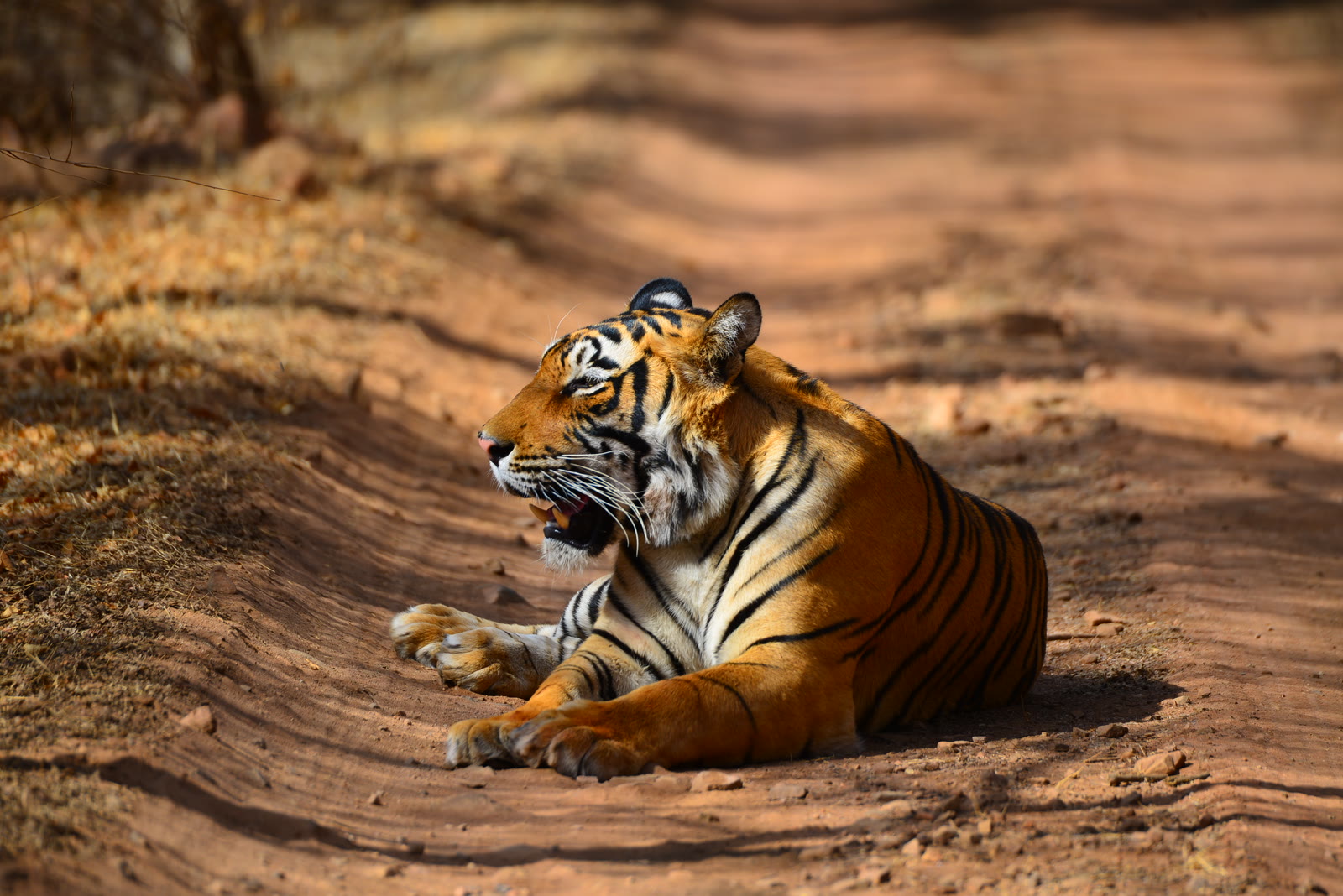
Bandhavgarh National Park lies in Umaria district in eastern Madhya Pradesh, in the rugged Vindhya hills. It is one of India's finest tiger destinations, celebrated for a very high density of tigers and for a landscape of sal forest, bamboo, grassy meadows and rocky ridges crowned by an ancient fort. The national park is small, about 105 km², and forms part of the core of Bandhavgarh Tiger Reserve, which covers 1,536 km², of which about 716 km² is core and 820 km² buffer.
The area was once a hunting ground of the Maharajas of Rewa. It became a national park in 1968 and a tiger reserve in 1993, when the neighbouring Panpatha Wildlife Sanctuary was added to the core. The distinction for visitors is easy to hold: the national park is the historic heart, the tiger reserve is the wider landscape, and safaris run in three core zones and three buffer zones.
The terrain is compact and dramatic. Steep-sided hills of sandstone rise above sal-lined valleys and open meadows, and the plateau at the top holds Bandhavgarh Fort, a 10th-century stronghold whose name means "brother's fort" in tradition. Moist deciduous, sal-mixed and dry deciduous forest, along with bamboo and grassland, cover the park, and the Charan Ganga river and its springs sustain the meadows.
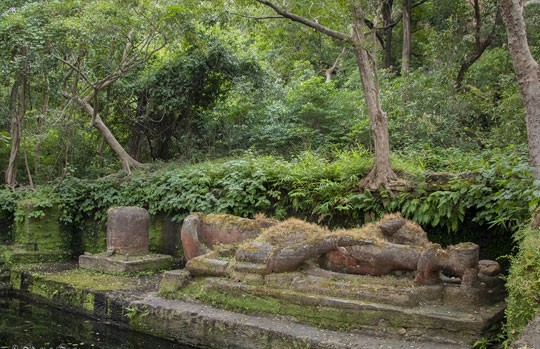
History sits in the forest as much as wildlife. The Shesh Shaiya, a 10th-century statue of Vishnu reclining on a serpent, lies near the origin of the Charan Ganga, and ancient caves and temples dot the hills. It was the setting for the BBC series Dynasties, which followed the tigress Raj Bhera, and its tigers have been the subject of many other films.
Wildlife is rich beyond tigers. Leopards, sloth bears, dhole, gaur, chital and sambar are all present, and gaur were reintroduced from Kanha in 2012, with about 170 in the park by 2025. Wild elephants returned to Madhya Pradesh in 2018 after more than a century, and a resident herd now ranges through the reserve.
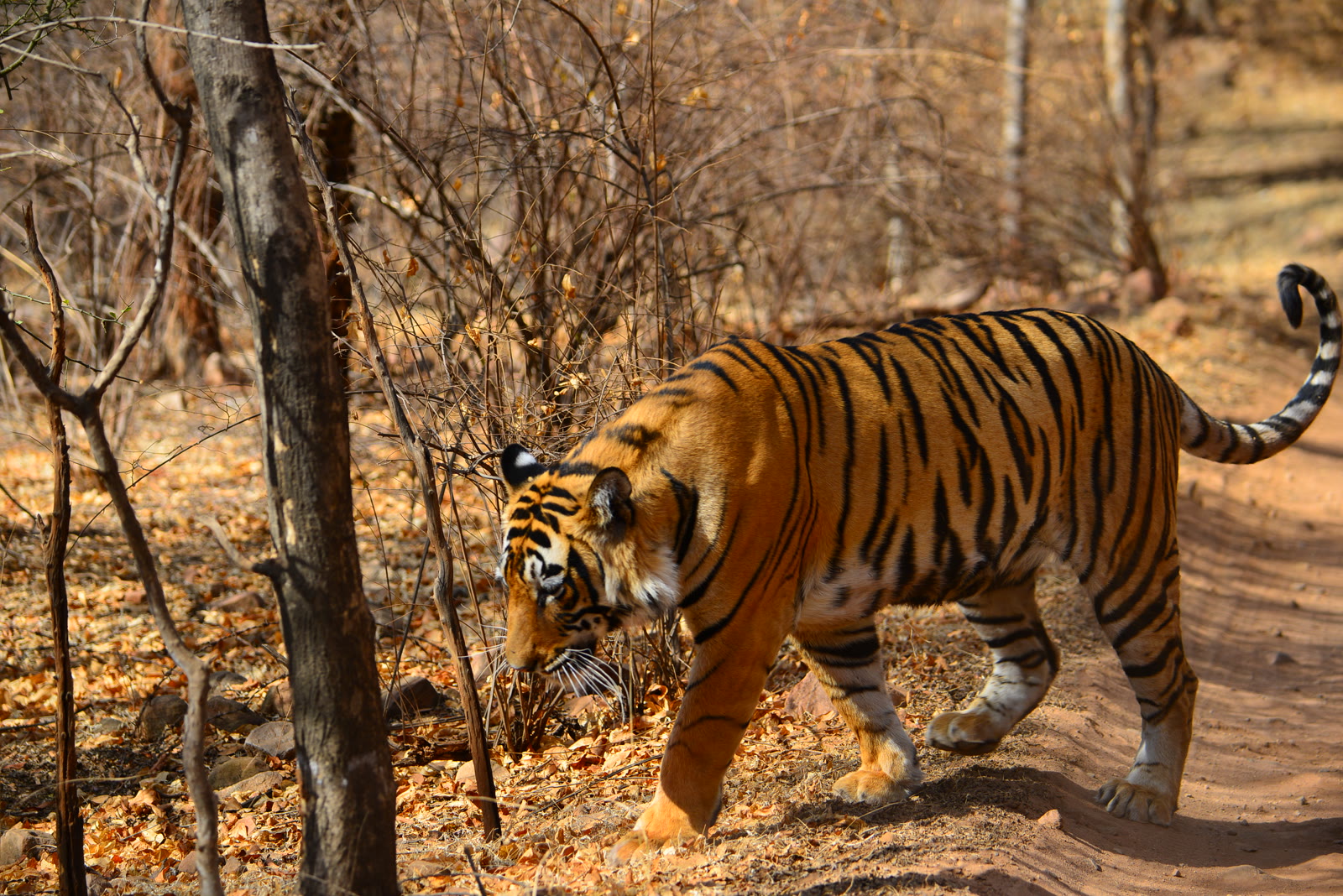
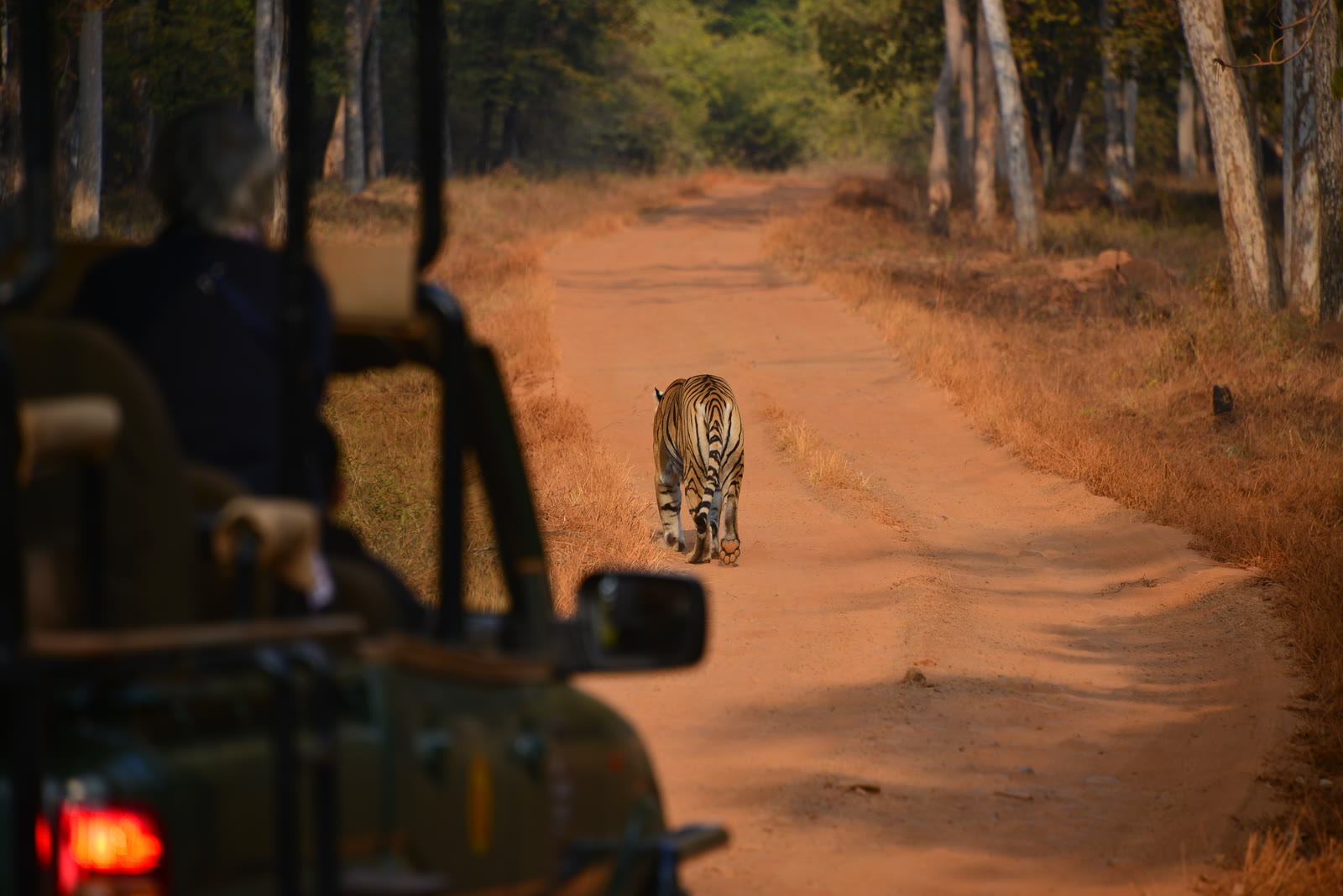
What to expect: morning and afternoon jeep drives through meadows, sal forest and rocky hills, often with the fort silhouetted above. It is a compact, rewarding park, and tigers, gaur and langurs are highlights, with sightings, while never promised, frequent.
Facts About Bandhavgarh National Park
| Information | Details |
|---|---|
| Location | Umaria district, Vindhya hills |
| State | Madhya Pradesh |
| Established | National park 1968; tiger reserve 1993 |
| Area | National park about 105 km²; tiger reserve 1,536 km² (core about 716 km², buffer about 820 km²) |
| Protected Area Type | National park within a tiger reserve, together with Panpatha Wildlife Sanctuary |
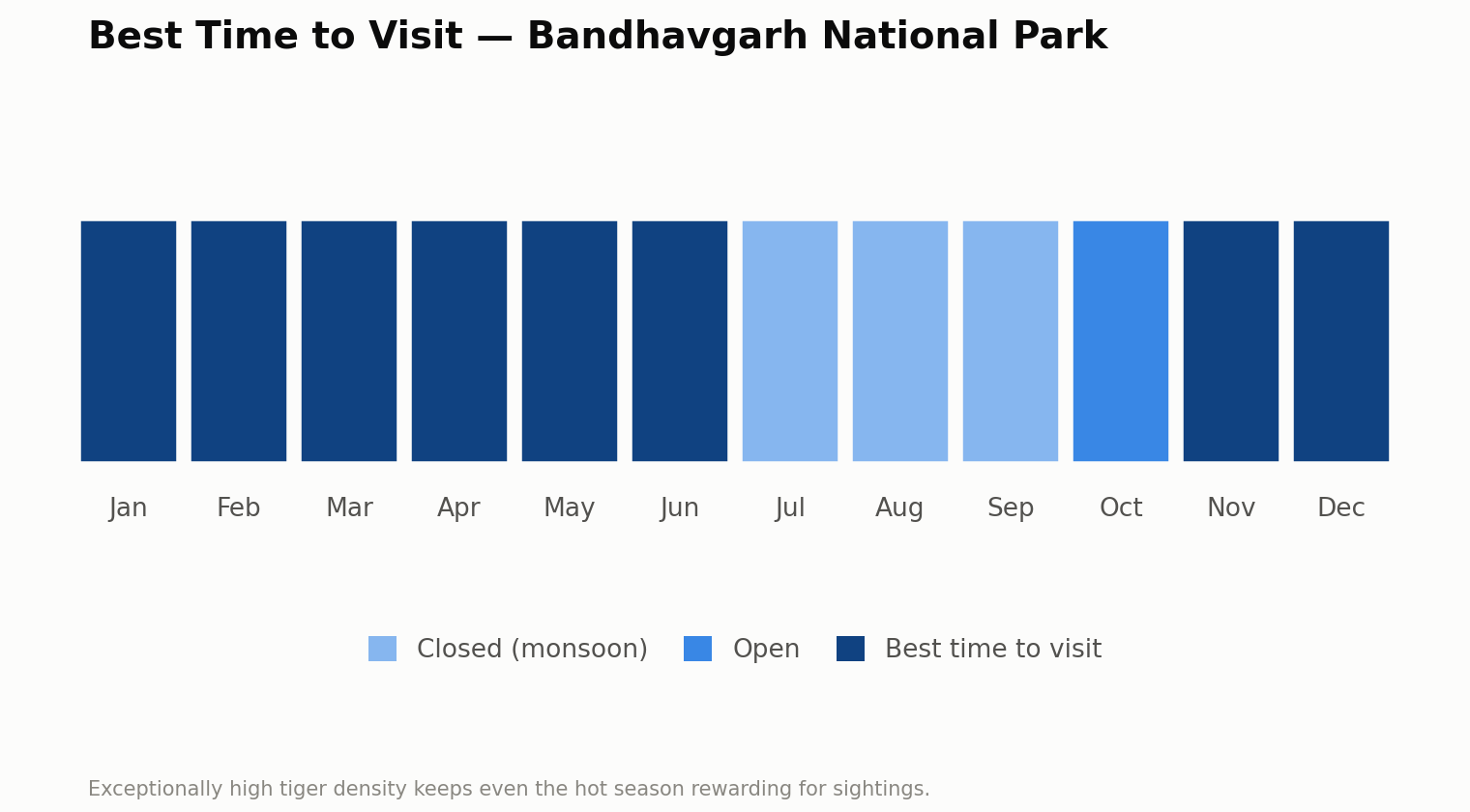
| Functional Days | Two daily shifts. Core zones from 1 October to 30 June; buffer zones through the year |
| Annual Closure | Core zones rest from 1 July to 30 September; buffer routes continue |
| Weekly Offs | Core zones typically rest on Wednesday afternoons, and the park closes on Holi and Diwali |
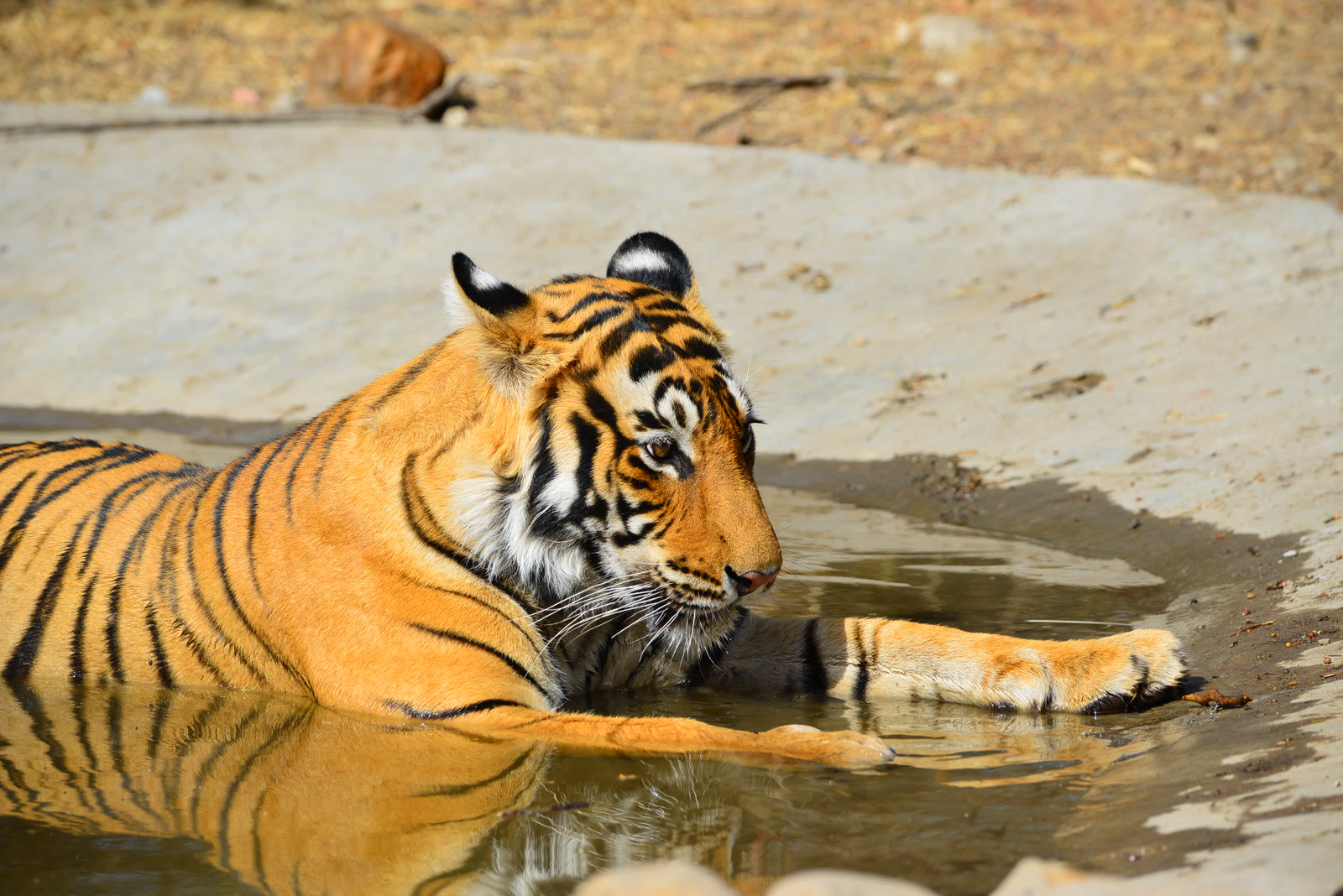
| Best Time to Visit | November to June, with April to June best for tigers at waterholes |
| Recommended Safari Duration | Two to three nights with three to five drives across different zones |
| Vegetation | Sal and mixed deciduous forest, bamboo, dry scrub and grassland |
| Elevation | Hilly terrain rising above the valley floors |
| Major Wildlife | Tiger, leopard, sloth bear, dhole, gaur, chital, sambar, nilgai |
| Famous For | High tiger density, Bandhavgarh Fort, Dynasties, the meadows of Tala |
Functional days. Drives run in a morning and an afternoon shift that follow the season, with mornings starting earlier in summer and later in winter.
Yearly off. The core zones rest through the monsoon and reopen on 1 October, when the meadows are green and the valleys full. Buffer zones stay open through the year.
Weekly offs and rules. Wednesday afternoons are a rest period for the core zones. Each permit is tied to a zone, date and shift, and only authorised jeeps enter the park.
Tiger Density and Other Major Species
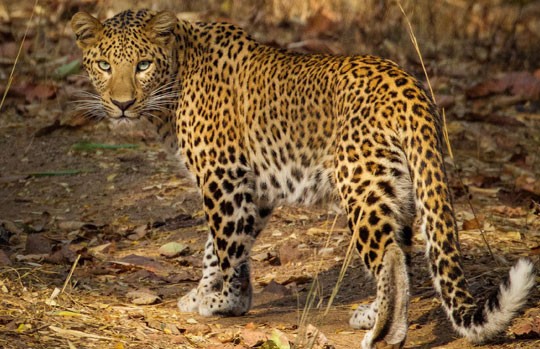
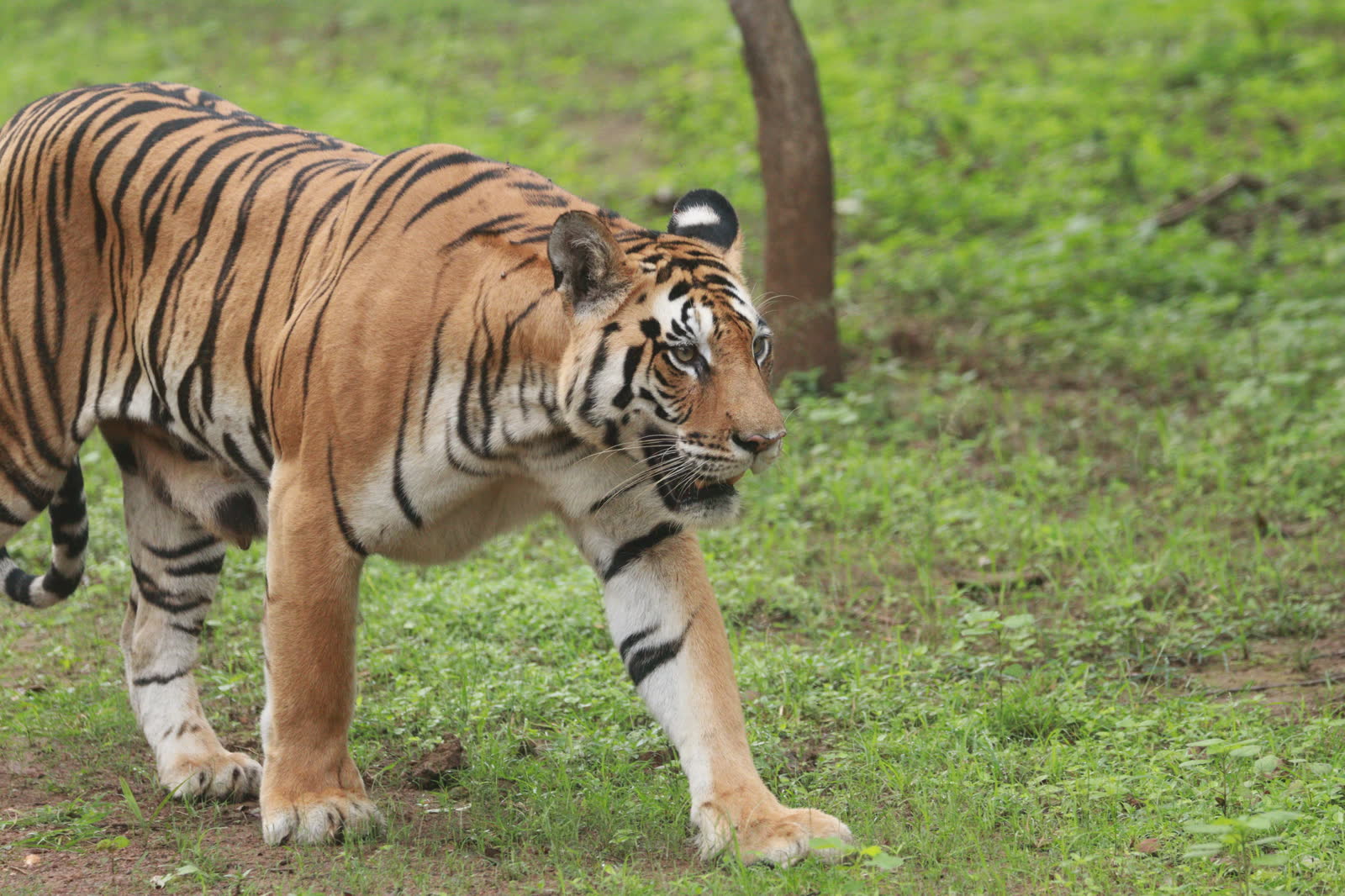
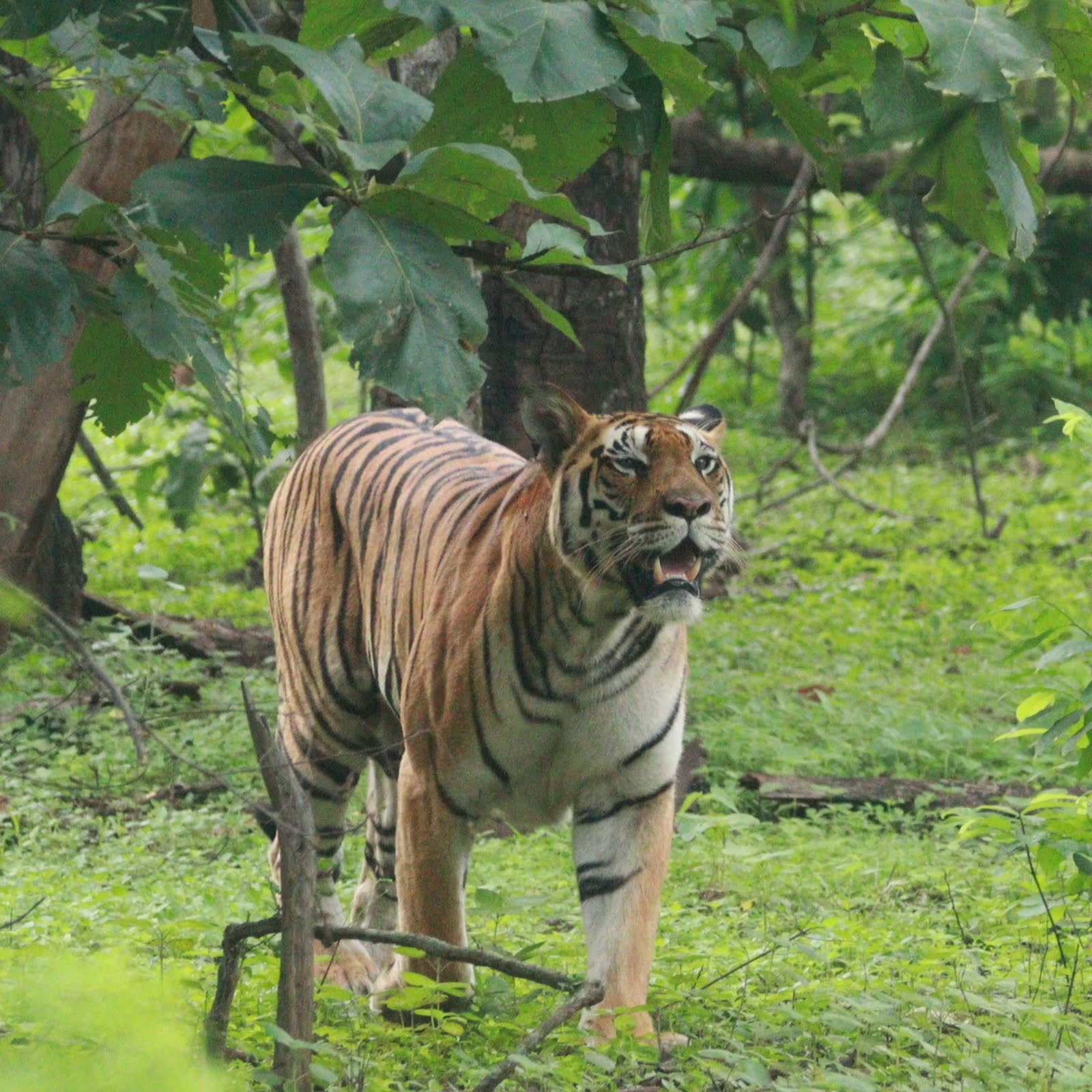
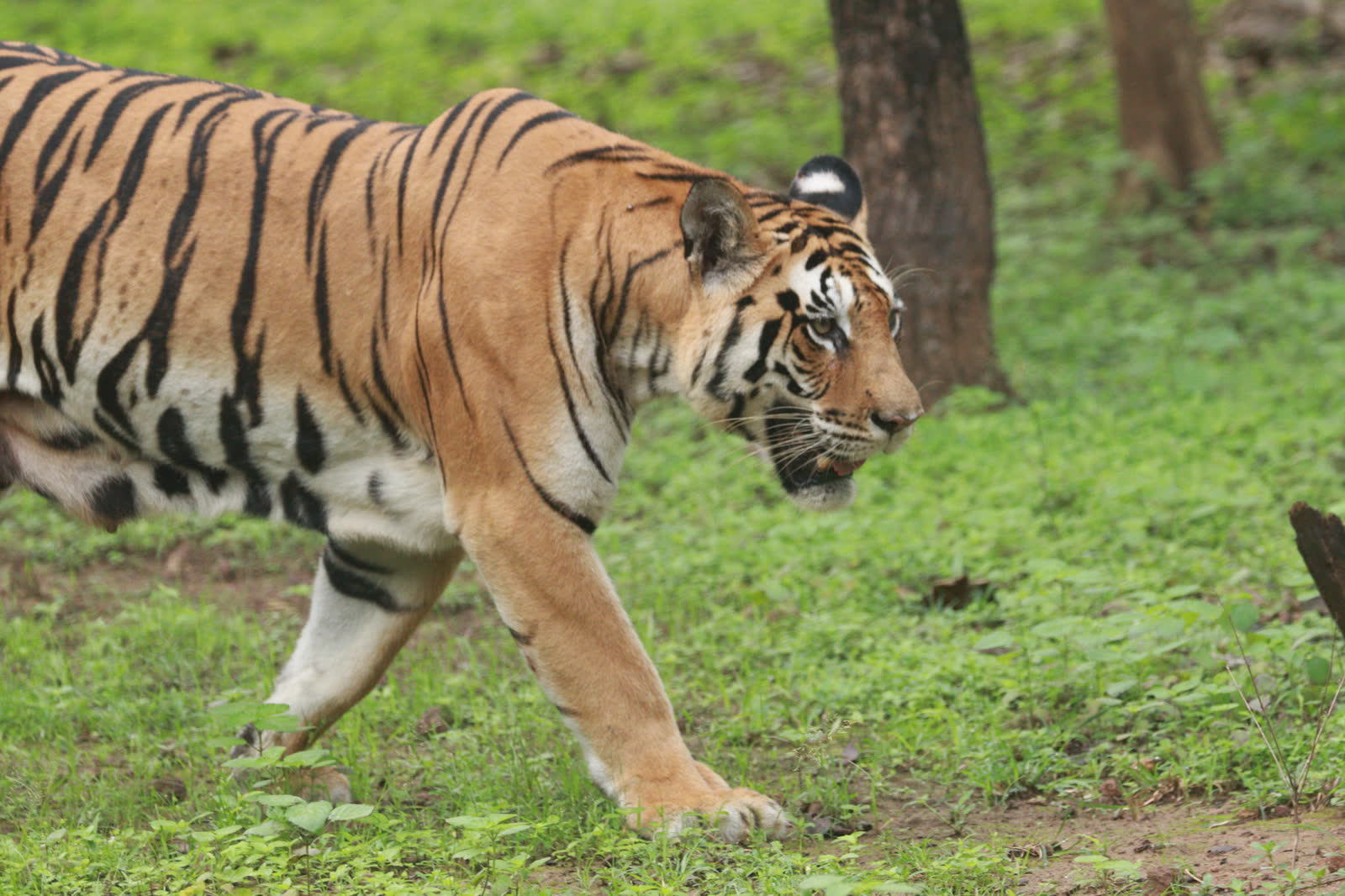
Bandhavgarh is one of the most tiger-dense reserves in India, and its conservation record is one of steady strength.
| Year | Area | Estimated numbers |
|---|---|---|
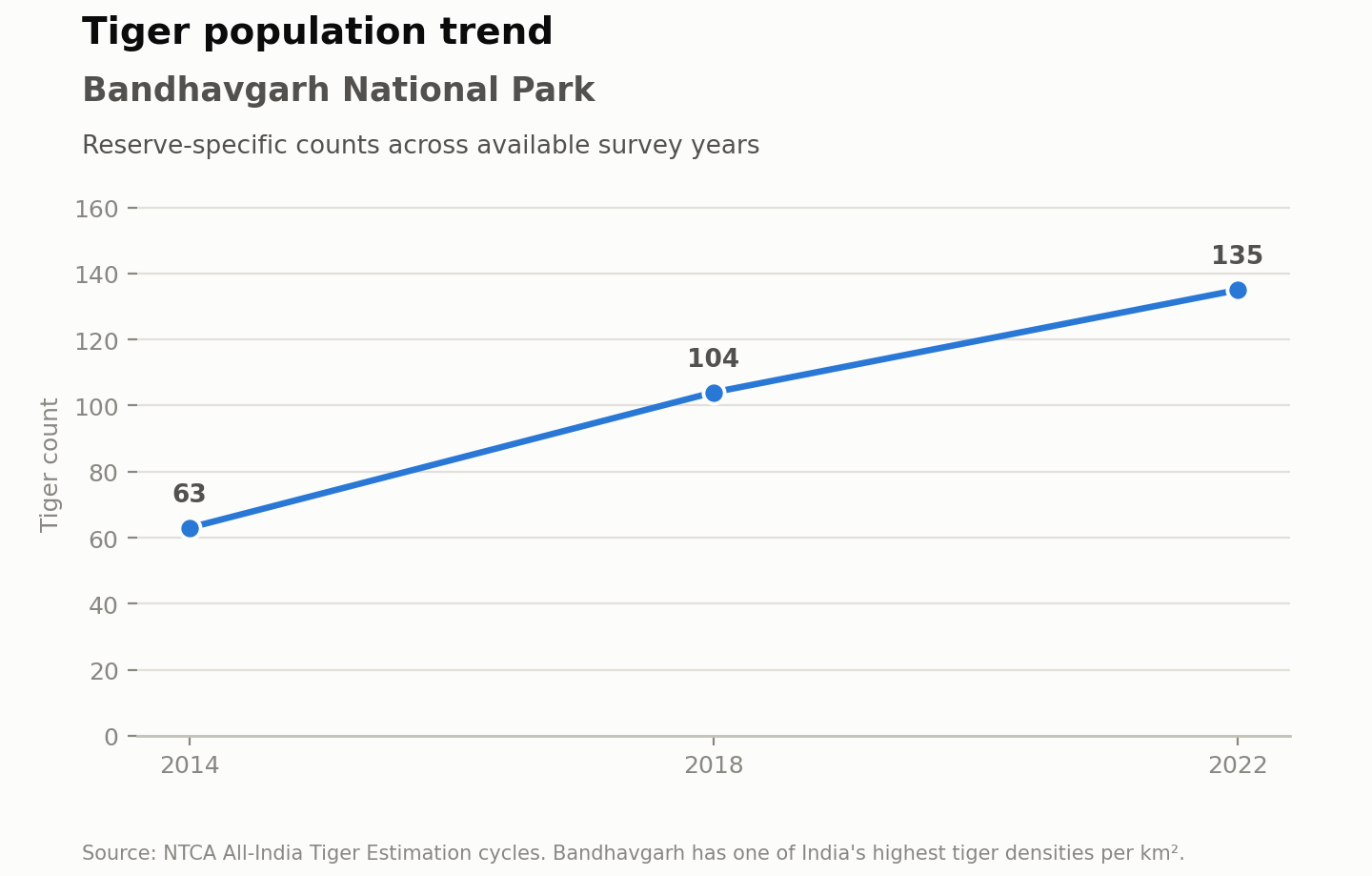
| 2022 | Bandhavgarh Tiger Reserve, tigers | About 135 |
| 2022 | India, tigers | 3,682 (range 3,167–3,925) |
| 2012 | Gaur reintroduced from Kanha | 50 animals |
| 2025 | Gaur | About 170 |
| 2024 | Elephants in the reserve | About 55 |
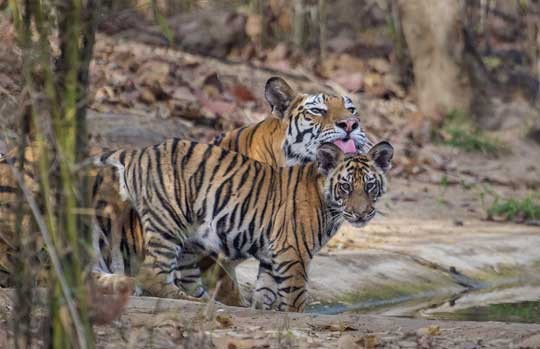
The compact, prey-rich core supports many tigers in a small area, and territories are often closely packed, which is why tigers here are famous for being visible on the meadows and forest edges. Bandhavgarh has also been a source reserve, with tigers from here helping to restock other parks. Its conservation achievements include the reintroduction of gaur, which had been lost, and the return of elephants, which began ranging through the reserve in 2018.
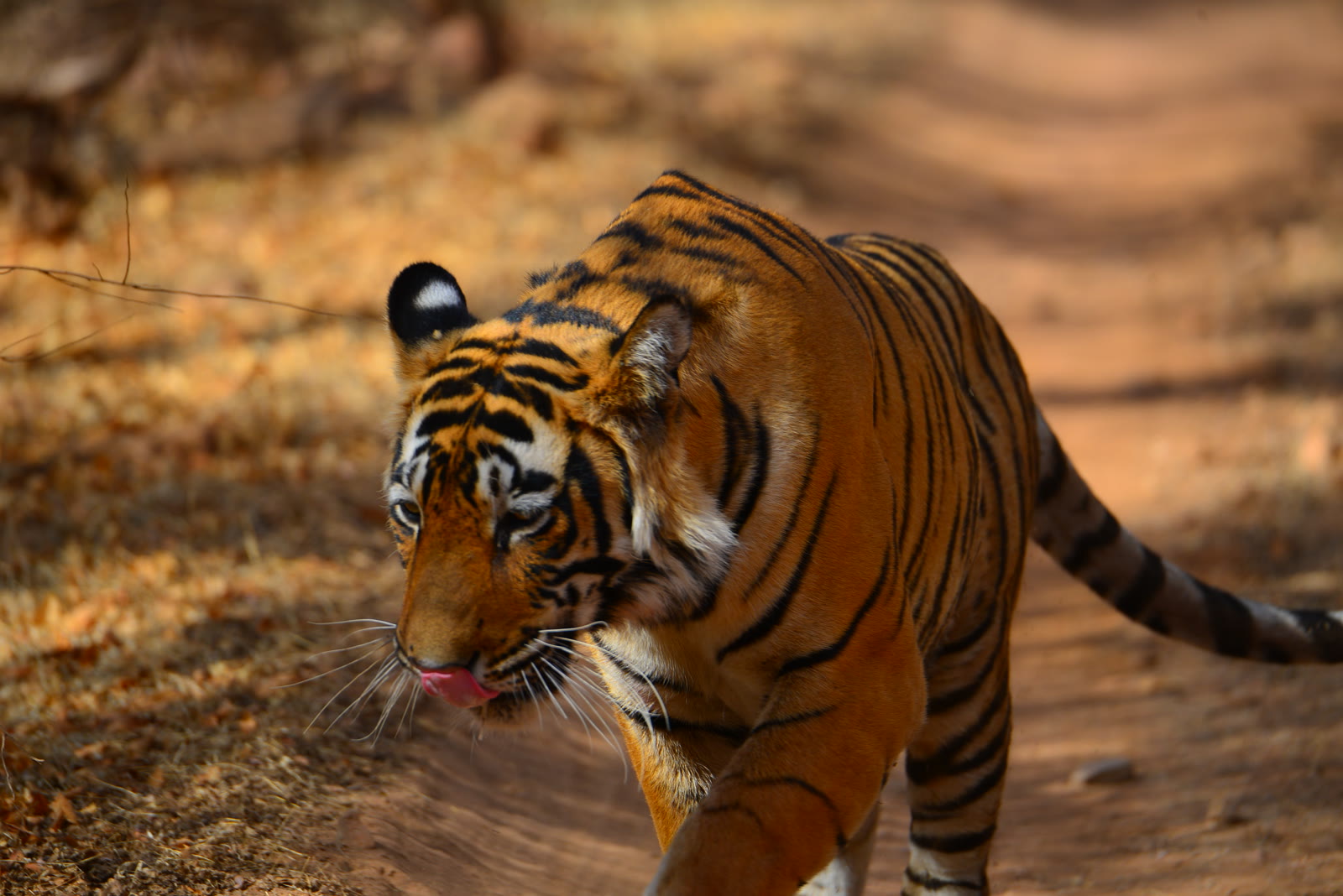
Sightings are frequent, and Bandhavgarh is often regarded as one of India's most rewarding parks for tigers. As with every wild cat, no sighting can be promised, but the density of tigers and the open meadows of Tala make each drive full of promise.
Other species
- Gaur: Seen regularly, grazing on meadows and forest clearings.
- Leopard: Present and secretive, seen occasionally in rocky areas.
- Dhole (wild dog): Seen from time to time in packs.
- Sloth bear: Seen occasionally, often among mahua trees in the hot season.
- Asian elephant: Present since 2018, seen occasionally.
- Prey base: Chital and sambar are seen on almost every drive, with nilgai, chinkara, wild boar and four-horned antelope also present.
- Striped hyaena, Indian wolf and fishing cat: Present and rarely seen.
- Birds: More than 240 species, from crested serpent eagle and Malabar pied hornbill to brown fish owl.
Safari Zones in Bandhavgarh National Park
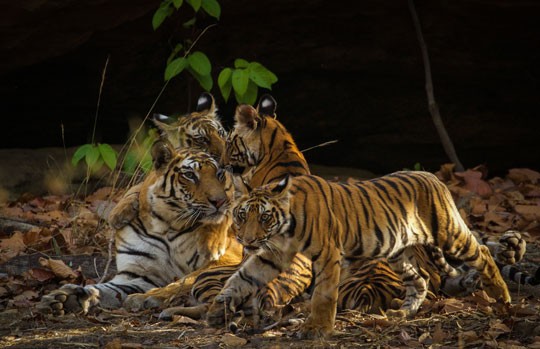
Bandhavgarh offers six safari zones: three core zones and three buffer zones. Each permit is tied to a zone, and no zone can promise a sighting.
| Zone | Area | Character |
|---|---|---|
| Tala | Core | The oldest and most scenic zone, with the fort, meadows and Shesh Shaiya |
| Magdhi | Core | Waterholes, dense forest and open grassland |
| Khitauli | Core | Dry deciduous forest on the park's edge, with consistent sightings |
| Dhamokhar | Buffer | An extension of Magdhi, with Mudgudi Dam and caves |
| Johila | Buffer | An extension of Tala, known for the Johila waterfall |
| Panpatha | Buffer | An extension of Khitauli, on the Pachpedi side |
Tala
Tala is the park's oldest and innermost zone, with towering sal forest, hillocks and grand meadows. It holds Bandhavgarh Fort and the 10th-century Shesh Shaiya statue of Vishnu, the source of the Charan Ganga, and the ancient Bari Gufa caves. The Chakradhara and Rajbhera meadows are known for scenic drives and have appeared in some of the finest tiger films. Tala has an excellent record for tiger sightings.
Magdhi
Magdhi mixes dense forest with open grassland, and its natural and artificial waterholes, such as Murdhawa, Dabhadhole and Sukhi Patiha, are places where tigers are often seen. Spots such as Charger Point, Mahaman Pond and Dinosaur Rock add interest, and the entry point lies about 38 km from Umaria.
Khitauli
Khitauli is a zone of dry deciduous forest and has reported numerous tiger sightings. It is less crowded than Tala and is easily reached from Umaria, about 37 km away.
Dhamokhar, Johila and Panpatha
The buffer zones offer quieter drives that stay open through the year. Dhamokhar, an extension of Magdhi, has Mudgudi Dam, the Sehimaada caves and Kadewaha grassland. Johila, an extension of Tala, is named after the Johila waterfall. Panpatha, an extension of Khitauli, is entered near Pachpedi and adds forest routes with fewer vehicles.
Vehicles and rules
Open jeeps carry small groups with a naturalist. Permits are allotted by zone, so drives across two or three zones give the fullest picture. India Tiger Safari would be delighted to design your fully private Bandhavgarh safari: a bespoke journey through the zones that suit you best, with curated stays, a private jeep and a naturalist guide devoted to your party.
Mammals and Birds
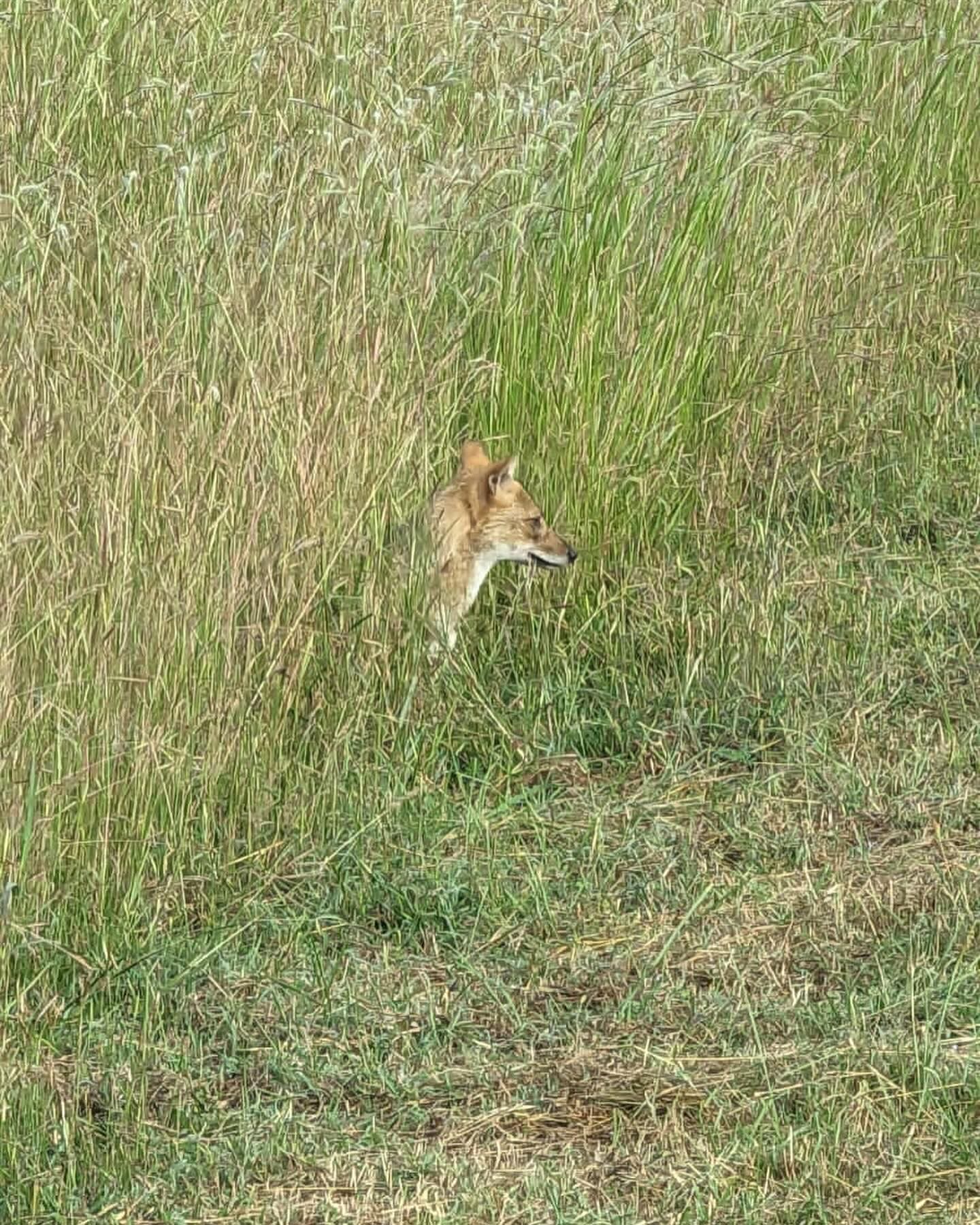
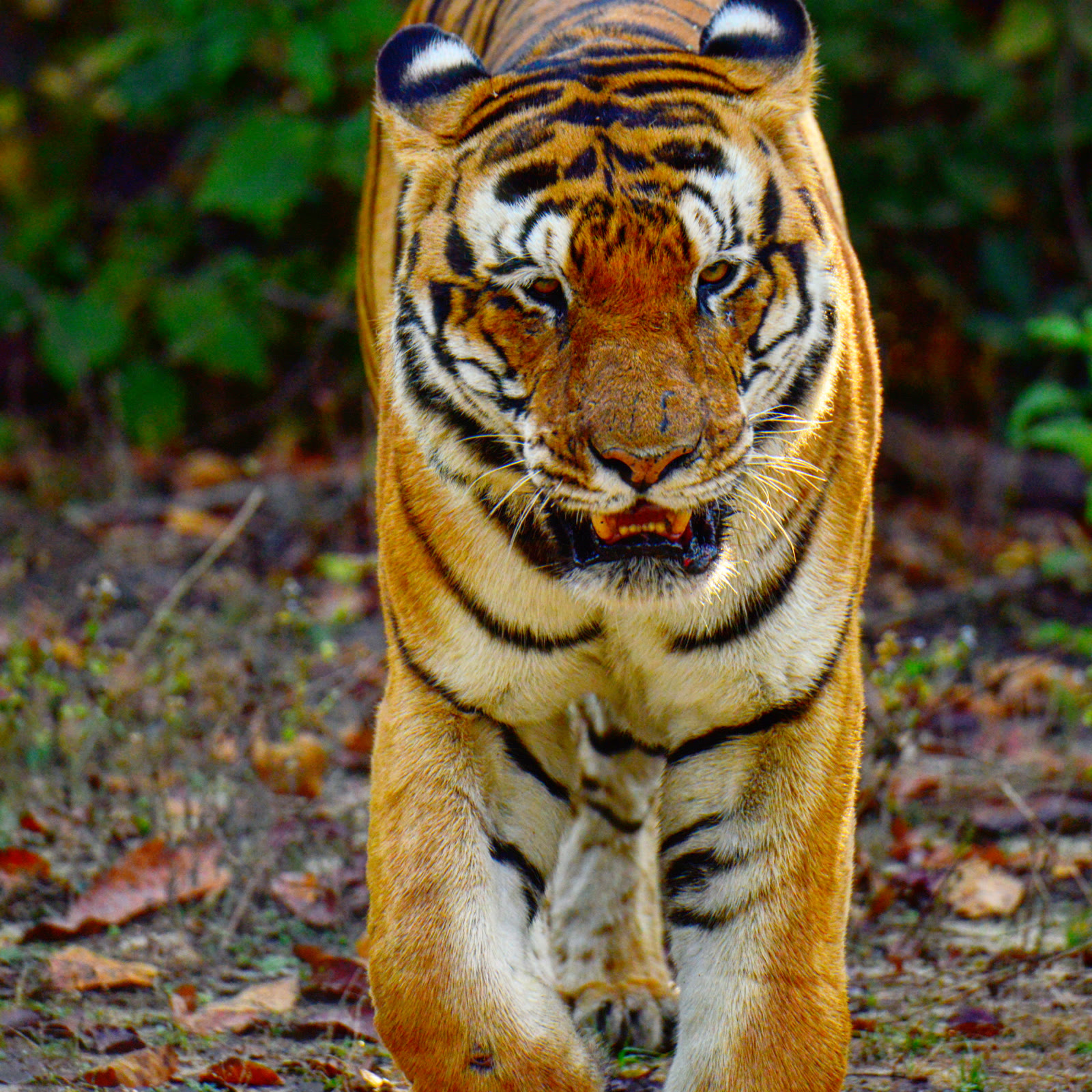
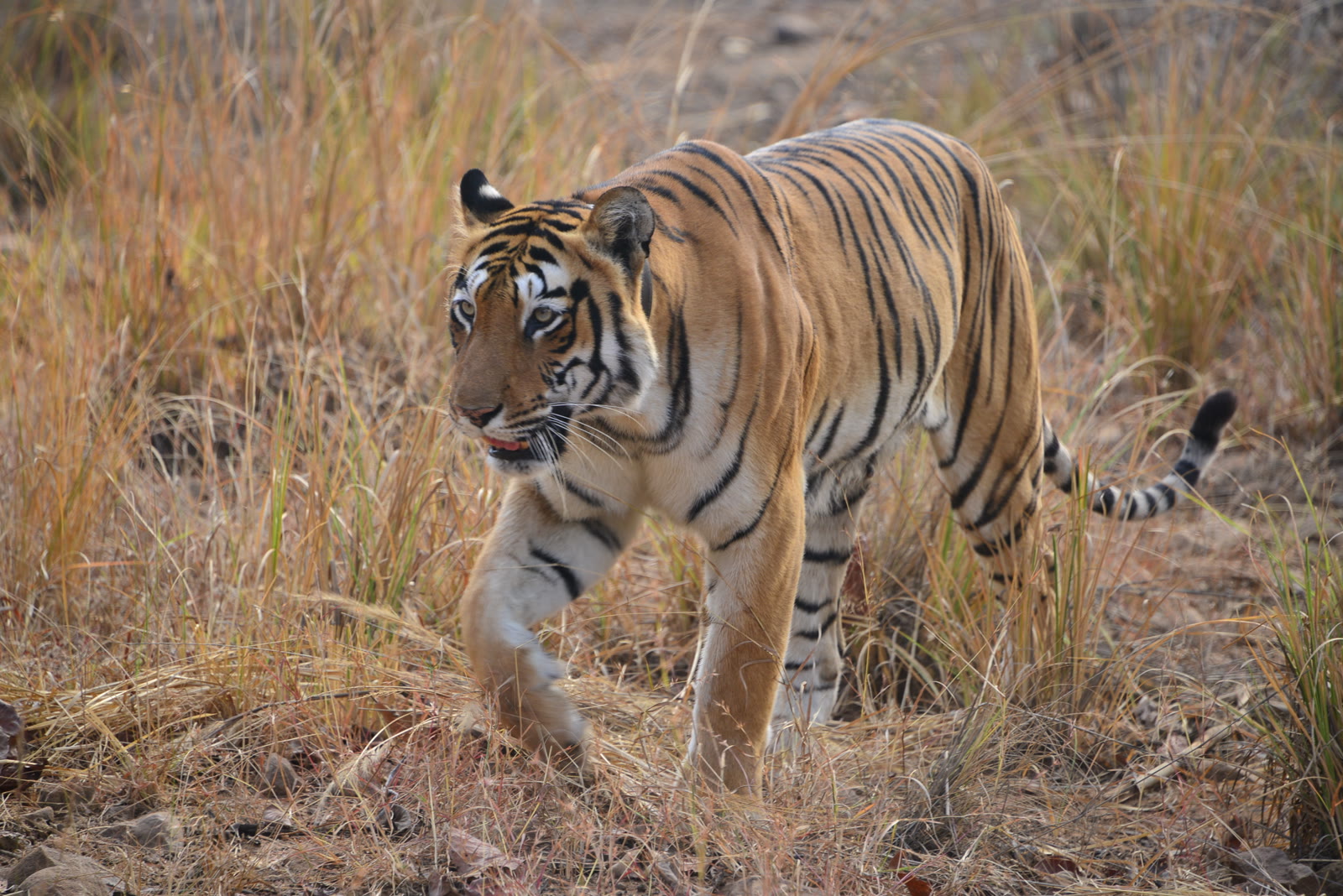
The lists below are representative and not complete.
Mammals
- Tiger
- Leopard
- Dhole
- Gaur
- Chital
- Sambar
- Nilgai
- Chinkara
- Northern Red Muntjac
- Four-horned Antelope
- Wild Boar
- Sloth Bear
- Striped Hyaena
- Indian Wolf
- Golden Jackal
- Indian Fox
- Indian Porcupine
- Jungle Cat
- Asiatic Wildcat
- Fishing Cat
- Rusty-spotted Cat
- Asian Elephant
Birds
- Red Junglefowl
- Indian Peafowl
- Greater Coucal
- Indian Roller
- Indian Grey Hornbill
- Malabar Pied Hornbill
- Common Myna
- Little Egret
- Cattle Egret
- Great Egret
- Black Drongo
- Indian Pond Heron
- Common Snipe
- Indian Robin
- Yellow-crowned Woodpecker
- Rufous Woodpecker
- White-throated Kingfisher
- Common Kingfisher
- Pied Kingfisher
- Asian Green Bee-eater
- Red-vented Bulbul
- Long-billed Vulture
- White-rumped Vulture
- Crested Serpent Eagle
- Crested Hawk-Eagle
- Bonelli's Eagle
- Lesser Spotted Eagle
- Brown Fish Owl
- Black Ibis
- White-necked Stork
- Little Cormorant
- Great Cormorant
- Shikra
Accessibility
Bandhavgarh is reached through the small town of Umaria, and the last stretch passes through farmland and sal forest. Distances and times are approximate.
Train
| Station | Distance and road time to the park | Why use it |
|---|---|---|
| Umaria | About 32–38 km, depending on the gate; roughly an hour | The nearest station, with services to Jabalpur, Katni and Bilaspur |
| Katni Junction | About 100 km; roughly two and a half hours | A major junction with trains from Delhi, Mumbai and Kolkata |
Air
| Airport | Distance and road time | Onward transport |
|---|---|---|
| Jabalpur (JLR) | About 165–190 km; roughly four hours | Private transfer |
| Khajuraho (HJR) | About 225 km; roughly four to five hours | Private transfer |
Jabalpur is the more convenient airport, with regular flights from Delhi, Mumbai and Bhopal. Khajuraho pairs well with a temple visit on the way.
Road
Jabalpur (about 165–190 km, roughly four hours). The main route from the airport and city, via Katni and Umaria.
Katni (about 100 km, roughly two and a half hours). A convenient road link from the railway junction.
Khajuraho (about 225 km, four to five hours). A scenic drive that lets you combine the famous temples with Bandhavgarh.
Inside the park, only authorised safari vehicles are used, with a naturalist.
Accommodation
Stays around Bandhavgarh cluster around Tala village and the Magdhi and Khitauli gates, set among sal forest and farmland. This guide describes the character of each option rather than ranking properties.
Luxury safari lodges
The finest properties offer spacious cottages or tents, private terraces, pools, fine dining and expert naturalists. Many sit at the edge of the forest, with mornings that begin with a short drive to the gate. They suit couples and small private groups who want comfort between drives.
Boutique lodges and eco-lodges
Smaller lodges and eco-lodges near the gates offer a quieter, more personal stay, with tree-house and cottage-style rooms and warm, home-style meals.
Resorts and mid-range hotels
A range of resorts with gardens and pools serves families and groups, and is practical for early starts.
Budget stays
Guesthouses in Tala and Umaria offer simple, good-value rooms.
Choosing well
- Gate proximity: Tala gate lies close to Tala village, while the Magdhi and Khitauli gates are about seven kilometres away, so choose a base to suit your zone.
- Dining: Lodges serve Indian menus and can pack breakfast for early drives.
- Guiding: Naturalists accompany every vehicle, and lodges can recommend experienced guides.
- Families: Resorts with pools and gardens suit children best.
India Tiger Safari's bespoke private itineraries pair each zone with a curated lodge.
People Also Visit
Bandhavgarh sits at the north-eastern end of Madhya Pradesh's tiger circuit, with several parks within a day's drive.
Kanha National Park
Kanha lies to the south-west, about four hours by road, and is the classic pairing. Its sal forests, meadows and barasingha contrast with Bandhavgarh's rocky hills and fort, and the two together show the range of central Indian tiger country.
Panna National Park
Panna lies to the north-west and is easily reached via Khajuraho, making it a natural extension for travellers who also wish to see the Khajuraho temples. Its river gorges and open forest offer a different landscape from Bandhavgarh's hills.
Pench National Park
Pench lies further south-west, usually visited after Kanha in a half-day drive. Its teak forest, river valley and dhole packs make a graceful conclusion to a Madhya Pradesh journey.
Bandhavgarh National Park FAQs
What is the best time to visit Bandhavgarh National Park?
The core zones are open from 1 October to 30 June. November to March brings cool, clear days, while April to June is hot, with tigers and other animals gathering at waterholes and thin vegetation improving visibility. Buffer zones stay open through the monsoon, from July to September.
How many days do you need in Bandhavgarh?
Two to three nights is ideal, giving three to five drives across two or more zones. That allows time for the meadows of Tala, the waterholes of Magdhi and the quieter forest of Khitauli. India Tiger Safari's bespoke itineraries match nights and zones to your dates.
Can you see tigers in Bandhavgarh?
Bandhavgarh Tiger Reserve held about 135 tigers in 2022 and has a very high tiger density, so sightings are frequent and the park is often regarded as one of India's most rewarding for tigers. No sighting can be promised, but the meadows of Tala and the waterholes of Magdhi make each drive full of promise.
Which safari zone is best in Bandhavgarh?
There is no single best zone. Tala is the oldest and most scenic, with the fort and meadows, Magdhi offers waterholes and dense forest, and Khitauli is quieter with consistent sightings. Driving two or three zones gives the fullest picture, and buffer zones offer quieter drives.
How do Bandhavgarh safari arrangements work?
Safaris are booked by zone, date and a morning or afternoon shift, in an open jeep with a naturalist. Every guest needs valid ID. India Tiger Safari handles permits, vehicles and guides for its private guests, so you can concentrate on the landscape and the animals.
What animals can you see in Bandhavgarh?
Tigers are the headline, with leopard, sloth bear and dhole also present. Gaur, chital, sambar, nilgai and wild boar are widespread, and elephants have ranged through the reserve since 2018. More than 240 bird species include crested serpent eagle, Malabar pied hornbill and brown fish owl.
How do you reach Bandhavgarh National Park?
Umaria station is about 32 to 38 km from the gates, and Katni Junction, about 100 km away, is a major railhead. Jabalpur airport is about 165 to 190 km, roughly four hours by road, and Khajuraho is about 225 km. A private transfer to your lodge is the most comfortable option.
Is Bandhavgarh suitable for families?
Yes. Drives are unhurried, the fort and meadows give plenty to see, and children often love the gaur, langurs and birds. Resorts with pools and gardens suit young guests, and a private jeep lets families set a comfortable pace.
What should you wear on a Bandhavgarh safari?
Choose muted greens, browns and khaki, and layer up, since winter mornings in an open jeep are cold. In summer, bring a hat, sunscreen and light long sleeves. Wear closed shoes, avoid strong perfume and carry binoculars for the birds.
Is a private jeep available in Bandhavgarh?
Yes. A jeep permit covers one vehicle for a small party, so a private group can have it to itself. India Tiger Safari arranges a private jeep and a naturalist guide devoted to your party as part of its bespoke journeys.