Gir National Park: Asiatic Lion Safari Guide
The only wild Asiatic lions in the world, and the Maldhari coexistence with wildlife
About Gir National Park
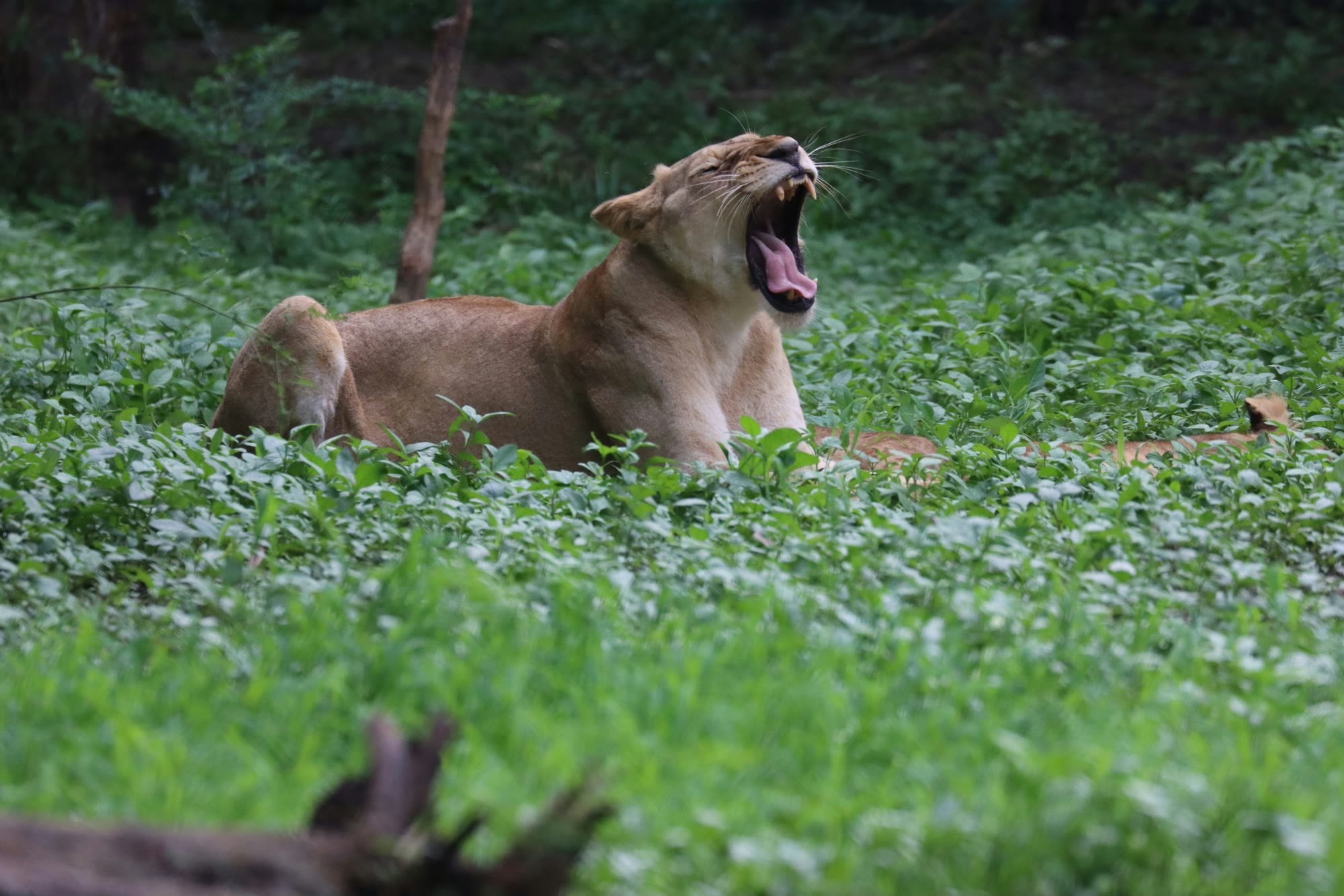
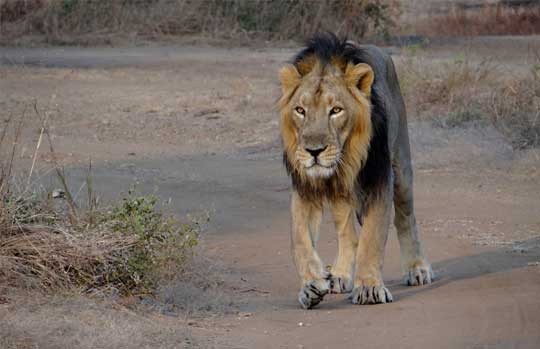
Gir National Park, known as Sasan Gir, lies in the Junagadh, Gir Somnath and Amreli districts of Saurashtra in western Gujarat. It is the only place in Asia where wild Asiatic lions live, and one of the most important protected areas in the country. Formally Gir National Park and Wildlife Sanctuary, it covers about 1,410 km², of which about 259 km² is the fully protected national park and about 1,152 km² the surrounding sanctuary.
The forest was once the private hunting ground of the Nawab of Junagadh. At the end of the 19th century only a small number of Asiatic lions survived, all of them here, and the Nawab, encouraged by British viceroys, took steps to protect them. The area became a wildlife sanctuary in 1965, and the national park core followed. The distinction for visitors is easy to hold: the national park is the heart of the reserve, the sanctuary is the wider forest around it, and both together form one lion landscape.
Gir is a landscape of dry deciduous forest, and it is the largest of its kind in western India. Teak grows mixed with acacia, ber, jamun, tendu and dhak, with open savannah-like grasslands known locally as vidis. Seven perennial rivers, including the Hiran, Shetrunji and Machhundri, thread the forest, and reservoirs such as Kamleshwar Dam, known as the lifeline of Gir, hold water through the dry season. The landscape is gentle, rolling and dust-gold, quite unlike the forests of central India.
People and lions share Gir in an unusual way. The Maldhari pastoral community has lived in the forest for generations, herding buffalo and cattle among the lions, and the tradition of tolerance is part of Gir's success. Women forest guards, known as the Cat Women of Gir, are among the reserve's best-known protectors.
Beyond lions, Gir is home to leopards, striped hyaenas, jackals, mugger crocodiles and more than 300 bird species, in a total of 2,375 recorded animal species.
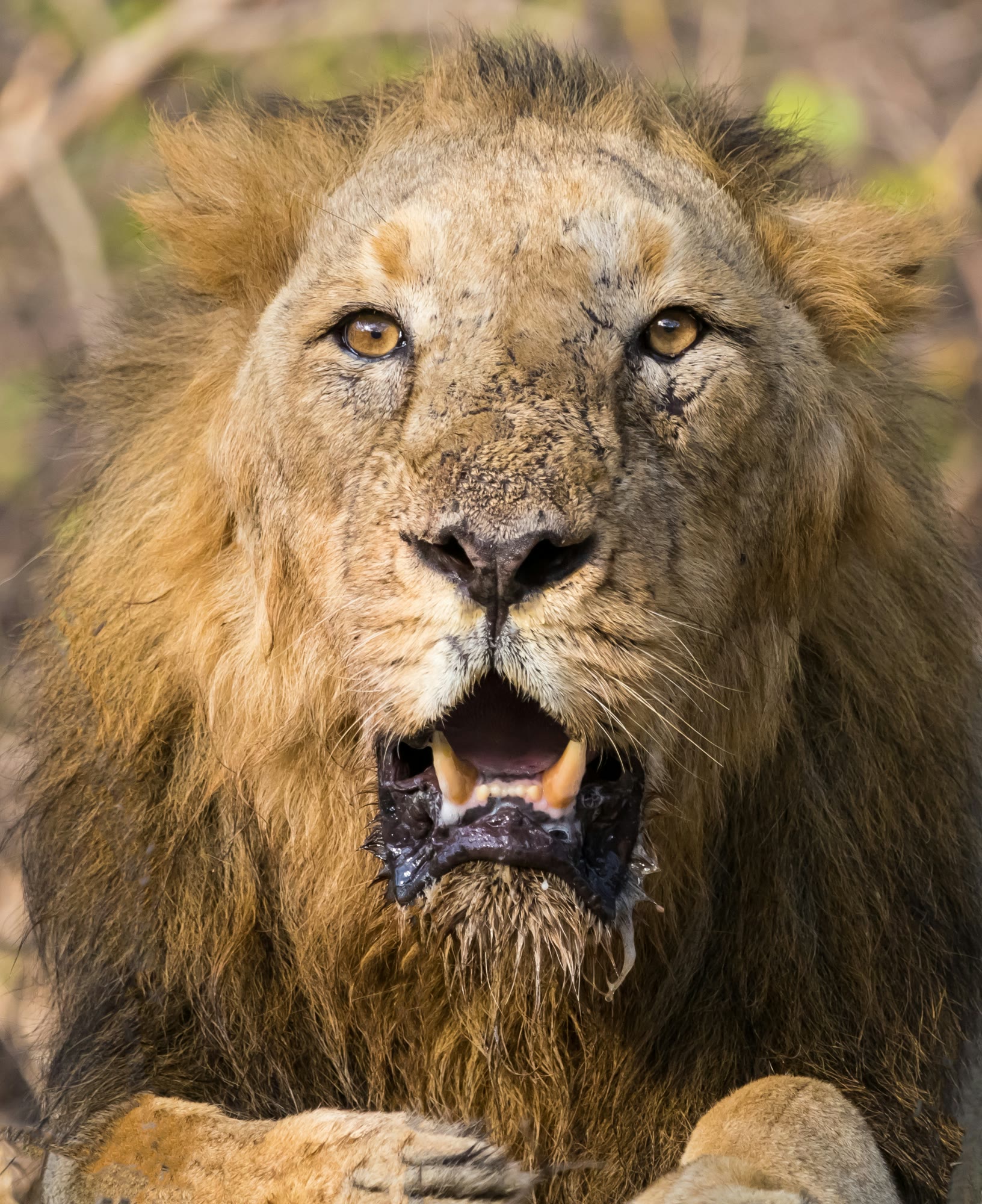
What to expect: morning and afternoon jeep drives through teak forest and grassland, with a naturalist guide, where lions are often seen resting in the open. It is one of India's most rewarding big-cat destinations, and sightings, while never promised, are frequent.
Facts About Gir National Park
| Information | Details |
|---|---|
| Location | Junagadh, Gir Somnath and Amreli districts, Saurashtra |
| State | Gujarat |
| Established | Wildlife sanctuary 1965, with the national park core notified in the 1970s |
| Area | About 1,410 km² (national park about 259 km², sanctuary about 1,152 km²) |
| Protected Area Type | National park and wildlife sanctuary |
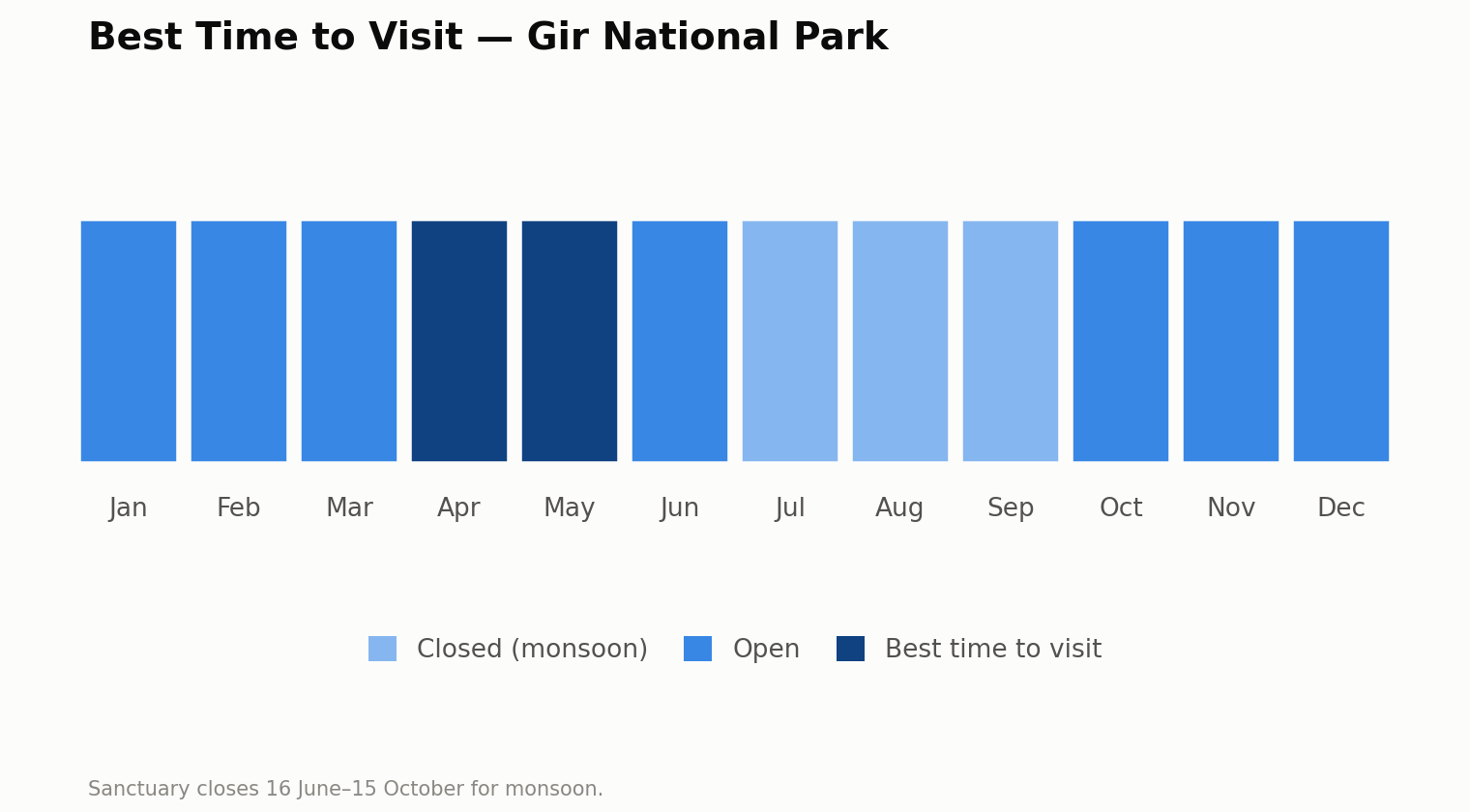
| Functional Days | Two daily shifts, from 16 October to 15 June |
| Annual Closure | Monsoon closure from 16 June to 15 October |
| Weekly Offs | Each route follows its own rest schedule |
| Best Time to Visit | November to March; April to June for lions near water |
| Recommended Safari Duration | Two nights with three to four drives, with time for Somnath and Junagadh |
| Vegetation | Dry deciduous teak forest, scrub, vidi grassland and river valley |
| Elevation | Low, gently rolling hills of the Saurashtra plateau |
| Major Wildlife | Asiatic lion, leopard, striped hyaena, chital, sambar, nilgai, mugger crocodile |
| Famous For | The only wild Asiatic lions in the world, and the Maldhari coexistence with wildlife |
Functional days. Drives run in a morning and an afternoon shift that follow the season, with mornings starting shortly after sunrise.
Yearly off. The park rests through the monsoon, reopening on 16 October when the forest is green and the reservoirs are full.
Weekly offs and rules. Rest days differ by route, so a permit is tied to a route, date and shift. Only authorised jeeps enter the park, with a naturalist guide.
Major Species
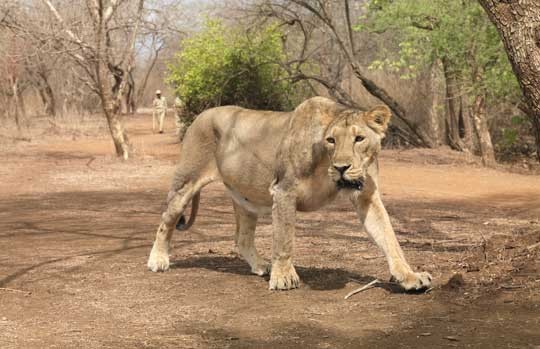
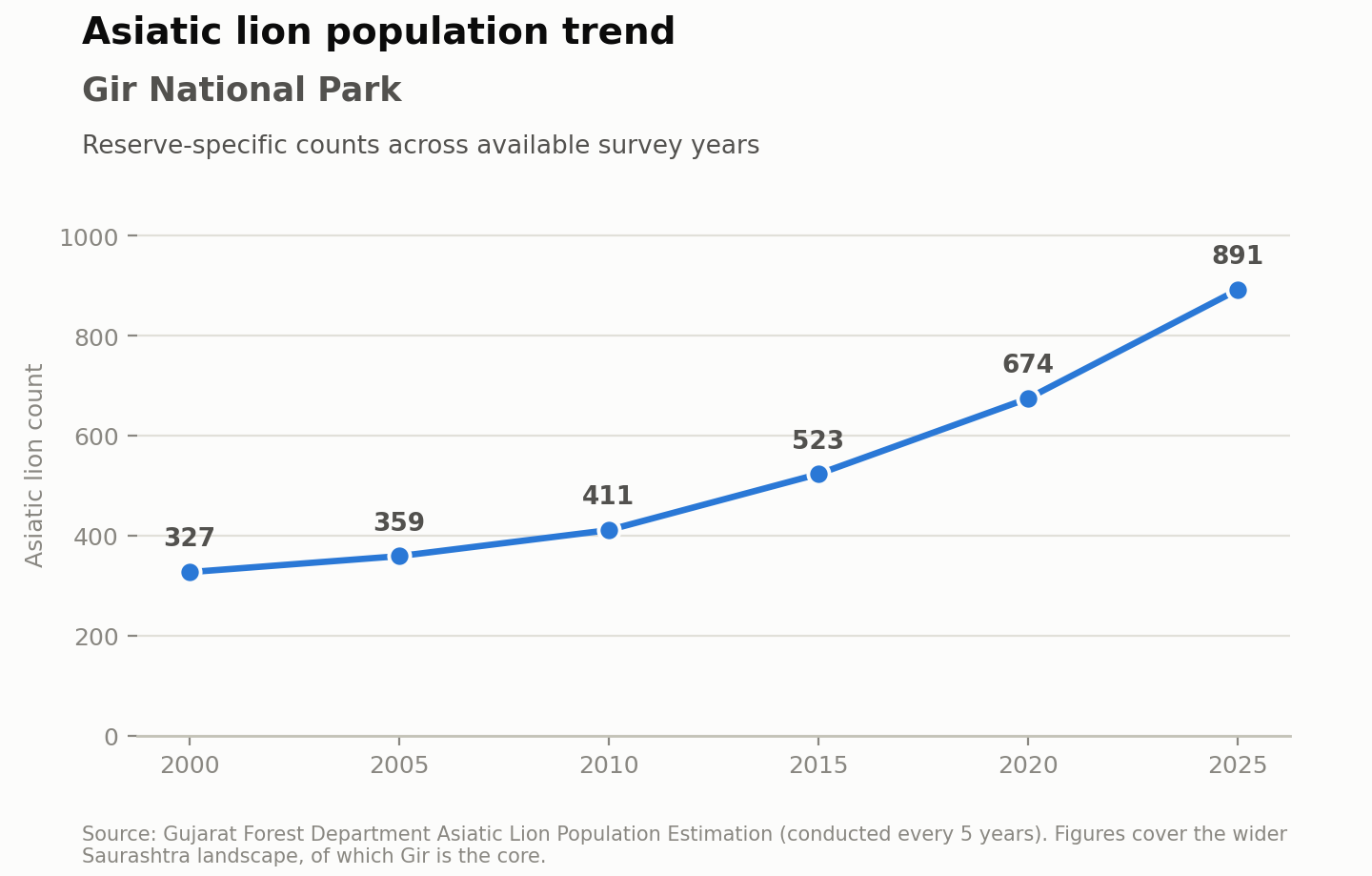
Gir has no tigers. Its star is the Asiatic lion, and its story is one of the most inspiring conservation recoveries in India. From only a small number of animals at the end of the 19th century, the population grew to 289 in 1936 and has climbed steadily since.
| Year | Area | Asiatic lions |
|---|---|---|
| 1968 | Gir | 177 |
| 2000 | Gir landscape | 327 |
| 2010 | Gir landscape | 411 |
| 2015 | Gir landscape | 523 |
| 2020 | Gujarat | 674 |
| 2025 | Gujarat | 891 |
The 2025 estimate, the 16th lion population estimation, recorded 891 lions across the Saurashtra landscape, an increase of about 32% in five years. About 390 lions live in the core Gir landscape, and the rest have spread to forests, coasts and river valleys in 11 districts, a sign of a species regaining its range. Habitat protection, prey management, water conservation and the goodwill of local communities have all contributed.
Sightings are frequent, and Gir is one of India's most reliable places to see a big cat. Lions are often seen resting in open grassland, near waterholes or on forest roads, though no sighting can ever be promised.
Other species
- Leopard: Present in good numbers and seen regularly, often in trees or near rocky outcrops.
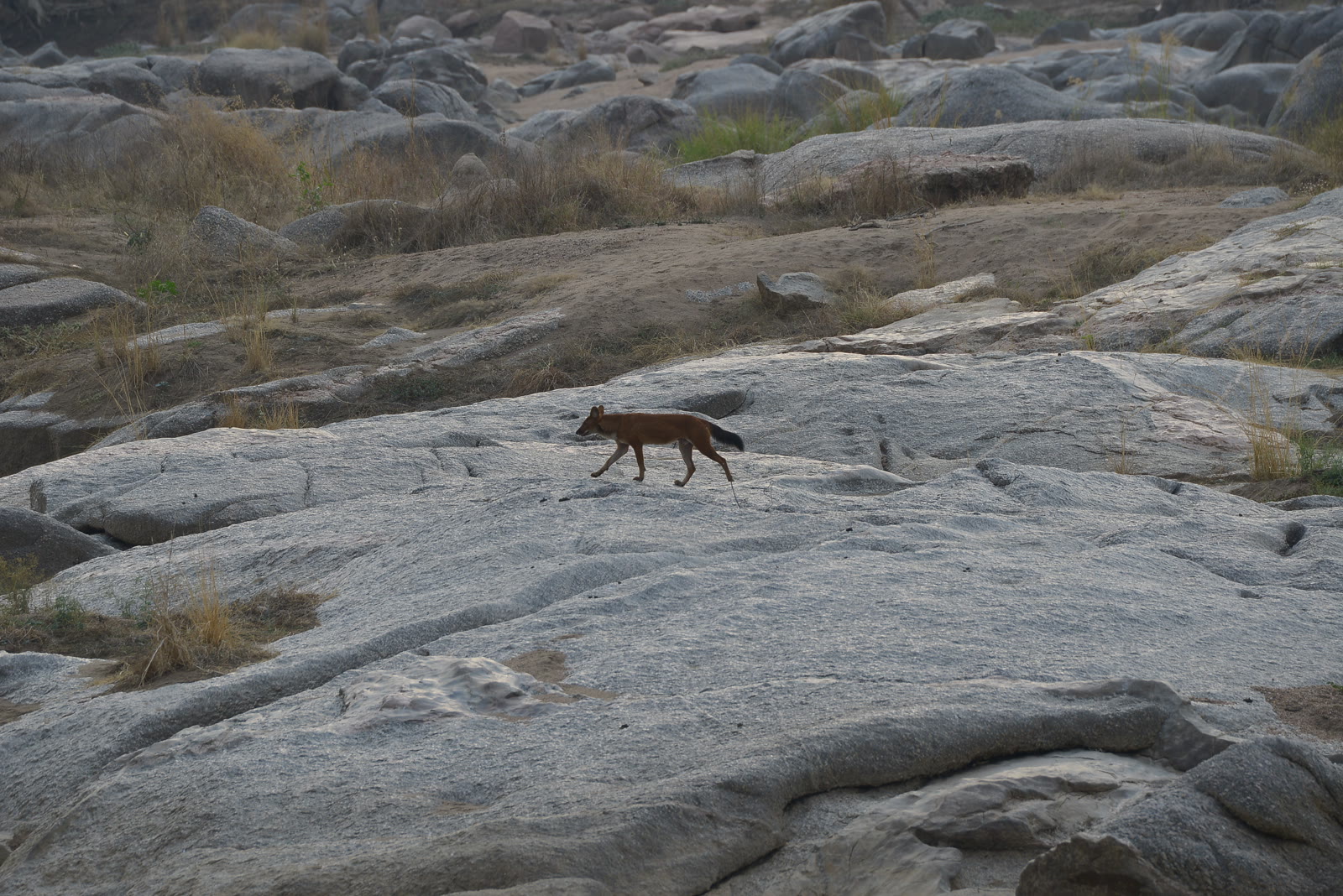
- Striped hyaena and jackal: Present, seen occasionally at dawn and dusk.
- Prey base: Chital, sambar and nilgai are seen on almost every drive, with chinkara and four-horned antelope also present.
- Mugger crocodile: A dependable sight around Kamleshwar Dam and other water bodies.
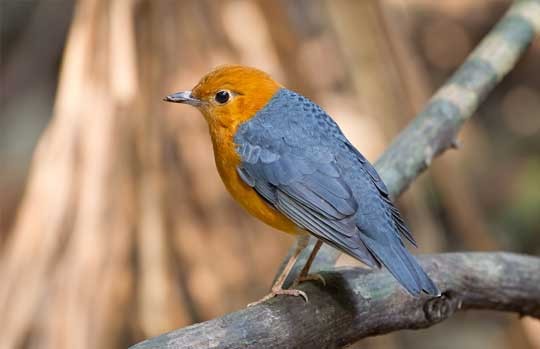
- Birds: More than 300 species, including crested serpent eagle, Bonelli's eagle, Indian pitta and six species of vulture.
Safari Zones in Gir National Park
Gir does not use a numbered zone system like the tiger reserves of central India. Instead, safaris follow a set of jeep routes from Sasan, complemented by nearby safari parks with their own character. A permit is tied to a route, and no route can promise a sighting.
| Area | Base | Character |
|---|---|---|
| Gir Jungle Trail (Sasan Gir Nature Safari) | Sasan | The main jeep safari through the sanctuary, with lions in natural forest |
| Devalia Safari Park | Near Sasan | A guided drive in a fenced area of the forest with a strong record of sightings |
| Ambardi Safari Park | Dhari, Amreli side | A quieter drive on the eastern side of the wider Gir landscape |
Gir Jungle Trail
The Gir Jungle Trail, also known as the Sasan Gir Nature Safari, is the classic experience. Open jeeps follow forest roads from Sasan through teak, scrub and grassland, past waterholes and rocky outcrops, in search of lions, leopards and deer. Drives run at dawn and in the afternoon, and lions are often found resting beside the track.
Devalia Safari Park
Devalia, also called the Gir Interpretation Zone, is a fenced area of the sanctuary near Sasan where lions, leopards, deer and other wildlife live in semi-natural conditions. Guided tours in vehicles follow a fixed route, and it is a good complement for guests who wish to maximise their chances of a sighting, or for families with less time.
Ambardi Safari Park
Ambardi, near Dhari on the Amreli side, offers a quieter drive through the forest in the wider Gir landscape. Lions are seen in a setting far from the busy Sasan routes, and it adds variety to a longer stay.
Vehicles and rules
Open jeeps carry small groups with a naturalist guide, and only authorised vehicles enter. Drives on more than one route give the fullest picture. India Tiger Safari would be delighted to design your fully private Gir safari: a bespoke journey through the routes that suit you best, with curated stays, a private jeep and a naturalist guide devoted to your party.
Mammals and Birds
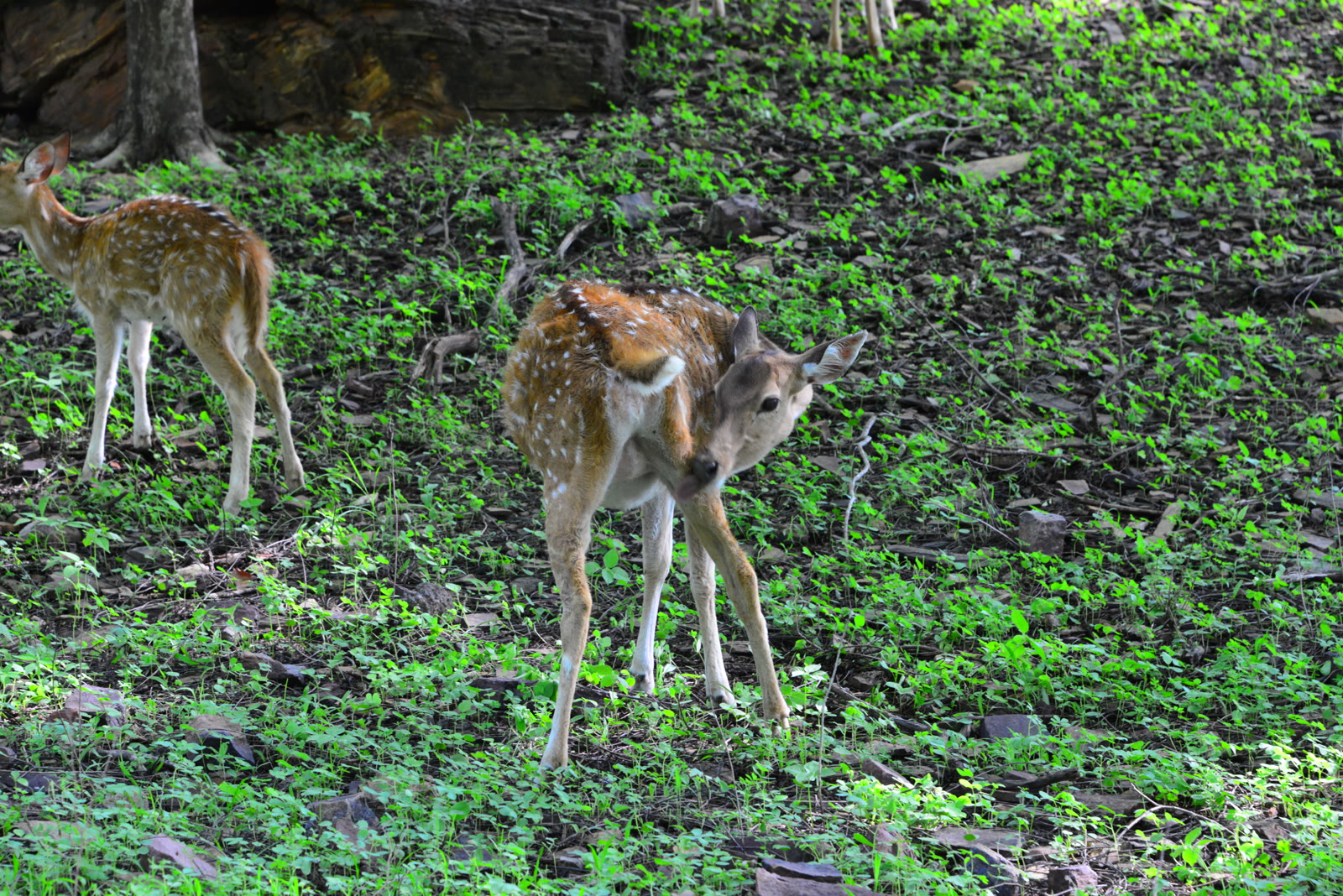
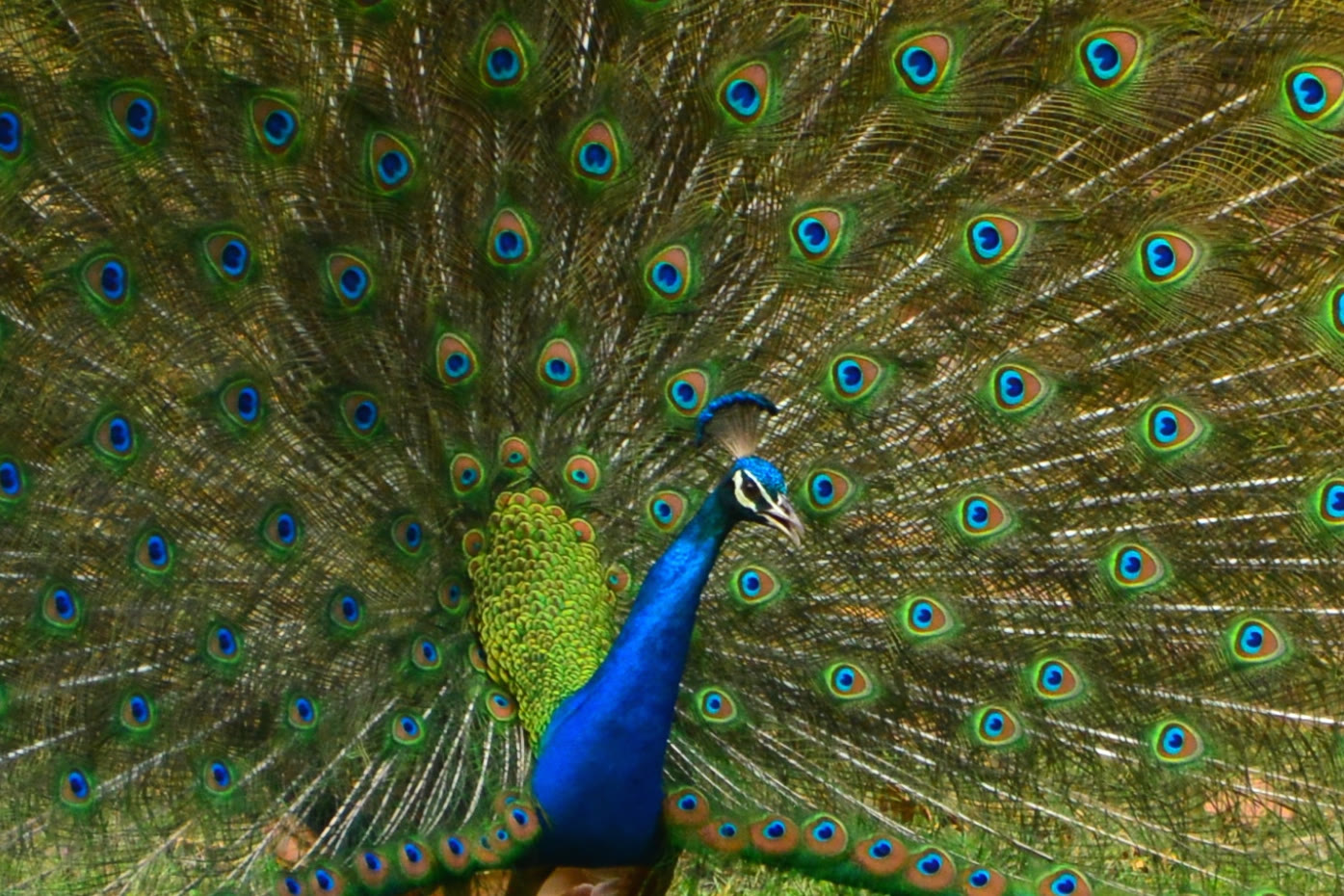
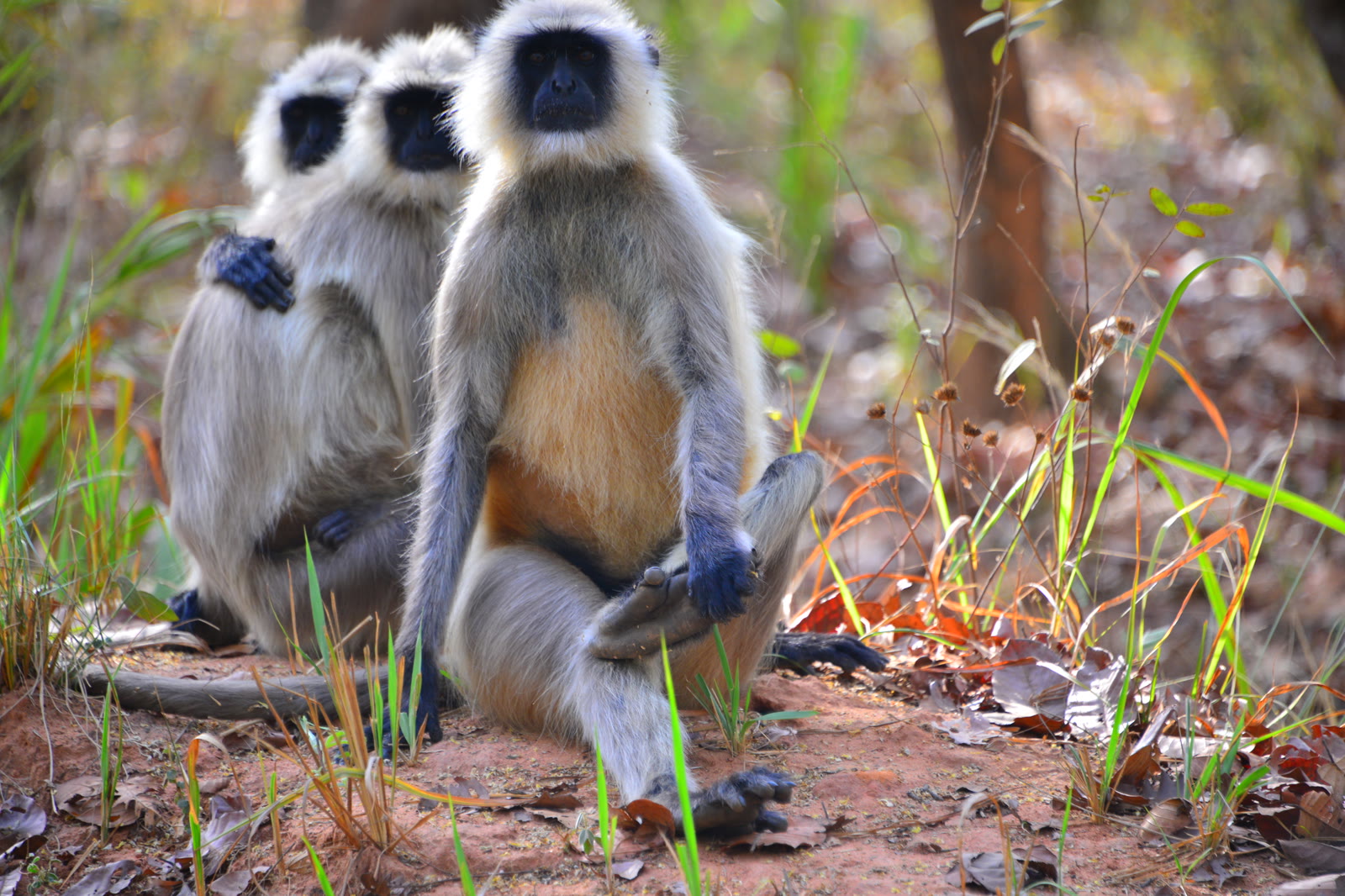
The lists below are representative and not complete. About 38 mammal species and more than 300 bird species have been recorded.
Mammals
- Asiatic Lion
- Indian Leopard
- Jungle Cat
- Striped Hyaena
- Golden Jackal
- Bengal Fox
- Indian Grey Mongoose
- Ruddy Mongoose
- Honey Badger
- Asiatic Wildcat
- Rusty-spotted Cat
- Chital
- Nilgai
- Sambar
- Four-horned Antelope
- Chinkara
- Wild Boar
- Blackbuck
Birds
- Crested Serpent Eagle
- Bonelli's Eagle
- Changeable Hawk-Eagle
- Brown Fish Owl
- Indian Eagle-Owl
- Rock Bush-quail
- Indian Peafowl
- Brown-capped Pygmy Woodpecker
- Black-headed Oriole
- Crested Treeswift
- Indian Pitta
- Black Ibis
- Shaheen Falcon
- Grey Drongo
- Pied Woodpecker
- Shrike
Accessibility
Gir lies in the heart of Saurashtra, close to Somnath and Junagadh, and it combines easily with temple and coastal itineraries. Distances and times are approximate.
Train
| Station | Distance and road time to Sasan | Why use it |
|---|---|---|
| Veraval | About 45 km; roughly one to one and a half hours | The nearest major railhead, also the gateway to Somnath, with trains from Ahmedabad and Mumbai |
| Junagadh Junction | About 70–80 km; roughly one and a half to two hours | A larger junction with frequent services from Ahmedabad and Rajkot |
Air
| Airport | Distance and road time | Onward transport |
|---|---|---|
| Rajkot (RAJ) | About 160 km; three to four hours | Private transfer |
| Diu (DIU) | About 100–110 km; roughly two to two and a half hours | Private transfer, with limited flights |
| Ahmedabad (AMD) | About 350–375 km; seven to eight hours by road | Private transfer, or a connecting flight to Rajkot or Diu |
Rajkot has the best flight frequency, and Diu is closest for a short transfer. International guests usually arrive in Ahmedabad or Mumbai.
Road
Somnath (about 40 km, one hour). A pleasant drive that lets you pair the temple with a lion safari.
Junagadh (about 70–80 km, one and a half to two hours). A heritage city with forts and a Nawab's palace on the way.
Rajkot (about 160 km, three to four hours). A straightforward drive from the airport.
Inside the reserve, only authorised safari vehicles are used, with a naturalist guide.
Accommodation
Stays around Gir cluster near Sasan, along the road towards Talala and Somnath, set among mango orchards, farmland and forest edge. This guide describes the character of each option rather than ranking properties.
Luxury safari lodges
The finest properties offer spacious cottages or tents, private terraces, pools, fine dining and expert naturalists, often looking out over forest or orchard. Mornings begin with a short drive to the safari gate. They suit couples and small private groups who want comfort between drives.
Boutique lodges and eco-lodges
Smaller lodges and eco-lodges in the villages around Sasan offer a quieter, more personal stay, with cottage-style rooms and warm Gujarati meals.
Resorts and mid-range hotels
A range of resorts with gardens and pools serves families and groups, and is practical for early starts.
Budget stays
Guesthouses in Sasan and Talala offer simple, good-value rooms.
Choosing well
- Gate proximity: Choose a base near Sasan for the Jungle Trail and Devalia, or near Dhari for Ambardi.
- Dining: Lodges serve Gujarati and Indian menus and can pack breakfast for early drives.
- Guiding: Naturalist guides accompany every vehicle, and lodges can recommend experienced guides.
- Families: Resorts with pools and gardens suit children best.
India Tiger Safari's bespoke private itineraries pair each route with a curated lodge.
People Also Visit
Gir sits on the far western side of India's wildlife map, and it pairs best with destinations reached through Ahmedabad.
Jawai Leopard Reserve
Jawai is a conservation reserve in southern Rajasthan, famed for leopards living among granite hills and temples, and it can be reached from Gir via Ahmedabad and Udaipur. Pairing Asiatic lions in dry deciduous forest with leopards on granite outcrops gives an unusual comparison of two big cats on one western India circuit.
Ranthambore National Park
Ranthambore lies to the north-east, usually reached with a flight or train through Ahmedabad and Jaipur. Its tigers among lakes and fort ruins contrast beautifully with Gir's lions and grasslands, and together they show three big cats across two states.
Nagarhole National Park
Travellers drawn to Gir's Asiatic lions often extend their trip south to Nagarhole, where the focus shifts to tigers moving through the moist deciduous forests of Karnataka's Western Ghats. The two parks make for a compelling India-wide big-cat itinerary — lions in Gujarat's dry teak forest, tigers in South India's denser jungle. India Tiger Safari can arrange a private multi-region safari connecting the two, with dedicated naturalist guides suited to each landscape.
Gir National Park FAQs
What is the best time to visit Gir National Park?
The park is open from 16 October to 15 June. November to March is the most comfortable, with pleasant days and cool mornings, and April to June is hot, when lions and other animals gather near water and visibility is good. The park closes from 16 June to 15 October for the monsoon.
How many days do you need in Gir?
Two nights is ideal, giving three to four drives across the Jungle Trail and Devalia, with time for Somnath or Junagadh. India Tiger Safari's bespoke itineraries match nights and routes to your dates.
Can you see Asiatic lions in Gir?
Gir is the only home of wild Asiatic lions, with 891 recorded in Gujarat in 2025, about 390 of them in the core Gir landscape. Sightings are frequent, and lions are often seen resting in the open. No sighting can be promised, but Gir is one of India's most rewarding places for a big cat.
Which safari route is best in Gir?
The Gir Jungle Trail is the classic experience, with jeeps through natural forest and grassland. Devalia Safari Park offers a guided drive with a strong record of sightings in a fenced area, and Ambardi is quieter on the eastern side. Combining two gives the fullest picture.
How do Gir safari arrangements work?
Safaris are booked by route, date and shift, in an open jeep with a naturalist guide. Every guest needs valid ID. India Tiger Safari handles permits, vehicles and guides for its private guests, so you can concentrate on the landscape and the lions.
What other animals can you see in Gir?
Leopards are seen regularly, and striped hyaena, jackal and honey badger are also present. Chital, sambar and nilgai are seen on almost every drive, with mugger crocodiles at Kamleshwar Dam. More than 300 bird species include crested serpent eagle, Bonelli's eagle and Indian pitta.
How do you reach Gir National Park?
Veraval, about 45 km from Sasan, is the nearest major railhead, and Junagadh, about 70 to 80 km away, is a larger junction. Rajkot airport is about 160 km away, and Diu is closer at about 100 to 110 km. Ahmedabad is about 350 to 375 km away by road. A private transfer is the most comfortable option.
Is Gir suitable for families?
Yes. Drives are unhurried, lions are often visible from the jeep, and children love the deer and peafowl. Devalia Safari Park is a shorter guided drive that suits younger guests, resorts with gardens and pools are relaxing, and Somnath is close by.
What should you wear on a Gir safari?
Choose muted greens, browns and khaki, and layer up, since winter mornings in an open jeep are cool. In summer, bring a hat, sunscreen and light long sleeves. Wear closed shoes, avoid strong perfume and carry binoculars for the birds.
Is a private jeep available in Gir?
Yes. A jeep permit covers one vehicle for a small party, so a private group can have it to itself. India Tiger Safari arranges a private jeep and a naturalist guide devoted to your party as part of its bespoke journeys.